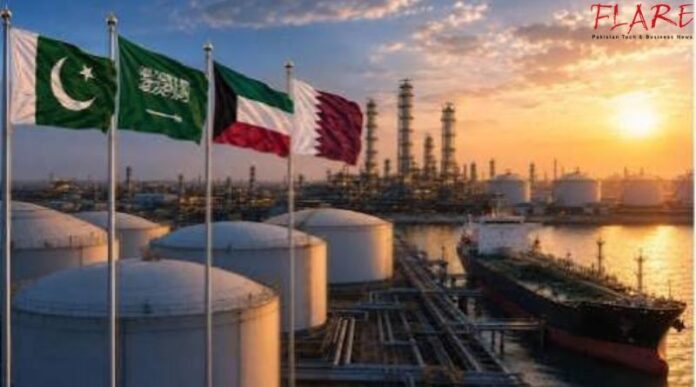

Pakistan is preparing a major plan to improve its fuel security by working with three important Gulf oil-producing countries: Saudi Arabia, Kuwait and Qatar. The proposed scheme aims to create oil storage facilities in Pakistan so that fuel can remain available during emergencies, supply problems or serious regional tensions.
The plan comes at a time when recent problems in the region have shown how quickly international oil supplies can be affected. Pakistan depends heavily on imported fuel, and any major disruption in shipping routes can create pressure on the country’s energy system. Officials now believe that keeping additional oil inside Pakistan could help reduce this risk.
Petroleum Minister Ali Pervaiz Malik has said that work is underway on a storage arrangement involving Saudi Arabia, Kuwait and Qatar. The idea is part of a wider effort by Pakistan to build stronger energy security and avoid serious fuel shortages in difficult situations.
Why Pakistan Needs More Oil Storage
Pakistan uses large amounts of petrol, diesel and other petroleum products every day. Transport, agriculture, factories, power generation and many other parts of the economy depend on a steady supply of fuel.
At present, Pakistan has limited protection against a major international supply problem. The country has also been described as the only country in the region without proper strategic oil reserves. This has made the government more interested in building a system that can provide extra fuel when normal imports are affected.
Normally, Pakistan brings oil into the country through international shipping routes. This works when global trade is running normally. However, a war, security problem, shipping disruption or closure of an important sea route can make fuel deliveries difficult.
When this happens, Pakistan can face higher import costs and possible shortages. A storage system inside the country would give the government and oil companies more time to manage such problems.
The proposed scheme is therefore not simply about storing oil for normal business. Its bigger purpose is to create a backup supply that can be used when the regular system comes under pressure.
Saudi Arabia, Kuwait and Qatar Could Play a Major Role
Saudi Arabia, Kuwait and Qatar are among the major energy-producing countries in the Gulf. Pakistan already has long-standing economic and diplomatic relations with these countries, making them natural partners for an energy storage project.
The new proposal could allow these countries to keep part of their oil stocks in Pakistan. Such an arrangement could benefit both sides.
For Gulf producers, storing oil closer to important markets can provide another option during a regional emergency. For Pakistan, having oil stored locally can provide greater protection if imports are delayed.
Earlier developments also showed interest from Kuwait in helping Pakistan build strategic petroleum storage facilities. In May, Pakistan and Kuwait discussed cooperation in the petroleum sector, including refining and fuel storage infrastructure.
Saudi Arabia has also been linked with Pakistan’s plans for strategic oil reserves. Earlier proposals suggested using Saudi expertise and investment to develop storage facilities in Pakistan.
Qatar is now also included in the wider Gulf partnership being considered by Pakistan, giving the plan a broader regional base.
How the Proposed System Could Work
The exact structure of the new storage scheme is still being worked out. However, the basic idea is to create large oil storage facilities where petroleum stocks can be kept safely for future use.
The oil could belong to foreign suppliers, while Pakistan could have special rights to access some of the stored fuel during an emergency. This type of arrangement can give both the supplier and the host country useful protection.
Pakistan has already considered a similar model for storage facilities at Gwadar. Under an earlier proposal, oil-producing countries would be allowed to keep strategic petroleum reserves at Gwadar, while Pakistan would have the first right to use the stocks during war, supply disruptions or other serious emergencies.
This approach could also help Pakistan attract foreign investment into its energy infrastructure.
Instead of the government paying the full cost of building and filling large storage facilities, foreign oil companies and producing countries could take part in the project. This could reduce the financial pressure on Pakistan while increasing its access to emergency fuel.
Gwadar Could Become an Important Energy Hub
Gwadar may have an important role in Pakistan’s future oil storage plans. The government has already discussed developing an Energy City in Gwadar that could include oil storage, LNG and LPG terminals and other energy-related facilities.
The location is important because Gwadar is on the Arabian Sea and is connected to Pakistan’s wider plans for regional trade and transport.
If large storage facilities are developed there, Gwadar could become more than a port for normal commercial activity. It could also become an important centre for energy storage and supply.
Such a development could support Pakistan’s long-term energy planning. It could also make the country more attractive to international energy companies looking for storage and logistics facilities in the region.
However, building such a system would require major investment. Storage tanks, pipelines, ports, security systems and transport links would all need to be developed or upgraded.
Lessons From Recent Supply Problems
One of the biggest reasons behind the new push is the experience of recent regional tensions and disruptions to oil shipping.
The Strait of Hormuz is one of the world’s most important energy routes. A large amount of oil and gas normally moves through the waterway. Any major disruption can therefore affect energy prices and supplies around the world.
Pakistan is particularly exposed because a large share of its imported fuel comes through Gulf routes.
Recent disruptions highlighted how quickly this dependence can become a problem. Reports earlier this year said that Pakistan faced serious concerns over oil supplies after the Strait of Hormuz was disrupted. Saudi Arabia, the United Arab Emirates and Kuwait are among Pakistan’s key suppliers.
The experience has encouraged officials to think beyond normal fuel imports.
Instead of waiting for another crisis and then trying to arrange emergency supplies, Pakistan wants to keep some fuel ready in advance.
This is the main reason strategic reserves are important.
What Are Strategic Oil Reserves?
Strategic oil reserves are large stocks of crude oil or petroleum products kept for emergencies.
They are different from the normal fuel stored by oil companies for daily business. Normal commercial stocks are regularly bought and sold. Strategic reserves are mainly kept as a backup.
For example, if international supplies are suddenly interrupted, a country can release some of its emergency stocks. This can help petrol pumps, transport companies, factories and other users continue operating while normal supplies are restored.
Strategic reserves can therefore act as a safety net for an economy.
Pakistan has been working on a broader plan for such reserves. In April, the Petroleum Division formed a committee to develop recommendations for strategic petroleum reserves and prepare an implementation plan. The committee was asked to look at existing storage facilities, future investment needs and ways to improve emergency fuel management.
The planned partnership with Gulf countries appears to fit into this wider effort.
Pakistan Could Get Faster Access to Emergency Fuel
One major benefit of the scheme would be quicker access to oil during a crisis.
If Pakistan has to buy all its emergency fuel after a supply disruption begins, it could take time for ships to arrive. International prices could also rise sharply because many countries may be trying to buy fuel at the same time.
Having oil already stored in Pakistan would remove part of this delay.
The government could potentially use the stored fuel while new shipments are being arranged.
This could be especially useful during a war or major regional crisis. It could also help protect important sectors of the economy, including transport, farming and industry.
The Plan Could Also Help Foreign Investors
The proposed storage system is not only about emergency fuel. It could also create new investment opportunities in Pakistan’s energy sector.
Foreign oil producers and trading companies could invest in storage tanks, terminals and related infrastructure.
Pakistan could benefit from new investment, jobs and improved energy facilities. Local companies could also become involved in transportation, storage, maintenance and other services.
The government has been trying to improve Pakistan’s refining and petroleum infrastructure as part of a wider energy strategy. Recent reports have also linked the storage initiative with plans for major refinery investment.
Better storage facilities could make these investments more useful by providing additional space for imported crude and petroleum products.
Policy Changes Will Be Important
One challenge is that Pakistan’s existing policies have not always made foreign investment in oil storage easy.
A June report said foreign suppliers had been reluctant to establish bonded oil storage facilities because of problems in the 2023 policy. The government was working to amend the policy and create better conditions for foreign suppliers.
This is an important issue because even if Gulf countries are interested, the project will need clear rules.
Investors need to know who owns the oil, who can use it, how long it can remain in storage and what happens during an emergency.
The government will also need clear rules about taxes, customs, transport and exports.
A strong policy framework can make the project easier to manage and encourage more foreign companies to participate.
What It Could Mean for Ordinary Pakistanis
For ordinary people, the most important benefit would be greater fuel security.
If Pakistan has a larger emergency stock, the country may be better prepared for unexpected disruptions.
This does not mean petrol and diesel prices will automatically become cheaper. International oil prices, the exchange rate, taxes and other costs will continue to affect fuel prices.
However, better storage could reduce the risk of sudden shortages.
Stable fuel supplies are important for almost every part of daily life. When fuel becomes difficult to obtain, transport costs can increase. Businesses may face higher expenses, farmers can struggle with rising diesel costs and the prices of goods can also come under pressure.
A reliable reserve can help reduce some of these risks during a major crisis.
A Long-Term Energy Security Step
Pakistan’s proposed partnership with Saudi Arabia, Kuwait and Qatar is part of a much larger question: how can the country protect itself from global energy shocks?
The answer cannot depend on oil storage alone.
Pakistan also needs stronger local refining capacity, better pipelines, improved ports, more storage, efficient energy policies and greater use of alternative energy sources.
Still, strategic oil storage can provide an important layer of protection.
The government has already started looking at ways to improve the country’s emergency fuel system. Earlier proposals have included strategic reserves, foreign investment and better use of existing storage infrastructure.
The Gulf partnership could take these efforts a step further.
What Happens Next?
The next stage will involve working out the technical and financial details of the proposed scheme.
Pakistan will need to decide where the storage facilities should be located, how large they should be, who will finance them and how the stored oil will be managed.
The government will also have to finalise agreements with Saudi Arabia, Kuwait and Qatar.
If the plan moves forward successfully, Pakistan could gradually build a much stronger emergency fuel system.
The project could also strengthen Pakistan’s energy ties with its Gulf partners and create new investment opportunities in the petroleum sector.
Conclusion
Pakistan’s plan to develop an oil storage scheme with Saudi Arabia, Kuwait and Qatar is an important move towards stronger energy security. The country has learned that depending too heavily on international fuel shipments can create serious risks when regional tensions or shipping problems affect global supplies.
By keeping more oil inside the country, Pakistan could have a useful backup during emergencies. The involvement of major Gulf energy producers could also bring investment, technical knowledge and stronger regional cooperation.
The project will not solve all of Pakistan’s energy problems. It will still need better refining capacity, improved infrastructure and long-term changes in the energy sector. But a proper strategic oil storage system can give the country an important safety net.
If the government can create clear policies and successfully attract Saudi, Kuwaiti and Qatari participation, the project could become a major part of Pakistan’s future energy security strategy.
Read Also: check