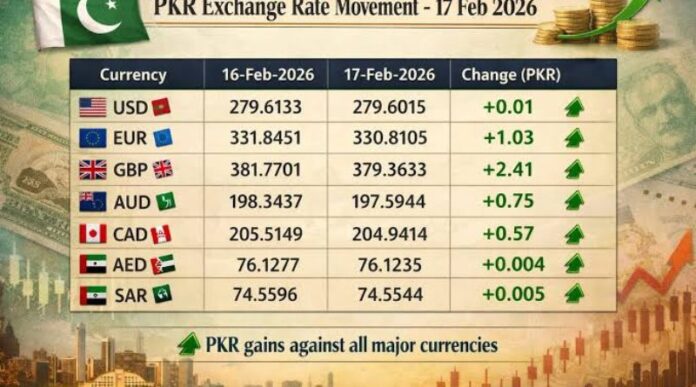

The Pakistani rupee showed a positive performance in the foreign exchange market today, gaining ground against several major international currencies. The improvement has brought some relief to the local market, especially after a long period in which Pakistan’s currency faced pressure from rising import costs, high inflation, and strong demand for foreign currency.
On Wednesday, August 12, 2026, the rupee remained stable to slightly stronger in the interbank market. The local currency closed at around Rs277.66 against the US dollar, recording a small gain during the day. Market reports said the rupee gained more than one paisa against the dollar.
The latest movement is important because the dollar is one of the most closely watched currencies in Pakistan. Changes in the dollar rate directly affect fuel prices, imported products, business costs, foreign education expenses, and many other areas of the economy.
Rupee Shows Strength in Today’s Market
The Pakistani rupee has been showing a more stable trend in recent months. Instead of seeing large daily falls, the currency has managed to hold its position against the US dollar and, at times, make small gains.
According to reports from the interbank market, the rupee ended Wednesday at Rs277.66 per US dollar. This was slightly better than its previous closing level.
Although the daily gain may look very small, regular improvements can be important for a currency like the Pakistani rupee. Even a few paisas can have an effect when large amounts of money are being exchanged by banks, importers, exporters, and other businesses.
The recent performance also shows that the rupee is not facing the same level of pressure that it experienced during earlier periods of economic uncertainty.
US Dollar Remains Around Rs278
The US dollar continues to be the main currency watched by Pakistan’s financial market. On August 12, the dollar was trading close to the Rs278 level in the local market.
One market report placed the dollar’s buying rate at around Rs278.40 and its selling rate at about Rs278.80 in the open market. The exact rate can vary between banks, exchange companies, and different parts of the market.
In the interbank market, however, the rupee ended the session at Rs277.66 against the dollar.
The difference between interbank and open-market rates is normal because the two markets work differently. Customers may also receive slightly different rates depending on the bank or exchange company they use.
Rupee Gains Matter for Pakistan
A stronger rupee can bring several benefits to Pakistan’s economy. One of the biggest advantages is that imported goods can become less expensive when the local currency remains stable.
Pakistan imports a large number of products from other countries. These include petroleum products, machinery, electronics, medicines, chemicals, industrial materials, and food items.
When the rupee loses value against the dollar, importers have to spend more rupees to buy the same amount of foreign goods. Businesses often pass these extra costs to customers through higher prices.
On the other hand, when the rupee becomes stronger or remains stable, import costs can become easier to manage.
This does not mean that prices will immediately fall across the country. Many other factors affect prices, including international oil rates, taxes, transport costs, local demand, and business expenses. However, a stable currency can reduce some of the pressure.
Impact on Fuel Prices
The exchange rate is especially important for Pakistan’s fuel market.
Pakistan depends heavily on imported energy products. International oil purchases are generally made in US dollars. Therefore, any major change in the dollar-rupee exchange rate can affect the cost of importing fuel.
A stable rupee can help reduce the impact of changes in international oil prices. If the dollar becomes more expensive, the rupee cost of imported oil can rise even when global oil prices remain unchanged.
This is why currency movements are closely followed whenever the government reviews petrol and diesel prices.
Imported Products May Get Some Relief
Consumers may also benefit from a stable rupee when buying imported products.
Many electronic devices, mobile phones, computer parts, vehicles, machines, and other goods either come directly from abroad or use imported parts.
When the rupee falls sharply, importers usually face higher costs. These costs can eventually reach consumers through higher retail prices.
A stronger or stable rupee gives businesses a little more room to manage these costs.
However, consumers should not expect every imported product to become cheaper immediately. Companies often have old stock, shipping expenses, taxes, duties, and other costs that can keep prices high.
Euro and British Pound Also Remain Important
The US dollar is not the only currency that matters to Pakistan.
The euro and British pound are also important because Pakistan has strong links with European countries and the United Kingdom. Many Pakistanis work, study, or have family members in these regions.
The latest currency data shows the euro trading around the Rs320 level against the Pakistani rupee. XE’s August 12 data placed the euro near Rs320.29, while other market sources showed similar levels.
The British pound remained much more expensive in rupee terms. Market rates on August 12 placed the pound at roughly Rs375 to Rs379, depending on the buying or selling rate.
Movements in these currencies are important for Pakistani students, overseas workers, families receiving remittances, and businesses involved in international trade.
Why Currency Rates Keep Changing
Foreign exchange rates do not remain fixed. They change throughout the day because of demand and supply as well as economic and political developments.
If demand for dollars increases, the dollar can become more expensive against the rupee. If the supply of dollars improves, the rupee can receive some support.
Pakistan’s foreign exchange reserves, imports, exports, remittances, oil prices, interest rates, and international financial conditions can all influence the rupee.
Political developments can also affect market confidence. When investors and businesses feel more confident about the country’s economic situation, pressure on the local currency may reduce.
Remittances Provide Support
Money sent home by Pakistanis living abroad is another important source of foreign exchange.
Millions of Pakistanis work in countries such as Saudi Arabia, the United Arab Emirates, the United Kingdom, the United States, and other parts of the world. Their remittances provide dollars and other foreign currencies to the country’s financial system.
Higher remittance inflows can support the rupee by increasing the supply of foreign currency.
The UAE dirham and Saudi riyal are especially important because of the large Pakistani communities working in the Gulf region. On August 12, the UAE dirham was trading close to Rs75.60 at the interbank level, according to reported market data.
Export Earnings Also Play a Role
Exports are another major source of foreign currency for Pakistan.
When Pakistani companies sell goods and services to foreign customers, they receive payments in international currencies. Export earnings can then help increase the supply of foreign exchange in the country.
Textiles, rice, sports goods, leather products, surgical instruments, information technology services, and other industries contribute to Pakistan’s export earnings.
A stronger export sector can therefore support the rupee over time.
However, Pakistan still needs to increase exports and reduce its dependence on imports to build a stronger and more balanced foreign exchange position.
Stable Rupee Gives Businesses More Confidence
Businesses generally prefer a stable currency because it makes planning easier.
For example, an importer who needs to pay a foreign supplier may have difficulty setting prices if the rupee changes sharply every few days. A sudden fall in the currency can increase the cost of goods before they even reach Pakistan.
Similarly, exporters need stable market conditions when planning contracts with international buyers.
A relatively stable rupee allows companies to make better financial plans. It can also reduce the risk linked to foreign currency payments.
What About Overseas Pakistanis?
Currency movements are also important for Pakistanis living abroad.
When overseas Pakistanis send money home, the amount received in rupees depends on the exchange rate. If the rupee becomes stronger, families may receive fewer rupees for the same amount of foreign currency.
For example, a family receiving dollars from a relative abroad may notice a difference in the rupee amount when the exchange rate changes.
This means a stronger rupee is not automatically good or bad for everyone. Its impact depends on a person’s financial situation.
Importers may benefit from a stronger rupee, while exporters and some remittance-receiving families may prefer a weaker rupee because their foreign earnings convert into more rupees.
A Small Daily Gain Can Still Be Important
The rupee’s latest gain against the dollar is small, but the bigger picture is more important.
The local currency has managed to remain around the Rs277 to Rs278 range against the US dollar. Reports earlier this week also showed the rupee closing higher against the dollar for another consecutive session.
This type of stability can be more useful for the economy than a sudden and short-lived jump.
Currency markets are influenced by many factors, so one day’s performance should not be treated as a guarantee that the rupee will continue rising.
Still, a stable exchange rate can provide some breathing room for businesses, consumers, and policymakers.
Global Markets Also Affect the Rupee
Pakistan’s currency market does not operate separately from the rest of the world.
Changes in the US dollar, oil prices, interest rates, wars, and economic data from major countries can affect currencies around the world.
For example, global oil prices remain an important issue for countries such as Pakistan because the country imports a large amount of energy. Higher oil prices can increase the country’s need for foreign currency.
International market conditions can therefore put pressure on the rupee even when domestic economic conditions remain unchanged.
What Could Happen Next?
The future direction of the Pakistani rupee will depend on several factors.
The country’s foreign exchange reserves, remittance flows, export performance, import demand, inflation, oil prices, and overall economic policies will remain important.
The rupee’s recent stability is encouraging, but maintaining that stability over a longer period will be the bigger challenge.
A strong currency is not only about the exchange rate shown on a currency board. A healthy economy also needs higher exports, better investment, stable inflation, strong foreign exchange reserves, and sustainable economic growth.
If these areas continue to improve, the rupee could have a better chance of maintaining its current position.
What Today’s Rupee Performance Means for the Public
For ordinary Pakistanis, currency movements may seem like financial news that only concerns banks and traders. In reality, exchange rates can affect everyday life.
The dollar rate can influence the prices of imported food, medicines, mobile phones, cars, fuel, machinery, and many other products.
It can also affect the cost of studying abroad, travelling overseas, sending money to another country, and paying international bills.
That is why even a small improvement in the rupee can attract attention.
Final Thoughts
The Pakistani rupee delivered another encouraging performance on August 12, 2026, gaining slightly against the US dollar and showing continued stability in the foreign exchange market. The interbank closing rate stood around Rs277.66 per dollar.
The rupee’s performance against other currencies also remains important for Pakistan’s economy. The euro was trading around the Rs320 level, while the British pound remained close to Rs375 or higher.
Although today’s gains are not large, the continued stability of the rupee is a positive sign for the local market. A stable currency can help businesses plan better, reduce some import pressure, and make the overall economic environment more predictable.
However, one day’s movement should not be seen as a major change in Pakistan’s economic situation. Currency markets can move quickly because of local and global developments.
For now, the rupee’s ability to hold its ground against the US dollar is the main positive point. If Pakistan can continue improving its foreign exchange position, increase exports, attract investment, and maintain strong remittance flows, the local currency may be able to maintain greater stability in the months ahead.
Read Also: check