

The economic cost of protests, long marches, and road blockades in Pakistan has once again become a major topic of discussion. The federal government has estimated that such disruptions can cause losses of around Rs. 120 billion every day. The figure was highlighted by Finance Minister Muhammad Aurangzeb in a pre-recorded message to the nation.
The number is extremely large and shows how much a major road blockade can affect the economy. When roads remain closed or movement is badly affected, businesses suffer, transport operations slow down, workers struggle to reach their workplaces, and the supply of goods can be interrupted.
However, there is another side of the calculation that deserves attention.
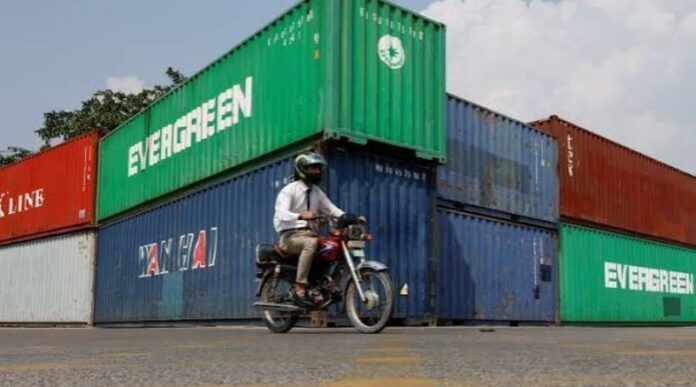
While the government is trying to measure the economic damage caused by protests, there is also a cost linked to the steps taken to stop or control those protests. One of the most visible parts of this response is the use of large shipping containers to block roads and prevent protesters from moving toward sensitive areas.
This raises a simple question: how much does it cost the country to prevent protests from disrupting economic activity?
If the loss caused by protests is being counted, the economic cost of road closures, traffic jams, blocked routes, delayed deliveries, and other government measures should also be considered.
Government Estimates Protest Losses at Rs. 120 Billion a Day
Finance Minister Muhammad Aurangzeb recently said that protests, long marches, and road blockades result in an estimated daily economic loss of Rs. 120 billion.
According to the explanation provided by the government, the figure was prepared by a team working under Planning Minister Ahsan Iqbal. The calculation divides the estimated loss into three major areas.
Services account for around Rs. 86 billion of the daily loss. Industry makes up another Rs. 25 billion, while agriculture accounts for approximately Rs. 9 billion.
These numbers show that the impact of protests is not limited to a single business sector.
When roads are blocked, transport becomes difficult. Shops may receive fewer customers, factories can face problems moving raw materials and finished products, and agricultural goods may not reach markets on time. Workers who depend on daily wages can also lose income when they cannot travel to their workplaces.
There is little doubt that a long road blockade can create serious problems for normal business activity.
But calculating the cost of the protest itself is only one part of the overall picture.
The Cost of Stopping Protests Also Matters
Whenever a major protest or political march is expected, authorities often take steps to restrict movement. Roads may be closed, containers can be placed at important points, and security arrangements can make movement difficult in areas where protesters are expected to gather.
These actions may be necessary from the government’s point of view to control a situation and protect important public areas. But they can also create economic costs of their own.
A container placed across a road does not create any economic output. Instead, it prevents vehicles from using that road. Trucks carrying goods may have to stop, take longer routes, or remain stuck for hours.
The same problem can affect thousands of commuters.
A vehicle sitting in traffic is not delivering goods, transporting workers, or completing business activity. It also consumes fuel while waiting. For transport companies, this means additional expenses without any additional income.
When thousands of vehicles face the same situation, the combined cost can become significant.
This is why the full economic impact should include both sides of the situation: the losses caused by protests and the losses caused by the measures used to control them.
Transport Sector Can Face Heavy Losses
Transport is one of the first sectors to feel the impact of road blockades.
Trucks, buses, vans, taxis, and private vehicles all depend on open roads. When a major route is blocked, transport operators cannot follow their normal schedules. A journey that normally takes a few hours can take much longer, while some trips may have to be cancelled completely.
The effects can go beyond one day.
A truck carrying goods that cannot reach its destination on time may cause delays at warehouses, markets, factories, and shops. A delay in one part of the supply chain can then create problems for other businesses.
Transport owners have also spoken about the financial damage caused by prolonged disruption.
According to a spokesperson for transport owners, the sector suffered losses of around Rs. 280 million during two weeks of the capital siege. This figure provides another example of how road restrictions can affect businesses that depend on regular movement.
The transport industry also spends money on fuel, driver wages, vehicle maintenance, and other daily operating costs. When vehicles cannot operate normally, many of these expenses continue even though the vehicles are not earning their usual income.
Fuel Waste Adds Another Cost
Traffic jams caused by blocked roads can also increase fuel consumption.
A vehicle stuck in heavy traffic may keep its engine running for long periods. Even when traffic is moving slowly, fuel efficiency can fall. When this happens across thousands of vehicles, the amount of fuel wasted can become substantial.
This is especially important for Pakistan because fuel remains a major cost for businesses and ordinary citizens.
Transport companies pass part of their operating expenses into freight charges. When delivery costs rise, businesses may eventually face higher costs as well. In some cases, these additional costs can reach consumers through higher prices.
This means a road closure can have effects beyond the people who are directly stuck in traffic.
A factory waiting for raw materials, a shop waiting for stock, a farmer trying to send produce to a market, or a delivery company trying to complete its route can all face financial losses because of transport delays.
Delayed Shipments Can Hurt Businesses
Modern businesses depend heavily on reliable transportation.
Factories need raw materials to arrive on time. Retailers need products to reach their stores. Exporters need shipments to move according to schedule. Even small delays can create problems when a company has strict delivery deadlines.
Long road closures can disturb this entire process.
A delayed truck may mean a delayed production line. A delayed shipment may mean a missed business commitment. A company may also have to pay extra charges because its goods or vehicles remain stuck for longer than expected.
For a country already dealing with economic pressure, such losses can be important.
Pakistan has been trying to improve foreign exchange reserves, support exports, control its fiscal situation, and strengthen economic activity. In such an environment, every unnecessary delay can add pressure to businesses and public finances.
This is why the economic discussion should not stop at the headline figure of Rs. 120 billion per day.
The country needs a broader calculation that looks at all sides of the disruption.
Are Containers Being Counted in the Economic Calculation?
The main argument is not that the government’s concerns about protests are wrong.
A prolonged protest can clearly create economic problems. Blocking major roads can affect millions of people and disrupt business activity across different sectors.
The question is whether the cost of government countermeasures is also being included in the calculation.
When containers are placed on major roads, they become part of the disruption. Roads may remain open in some areas but become difficult or impossible to cross in others. Traffic can be diverted into smaller streets, creating congestion in places that normally experience normal traffic flow.
This creates another economic cost.
Workers may reach offices late. Customers may avoid markets. Delivery riders may take longer to complete their routes. Public transport may face delays. Businesses may lose working hours.
None of these costs necessarily appears in the main Rs. 120 billion estimate for protest-related losses.
That is why a complete economic assessment should examine both the protest and the response to it.
A Balanced Cost Calculation Is Needed
Governments need reliable data when making decisions about public order and economic activity.
If officials estimate that protests are costing Rs. 120 billion every day, the calculation should ideally cover the full economic impact. That includes lost business activity, transport disruption, delays in services, industrial losses, agricultural problems, fuel waste, and other related expenses.
At the same time, any assessment should look at the economic effects of road closures, security arrangements, container placement, traffic diversions, and other restrictions.
This would provide a clearer picture of the actual cost to the country.
The purpose of such a calculation is not necessarily to support protests or oppose government action. Instead, it is about understanding the complete financial impact of major disruptions.
Without such a wider calculation, one side of the economic loss may receive far more attention than the other.
Pakistan Can No Longer Ignore the Cost of Disruption
Pakistan’s economy depends on the smooth movement of people, goods, services, and money.
Factories need workers. Markets need customers. Farmers need roads to transport their produce. Transport companies need open routes. Exporters need reliable supply chains.
Whenever movement is badly affected, economic activity also suffers.
This is why both protests and the measures used to control them can carry financial consequences.
The government’s estimate of Rs. 120 billion in daily losses highlights the scale of the problem. But the use of containers and road restrictions also deserves to be included in the discussion. A blocked road creates delays, vehicles use more fuel, businesses lose working hours, and transport operators can face direct financial losses.
In other words, the economic bill does not begin and end with the protesters.
The Bigger Question Is the Total Economic Bill
The debate over protest-related losses should therefore move beyond one number.
If the government wants to show how much protests cost Pakistan, it should also account for the cost of the response used to control those protests. This would include the effects of containers, traffic diversions, blocked routes, delayed shipments, lost working hours, additional fuel use, and other disruptions.
A protest can certainly cause economic damage. But measures taken to stop a protest can also create economic damage.
That is the central point behind the argument that containers may be more expensive than protests.
Pakistan needs an honest and complete picture of these costs. Only by looking at the whole situation can policymakers, businesses, transport operators, and the public understand how much major road disruptions are really costing the country.
The government has every reason to be concerned about economic losses caused by prolonged protests and blockades. At the same time, economic damage remains economic damage, regardless of whether it is caused directly by protesters or indirectly by the steps taken to control them.
If Rs. 120 billion is the estimated daily cost of a protest, then the country’s calculation should not end there. The cost of the containers, the blocked roads, the traffic, the wasted fuel, and the delayed business activity should also be part of the final bill.
Read Also: check