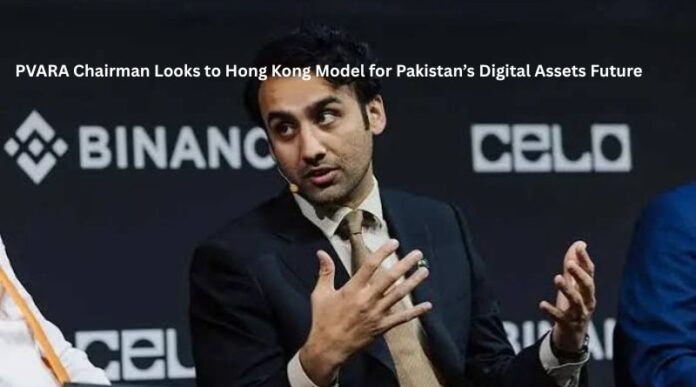

Pakistan is looking at international examples as it works to build a proper and regulated digital assets industry. Pakistan Virtual Assets Regulatory Authority (PVARA) Chairman Bilal Bin Saqib has highlighted Hong Kong as an important example for Pakistan as the country develops rules and systems for digital assets, blockchain and tokenization.
Saqib recently visited Hong Kong, where he met with senior officials and institutions working on financial regulation and digital finance. After returning to Pakistan, he briefed Federal Minister for Finance and Revenue Senator Muhammad Aurangzeb about the discussions and the ideas that could be useful for Pakistan.
The visit comes at an important time for Pakistan. The country has recently introduced a legal framework for virtual assets and established PVARA as the main regulator for this growing sector. The aim is to bring digital asset activity into a proper system where businesses can operate under clear rules while users and investors receive better protection.
According to recent reports, Saqib’s discussions in Hong Kong focused on areas such as digital assets, blockchain, tokenized financial products, digital bonds, stablecoins, compliance and financial infrastructure. Pakistan is now exploring how some of the ideas used in Hong Kong could be adjusted for its own market.
Why Hong Kong Is Important for Pakistan
Hong Kong has become one of Asia’s leading markets for regulated digital assets. Instead of completely rejecting new financial technologies, Hong Kong has worked on rules that allow innovation while keeping financial risks under control.
This approach is of interest to Pakistan because the country is also trying to create a balance between innovation and safety.
For many years, cryptocurrency and other digital assets have attracted a large number of Pakistani users. However, the sector operated without a complete regulatory structure. The creation of PVARA and the Virtual Assets Act, 2026 has changed that situation.
PVARA says the new law provides Pakistan with its first complete legal framework for virtual assets and businesses that provide virtual asset services. The authority is responsible for licensing, supervising and regulating these businesses while also working to protect consumers and reduce financial crime risks.
The Hong Kong experience could therefore provide Pakistan with useful lessons on how a digital asset market can be developed under proper government supervision.
Bilal Bin Saqib’s Hong Kong Visit
During his recent visit, PVARA Chairman Bilal Bin Saqib met with officials from several important Hong Kong institutions.
These included the Financial Services and the Treasury Bureau, the Hong Kong Monetary Authority and the Securities and Futures Commission.
The meetings gave Pakistani officials an opportunity to learn about Hong Kong’s approach to digital assets, stablecoins, tokenization and financial regulation.
The discussions were not limited to cryptocurrency trading. They also looked at how blockchain technology can be used in traditional financial markets.
This is important because Pakistan’s digital asset plans are becoming broader than simply regulating cryptocurrency exchanges. The country is exploring ways to use blockchain technology in areas such as capital markets, payments, settlement systems and digital financial products.
Saqib has also spoken about the possibility of using tokenization to modernize Pakistan’s financial system and make investment opportunities available to a wider group of people.
What Is Tokenization?
Tokenization is one of the main areas being discussed by Pakistani officials.
In simple words, tokenization means creating a digital version of an asset on blockchain technology. The asset could be a bond, property, investment product or another financial instrument.
Instead of using only traditional paperwork and systems, information about ownership and transactions can be recorded digitally.
This could make some financial processes faster and easier.
For example, Pakistan could explore tokenized government bonds. Investors could potentially buy and manage these digital versions through regulated financial systems.
The government has already discussed the possibility of tokenizing sovereign debt instruments. In May 2026, the Finance Ministry held discussions with PVARA officials about tokenized sovereign bonds and Naya Pakistan Certificates. The discussions looked at how blockchain could help modernize capital markets and give more investors access to Pakistani financial products.
The idea is still being explored, but it shows that Pakistan’s digital asset plans are moving beyond cryptocurrency.
Pakistan Wants a Safe Digital Asset Market
The government has made it clear that the goal is not simply to encourage digital assets without rules.
Instead, officials want to create a market that is responsible, transparent and properly managed.
Finance Minister Muhammad Aurangzeb welcomed the briefing given by the PVARA chairman and stressed the need for a well-organized digital asset ecosystem.
The government wants new technology to support economic growth, but it also wants safeguards in place. This includes protecting consumers, reducing illegal financial activity and making sure companies follow the required rules.
PVARA’s regulatory framework is designed around international standards, including measures related to anti-money laundering and counter-terror financing.
This approach is especially important because digital assets can move across borders quickly. Without proper checks, they can create risks for users, businesses and the wider financial system.
Pakistan Has a Large Crypto User Base
One major reason Pakistan is paying attention to digital assets is the size of its potential market.
PVARA Chairman Bilal Bin Saqib recently told a Senate committee that around 40 million Pakistanis are linked to cryptocurrency accounts. He also said Pakistan has become one of the world’s largest cryptocurrency markets.
A large part of this activity comes from Pakistan’s young population.
Young Pakistanis are already familiar with cryptocurrency, online payments, digital platforms and other new technologies. Many people have also turned to digital assets as an alternative way to save, invest or transfer money.
The government now wants to bring this existing activity into a regulated system instead of allowing it to remain outside formal financial structures.
This could provide more protection for users while also giving the government a clearer picture of the market.
From Crypto Users to Digital Businesses
Pakistan’s goal is not only to regulate people who buy or sell digital assets.
Officials also want Pakistani companies and young entrepreneurs to build businesses around blockchain and other emerging technologies.
Saqib has repeatedly said that Pakistan’s young population should not remain only users of new technology. They should also become developers, business owners and creators of new financial products.
This could open opportunities in areas such as blockchain software, digital payments, financial technology, compliance systems and tokenized assets.
PVARA has also created a regulatory sandbox where companies can test innovative virtual asset products under supervision before offering them more widely. The sandbox can be used for areas including tokenization, payments, digital asset custody and compliance technology.
Such a system could help new companies develop their products while giving regulators a chance to understand the technology and manage possible risks.
Digital Bonds Could Be a Major Opportunity
One area that could become particularly important is digital or tokenized bonds.
Traditional bonds normally involve several steps, financial institutions and paperwork. Blockchain-based systems could potentially make parts of this process more digital.
Pakistan is studying how a digitally native sovereign note could work on regulated blockchain infrastructure. Such a system could potentially allow faster settlement and make ownership records easier to track.
It could also help connect Pakistani financial products with international investors.
However, this does not mean traditional financial systems will disappear immediately. Any new digital system would need to work with Pakistan’s existing financial infrastructure and follow the country’s laws and financial rules.
The main goal is to improve the system rather than replace everything at once.
Hong Kong Could Become a Link to Global Investors
Another important point from the Hong Kong discussions is international investment.
Pakistan needs foreign investment to support economic growth, and the digital asset sector could provide another route for attracting international companies and investors.
Hong Kong already has strong links with global financial markets. It also has experience with regulated digital asset products.
Saqib has described Hong Kong as a possible bridge between Pakistani technology companies and international investors.
If Pakistan can develop a clear and trusted regulatory environment, international companies may become more interested in entering the local market.
At the same time, Pakistani startups could potentially use international connections to expand their businesses outside the country.
Regulation Will Be the Key
The biggest challenge for Pakistan will be creating rules that encourage innovation without creating unnecessary risks.
Too many restrictions could discourage companies and investors from entering the market. On the other hand, weak regulation could expose users to fraud, money laundering, market manipulation and other problems.
PVARA is therefore expected to play an important role in setting the rules and monitoring businesses.
The authority has already advised companies planning virtual asset projects, stablecoin activities, blockchain solutions or tokenization projects to engage with PVARA before launching such initiatives. It has also highlighted tools such as regulatory sandboxes and no-objection processes for businesses working in the sector.
This suggests that Pakistan wants companies to work with regulators from the beginning instead of developing products first and seeking approval later.
Pakistan Wants International Standards
Another major part of the strategy is international compliance.
Digital assets are not limited by national borders. A Pakistani company can potentially provide services to customers in other countries, while foreign companies can target Pakistani users.
Because of this, Pakistan needs rules that are understandable and acceptable internationally.
PVARA says its framework is aligned with international standards and focuses on areas such as anti-money laundering, counter-terror financing and consumer protection.
Following international standards could help Pakistan improve its reputation among foreign investors and financial institutions.
It could also make it easier for Pakistani digital asset companies to work with businesses in other countries.
What Pakistan Can Learn From Hong Kong
Pakistan does not necessarily need to copy Hong Kong exactly.
Every country has its own economy, laws, financial system and needs. Instead, Pakistan can study what worked in Hong Kong and then develop rules that fit local conditions.
Some of the key lessons include the importance of clear regulations, strong supervision, consumer protection and cooperation between government departments and private companies.
Another lesson is that digital assets should not be viewed only as a cryptocurrency issue.
Blockchain technology can be used for many different purposes, including financial markets, payments, digital ownership records and investment products.
Pakistan is now looking at these wider possibilities.
A New Direction for Pakistan’s Financial System
The government’s recent discussions show that Pakistan is thinking about digital assets as part of the country’s wider financial future.
The creation of PVARA has already provided a formal structure for regulating the sector. The next challenge is to turn that structure into practical products, investment opportunities and businesses.
The government has also been working with other institutions on digital infrastructure. This includes discussions about how digital systems can support areas such as identity, data exchange and financial services.
The combination of digital infrastructure, blockchain and financial technology could eventually create new opportunities for businesses and investors.
However, success will depend on how effectively Pakistan implements the new rules.
What This Means for Ordinary Pakistanis
For ordinary Pakistanis, better regulation could mean a safer environment for using digital asset services.
Users could have clearer information about which companies are licensed and which services are legal. They could also have more protection against companies operating without proper approval.
At the same time, regulation does not mean that digital assets are risk-free.
Cryptocurrency and other digital assets can still experience major price changes. Investors can lose money, and users should understand the risks before putting their savings into any digital asset.
The purpose of regulation is to create better rules and reduce certain risks, not to guarantee profits.
The Road Ahead
Pakistan’s interest in the Hong Kong model shows that the country wants to become part of the growing global digital finance industry.
The recent meetings between PVARA officials and Hong Kong regulators have provided Pakistan with an opportunity to study how another financial centre is dealing with digital assets.
The next step will be turning those discussions into practical policies and projects.
This could include tokenized financial products, digital bonds, improved payment systems, blockchain-based financial infrastructure and stronger links with international investors.
Pakistan has already taken an important step by creating a dedicated regulator and introducing the Virtual Assets Act, 2026. PVARA describes itself as the independent federal authority responsible for licensing, supervising and regulating virtual assets and virtual asset service providers in the country.
Now the real test will be implementation.
If Pakistan can maintain a balance between innovation, investor protection and strong regulation, the digital asset sector could become an important part of the country’s technology and financial economy.
The Hong Kong experience may provide useful guidance, but Pakistan will ultimately need to build a system that works for its own people, businesses and financial institutions.
With millions of Pakistanis already connected to the crypto market and a young population interested in new technology, the opportunity is large. The challenge is to turn that interest into a safe, legal and productive digital economy.
The coming years will show whether Pakistan can successfully move from being a major user of digital assets to becoming a country that also builds the companies, products and financial infrastructure behind the next generation of digital finance.
Read Also: check