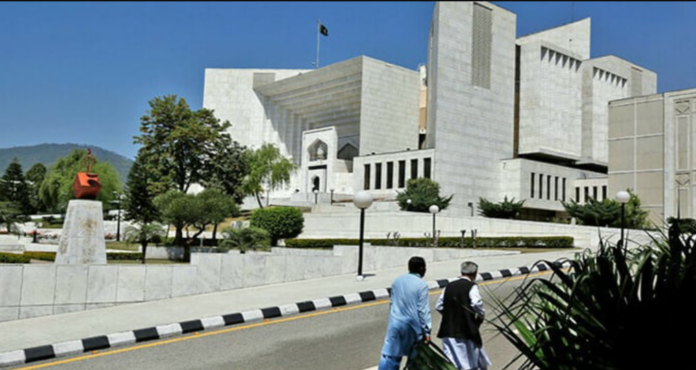

The Supreme Court of Pakistan has established important legal principles regarding the transfer of property given as Haq Mehr (dower) in marriage cases. The ruling aims to clarify ownership rights in jointly inherited properties and prevent future legal disputes involving property mentioned in marriage agreements.
In a written judgment issued by Justice Shakeel Ahmad, the court stated that no co-owner of a jointly inherited property can transfer more property than the share legally belonging to them. The decision emphasized that inherited property rights of other legal heirs cannot be affected by unilateral claims made by one individual.
According to the judgment, a husband can only offer property as Haq Mehr to the extent of his legally owned share in a jointly inherited property. The court clarified that a claim of giving an entire house as Haq Mehr cannot override or diminish the legal rights of other co-sharers and heirs who also possess ownership interests in the property.
The ruling highlighted that disputes often arise when property included in a marriage contract is later found to be jointly owned or inherited by multiple family members. In such situations, transferring ownership beyond a person’s actual legal share creates conflicts among heirs and leads to lengthy litigation in courts.
To address this issue, the Supreme Court directed Nikah registrars and Nikah Khawans to verify ownership details of any property listed as Haq Mehr before recording it in the marriage contract. The court stressed that proper verification of ownership can help protect the rights of all parties involved and reduce unnecessary legal complications in the future.
In addition, the court ordered the inclusion of a separate column in the Nikahnama specifically related to ownership details of property being offered as Haq Mehr. The purpose of this new requirement is to ensure transparency and provide clear documentation regarding whether the property is fully owned, partially owned, inherited, or jointly shared.
Legal experts believe the decision could significantly improve clarity in marriage contracts and reduce property-related disputes arising after marriages or inheritance settlements. They say many families face prolonged court battles because ownership details of property mentioned in Nikahnamas are often unclear or improperly verified at the time of marriage.
The judgment also underlined the importance of protecting inheritance rights guaranteed under Pakistani law. By restricting individuals from transferring more than their legal share, the court reinforced the principle that the rights of co-heirs and family members cannot be ignored or unlawfully transferred through marriage agreements.
The Supreme Court dismissed a civil petition challenging the decision of the Peshawar High Court, thereby upholding the lower court’s ruling. The apex court’s decision now serves as an important legal precedent for similar cases involving Haq Mehr and inherited property disputes.
Furthermore, the Supreme Court directed that copies of the judgment be sent to the chief secretaries of all provinces for necessary action and implementation. This step indicates the court’s intention for the ruling to be applied consistently across the country.
Legal analysts say the ruling may lead to reforms in Nikah registration procedures and encourage greater scrutiny of property documents before marriage contracts are finalized. It may also increase awareness among families regarding the legal implications of offering inherited or jointly owned property as Haq Mehr.
The decision has been widely viewed as an important move toward protecting property rights, ensuring legal transparency, and minimizing avoidable litigation related to family inheritance and marriage agreements. Experts believe the judgment could help create a more organized and legally secure process for documenting property-related Haq Mehr arrangements in Pakistan.
By clearly defining the legal boundaries surrounding jointly owned property and Haq Mehr, the Supreme Court has provided guidance for courts, marriage registrars, legal practitioners, and families dealing with property transfers in marriage contracts. The ruling is expected to play a significant role in shaping future legal interpretations of inheritance and marital property rights in the country.