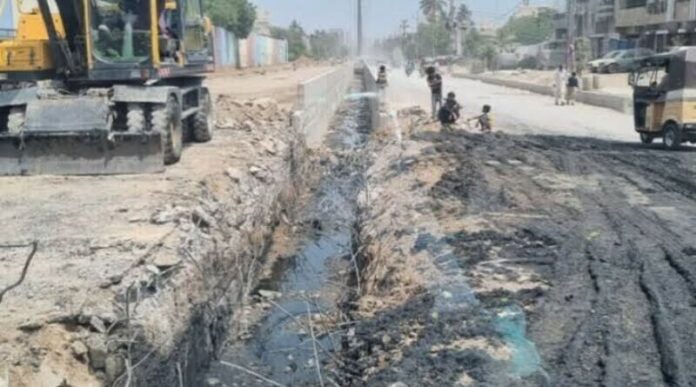

The Punjab government has taken an important step to protect newly built roads across the province. Chief Minister Maryam Nawaz Sharif has ordered a ban on digging or causing any kind of damage to newly constructed roads. The decision aims to stop a common problem where a road is built or repaired and is then dug up again after a short time for sewerage, water, electricity, gas, or other development work.
The Chief Minister has directed all relevant government departments to work together and properly plan their projects before new roads are constructed. The purpose is to make sure that roads are not repeatedly damaged due to poor coordination between different departments.
The order was issued during a special meeting held to review development projects funded through the Punjab government’s Own-Source Revenue (OSR) programme. The meeting looked at development schemes in different parts of the province, including Lahore, Multan, Bahawalpur, Sahiwal, Rawalpindi, and Faisalabad.
The new decision is expected to help protect public money, reduce inconvenience for citizens, and improve the overall condition of roads across Punjab.
Roads Will Not Be Dug Up Again and Again
In many cities, people often see newly repaired or newly constructed roads being dug up again within a short period. In some cases, one department completes road work, while another department later starts digging for sewerage lines, water pipelines, electricity cables, or other underground work.
This process damages the new road and creates serious problems for the public. Traffic becomes slow, dust spreads into nearby areas, and shopkeepers and residents face difficulties. After the road is dug up, it may also take a long time to be repaired properly.
Chief Minister Maryam Nawaz has now ordered government departments to coordinate their work so that such repeated digging can be avoided. Departments will be expected to plan their underground work before the construction or repair of roads is completed.
The decision is aimed at ending the waste of public resources and improving the quality and life of development projects.
Better Planning Between Government Departments
The Punjab government wants different departments to communicate and work together before starting major development projects. Instead of completing work separately, departments will need to coordinate their plans so that roads are not repeatedly damaged.
For example, if a road is scheduled to be rebuilt, departments responsible for sewerage, drainage, electricity, water supply, and other services should complete their necessary work before the final road surface is laid.
This can save time and money while also reducing problems for the public.
Better coordination can also help ensure that development projects are completed in a proper order. Roads can be constructed only after important underground work is finished, reducing the need for future digging.
Manholes and Sewerage Covers Must Match Road Level
The Chief Minister also issued instructions regarding manholes and sewerage covers. These covers must remain level with the surface of the road.
Uneven manholes and damaged covers can create problems for drivers and motorcyclists. They can also damage vehicles and increase the risk of accidents, especially on busy roads and highways.
Keeping these covers at the correct level can improve road safety and provide a smoother driving experience. The government wants newly constructed roads to be properly completed rather than leaving behind uneven surfaces and poorly managed sewerage covers.
This instruction shows that the focus is not only on building more roads but also on improving the quality and safety of road infrastructure.
Proper Drainage for Every New Road
Another important instruction given during the meeting was related to roadside drainage. The Chief Minister directed that every new road should have a proper drainage system.
Poor drainage can seriously damage roads, particularly during the monsoon season. When rainwater remains on roads for a long time, it can weaken the surface and lead to cracks and potholes. Standing water also creates difficulties for traffic and pedestrians.
Proper drainage can help rainwater move away from the road quickly. This can protect the road surface and increase its life.
The government has therefore stressed that drainage should be considered an important part of every road project. Roads should not simply be built without planning how rainwater will be managed.
Road Signs and Lane Markings Will Also Be Required
The Punjab government is also focusing on better road management and safety. The Chief Minister directed authorities to ensure that new roads have proper road signs and lane markings.
Clear lane markings can help drivers understand where they should drive. They can also make roads safer by improving traffic movement.
Road signs are equally important, especially in busy cities and areas with heavy traffic. Signs can guide drivers, provide warnings, and help reduce confusion on the road.
The decision means that road construction will not only focus on laying asphalt or building a smooth surface. Important safety features will also need to be included as part of the complete road project.
Focus on Dust-Free Development Work
Authorities were also directed to keep road development projects as dust-free as possible. Construction and excavation work can create large amounts of dust, especially in crowded areas.
Dust can cause problems for nearby residents, shopkeepers, pedestrians, and drivers. It can also affect people travelling through construction zones.
The government wants relevant authorities to take proper steps during development work to reduce dust and keep project areas cleaner.
This is particularly important in large cities where road construction often takes place close to markets, residential areas, schools, offices, and hospitals.
Shopkeepers Cannot Be Charged Without Approval
During the meeting, the Chief Minister also directed officials not to collect any charges from shopkeepers without prior approval.
Development and beautification projects can sometimes affect local businesses. Shopkeepers may face difficulties due to road construction, blocked access, dust, or changes in the surrounding area.
The Chief Minister’s direction means that government officials cannot collect charges from traders without proper approval.
This instruction is expected to protect shopkeepers from unnecessary demands and improve accountability in government departments.
Separate Timelines Required for Development Projects
The Punjab government has also asked for separate timelines for all development schemes.
A clear timeline can help authorities monitor the progress of a project and determine whether work is being completed on schedule. It can also make it easier to identify delays and hold the responsible departments accountable.
Many development projects take longer than expected, creating inconvenience for the public and increasing costs. By setting proper timelines, the government hopes to improve project management.
The Chief Minister wants development work to move forward in an organised and timely manner.
Major Development Schemes Approved Across Punjab
The meeting reviewed and approved several development projects under the Own-Source Revenue programme.
These schemes include the construction and widening of dual carriageways, road carpeting, footpaths, cat’s eyes, kerb stones, lane markings, and roadside drainage systems.
Other projects related to sewerage, city beautification, sports facilities, and the solarisation of disposal stations were also approved.
The projects are planned for different districts and cities across Punjab. The aim is to improve public infrastructure and provide better facilities to residents.
Lahore Gets Major Beautification Projects
Several projects were approved for Lahore, including beautification work on major roads.
The schemes cover roads such as Egerton Road, Lytton Road, Davis Road, Lower Mall, Lawrence Road, Queen’s Road, and Bank Road, among others.
Lakshmi Chowk is also expected to be included in beautification work. Plans include artwork on the Metro track and its supporting pillars.
The government also discussed improving the appearance of the Orange Line track along Multan Road. Cleaning, plantation, and mural painting have been planned to make the area more attractive.
Projects for the construction and widening of rural roads on the outskirts of Lahore were also approved.
Development Work in Kasur and Sheikhupura
In Kasur, several schemes related to road construction, road widening, solar streetlights, and beautification were approved.
Development projects in Sheikhupura were also discussed. These include work related to sewerage, pumping stations, road construction, and road widening.
Such projects are aimed at improving both urban and rural infrastructure.
Multan Division Receives 42 Projects
Multan division received a major share of approved development schemes. A total of 42 projects were approved for the division.
These projects include dual carriageways, lane markings, drainage work, and sewerage schemes.
Development work is also planned for suburban areas and other cities and towns, including Khanewal, Kabirwala, Mian Channu, Jahanian, and Talumba.
The projects are expected to improve road networks and public facilities in the region.
Projects Approved for Vehari and Lodhran
Six development schemes were approved for Vehari. These include road-related projects and the solarisation of a disposal station.
In Lodhran, six projects were approved. The schemes include a children’s park, streetlights, road construction, road widening, and beautification work.
These projects show that the government is focusing on different areas rather than only major cities.
More Projects for South Punjab
The meeting also approved 12 projects in Bahawalpur, three in Rahim Yar Khan, and eight in Bahawalnagar.
The development plans include road construction, improvement work, beautification, and other public facilities.
South Punjab has a large population spread across many cities and towns, making better roads and infrastructure important for travel, business, and daily life.
Development Plans for Sahiwal Division
In Sahiwal, 13 development schemes were approved.
Four projects were approved for Okara, while 14 schemes received approval in Pakpattan.
These projects include road beautification, construction, widening, solar streetlights, and sports facilities.
The government aims to improve the condition of public infrastructure in these areas while also providing better recreational facilities.
Faisalabad and Nearby Districts
In Faisalabad, 13 projects related to road construction and repair were approved.
Six schemes were approved for Chiniot, while Jhang received approval for 18 projects.
Development plans in Toba Tek Singh include a shopping arena and a food street. A sports stadium and badminton stadium are also planned in Kamalia.
These projects are expected to improve both public facilities and business opportunities in the concerned areas.
Projects Approved in Rawalpindi Division
The meeting also approved several schemes for Rawalpindi division.
Thirteen projects were approved in Rawalpindi district, while six were approved for Attock.
Murree received four development schemes. Seven projects each were approved for Jhelum and Chakwal.
The Chief Minister also asked for details of projects planned for Hasan Abdal, Hazro, Kallar Kahar, and other tehsils.
A Step Towards Better Road Management
The ban on digging newly constructed roads is an important decision for Punjab. If properly implemented, it can prevent the unnecessary destruction of roads and save large amounts of public money.
The success of the decision will depend on strong coordination between government departments. Departments responsible for water, sewerage, electricity, gas, and other services will need to plan their work before road construction is completed.
The government is also placing greater focus on drainage, road markings, signs, level manholes, dust control, and project timelines.
Together, these steps can improve the quality of roads and make development work more useful for the public.
For ordinary citizens, the biggest benefit could be fewer roads being dug up again and again. Smooth and properly maintained roads can make travel easier, reduce traffic problems, and improve daily life in cities and towns across Punjab.
The Punjab government has made it clear that newly constructed roads should be protected from unnecessary excavation and damage. The new policy could help create a more organised approach to development, where government departments work together before roads are completed.
If the instructions are followed effectively, the province may see better roads, improved public facilities, reduced waste of resources, and fewer difficulties for residents, drivers, and businesses. The move also sends a strong message that development projects should be planned properly from the start instead of being repaired repeatedly after completion.
Read Also: check