
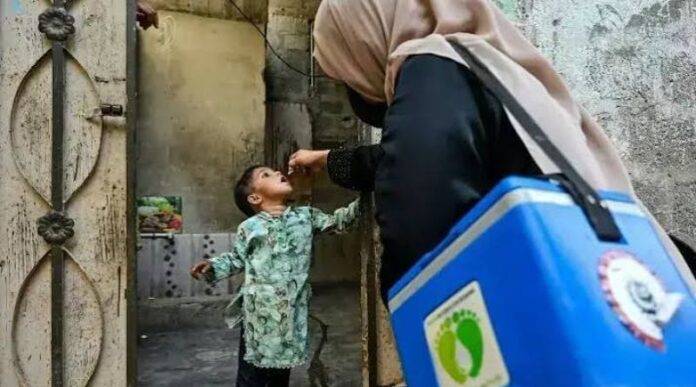

Pakistan’s national polio tally has increased to four after health authorities confirmed another polio case in Khyber Pakhtunkhwa (KP). The latest case has raised fresh concerns about the spread of the virus and the challenges faced by the country in its long-running fight to eliminate polio.
Polio remains one of the major public health concerns in Pakistan. Although the disease can be prevented through vaccination, children who are not fully vaccinated remain at risk of infection. Health officials continue to carry out vaccination campaigns across the country to protect children and stop the virus from spreading.
The confirmation of another case in KP has once again highlighted the need for parents to make sure their children receive all recommended doses of the polio vaccine.
New Polio Case Reported in Khyber Pakhtunkhwa
The latest case was reported in Khyber Pakhtunkhwa, where health teams have faced several difficulties in reaching every child during vaccination campaigns. The province has remained one of the key areas of concern in Pakistan’s efforts to control polio.
Following the confirmation of the new case, the national number of polio infections has reached four. Health authorities are now working to understand how the virus reached the affected child and whether there is any risk of further transmission in the area.
Officials normally conduct detailed investigations after a polio case is identified. These investigations can include checking the child’s vaccination history, collecting samples, and testing sewage from nearby locations. Such steps help health teams determine whether the virus is still circulating in the community.
The latest development is being closely watched because even a single confirmed case can indicate that the virus may still be present in other areas without being detected.
Why KP Remains a Major Focus
Khyber Pakhtunkhwa has been an important part of Pakistan’s polio eradication efforts for many years. The province has a large population spread across cities, towns, villages, and remote areas. Reaching children in some of these locations can be difficult for vaccination teams.
Movement between different areas can also make it harder to track the spread of the virus. When people travel from one district to another, the virus can potentially move with them if children are not protected through vaccination.
Security concerns have also created problems for health workers in some parts of the province. Polio workers have at times faced difficult conditions while carrying out door-to-door vaccination activities.
Despite these challenges, vaccination teams continue their work to reach children and provide them with the required doses.
Four Cases Raise Fresh Concerns
The increase in the national tally to four cases is a reminder that Pakistan’s fight against polio is not over. The country has made progress in reducing the number of cases over the years, but the continued detection of infections shows that the virus still poses a threat.
Polio spreads mainly through contaminated water and food and can move quickly in communities where sanitation is poor and vaccination coverage is low. In many cases, an infected person may not show serious symptoms, making it difficult to identify the virus based only on illness.
This is why health authorities depend heavily on vaccination campaigns and environmental testing. Sewage samples can sometimes detect the presence of poliovirus even before a new child is officially diagnosed.
When the virus is found in sewage, health officials can take steps to increase vaccination efforts in the affected area.
Vaccination Remains the Best Protection
Health experts have repeatedly stressed that vaccination is the most effective way to protect children from polio. The vaccine helps build immunity and reduces the chances of children becoming infected.
Children need to receive multiple doses during vaccination campaigns to ensure strong protection. Parents are therefore encouraged to allow polio workers to vaccinate their children whenever teams visit their homes.
Some parents may believe that their children do not need additional doses if they have already received routine vaccinations. However, repeated polio vaccine doses are an important part of Pakistan’s eradication programme, particularly in areas where the virus continues to circulate.
Health workers also encourage parents to keep track of their children’s vaccination records and follow advice given by medical professionals.
The Importance of Polio Campaigns
Pakistan regularly conducts nationwide and regional polio vaccination campaigns. During these campaigns, teams visit homes, schools, public places, and other locations to reach children under five years of age.
The aim is to make sure that no child is left without protection.
Door-to-door vaccination is especially important because some families may live far from health centres. Vaccination teams can reach children directly at their homes, making it easier to provide the vaccine to a large number of children.
However, the success of these campaigns depends on cooperation from parents and communities. If families refuse vaccination or children are repeatedly missed, gaps in protection can remain.
These gaps can give the virus an opportunity to survive and spread.
Community Support Is Essential
The government and health departments cannot eliminate polio alone. Community support is equally important. Parents, teachers, religious leaders, local elders, doctors, and community organisations all have a role to play.
Parents need to understand why vaccination is important and make sure their children receive the recommended doses. Community leaders can help explain the benefits of vaccination and address concerns among families.
Teachers can also help spread awareness about polio and encourage parents to cooperate with health teams.
In areas where people have concerns about vaccination, trusted local figures can play an important role in helping families understand the facts.
Building trust between communities and vaccination teams is one of the most important parts of the eradication effort.
Health Workers Continue Their Difficult Job
Polio workers across Pakistan continue to perform their duties in challenging conditions. Many teams travel from house to house during vaccination campaigns, often working for long hours to make sure children are protected.
Their work is especially important in remote areas where access to health facilities can be limited.
Vaccination teams also help identify children who may have missed previous doses. This allows health authorities to improve vaccination coverage and reduce the number of children who remain vulnerable.
The government and health authorities have repeatedly called for greater cooperation with these workers.
Why Every Child Matters
Polio eradication depends on reaching every child. Even if vaccination coverage is high, unvaccinated children can provide an opportunity for the virus to continue circulating.
For this reason, health officials focus heavily on children under five years of age. This age group is particularly important because young children may have lower immunity if they have not received all required doses.
A missed child can become a potential weak point in an otherwise strong vaccination campaign.
Health teams therefore use different methods to find children who were not vaccinated during previous rounds. These efforts include repeated household visits and checks in high-risk communities.
Environmental Surveillance Helps Detect the Virus
Environmental surveillance is another important tool in Pakistan’s polio programme. Health authorities collect sewage samples from different locations and test them for poliovirus.
This method can provide an early warning that the virus is present in an area.
A positive environmental sample does not always mean that a child has developed polio. However, it shows that the virus may be circulating and that additional vaccination efforts may be needed.
This system helps authorities identify areas where the virus may be spreading silently.
By combining environmental testing with vaccination campaigns and investigations of confirmed cases, health officials can better understand the movement of the virus.
Pakistan’s Long Fight Against Polio
Pakistan has spent many years trying to eliminate polio. The country has introduced repeated vaccination campaigns, strengthened disease monitoring, and expanded public awareness programmes.
The goal has always been to stop the virus completely and ensure that future generations of Pakistani children grow up without the threat of polio.
Progress has been made, but the appearance of new cases shows that the final stage of eradication can be particularly difficult.
The presence of the virus in certain areas means vaccination efforts cannot be reduced. Instead, health authorities need to continue monitoring communities and responding quickly whenever the virus is detected.
Parents Have a Key Role
Parents are at the centre of the fight against polio. When vaccination teams arrive, families should cooperate and allow eligible children to receive the vaccine.
Parents should also seek medical advice if they have questions or concerns about vaccination.
It is important to understand that polio can cause permanent disability. In serious cases, the disease can also be life-threatening. Because there is no cure for polio once paralysis develops, prevention through vaccination is extremely important.
Protecting children through vaccination is therefore not only a personal responsibility but also a way to protect the wider community.
What the Latest Case Means
The latest case in KP and the rise of the national tally to four show that Pakistan still has work to do before it can completely eliminate polio.
The new case will likely lead to increased monitoring and vaccination activities in the affected area. Health authorities will also need to check whether the virus has spread to other communities.
The situation highlights the importance of quick action. When the virus is detected early, vaccination teams have a better chance of stopping it before it reaches more children.
The Road Ahead
Pakistan’s fight against polio requires continued effort from the government, health workers, parents, and communities. The country cannot afford to become less active simply because the number of cases has fallen compared with previous years.
Every confirmed infection should be treated seriously.
Health authorities need to maintain strong surveillance, improve vaccination coverage, support frontline workers, and ensure that children in difficult-to-reach areas are not missed.
At the same time, public awareness must remain a priority. Families need clear and simple information about the importance of vaccination and the risks posed by polio.
The latest case reported in Khyber Pakhtunkhwa is a reminder that the virus can return whenever vaccination gaps remain.
Conclusion
Pakistan’s national polio tally has reached four following the confirmation of a new case in Khyber Pakhtunkhwa. The development has renewed attention on the country’s efforts to eliminate the disease and protect children from permanent disability.
While vaccination campaigns have helped reduce polio cases, the latest infection shows that the virus has not yet been completely stopped.
Continued vaccination, strong disease monitoring, environmental testing, and community cooperation will remain essential. Parents can make an important contribution by ensuring their children receive every recommended polio vaccine dose.
The goal of a polio-free Pakistan can only be achieved when every child is protected and no area is left behind. The latest case is therefore not only a health warning but also a reminder that the national effort against polio must continue until the virus is completely eliminated.
Read Also: check