
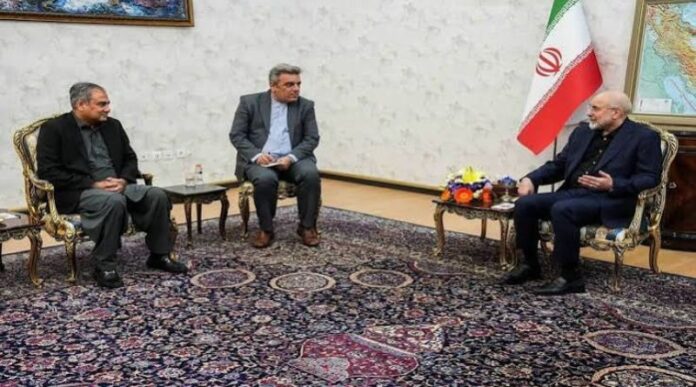

Pakistan’s Interior Minister Mohsin Naqvi has reached Iran for a two-day visit aimed at discussing bilateral relations, regional developments and matters of mutual interest with senior Iranian officials.
According to Iranian media reports, Naqvi arrived in Tehran on Monday, September 21, where he is expected to hold meetings with the Iranian leadership and other senior officials. His visit comes at a time when tensions in the region remain high and several diplomatic efforts are underway to reduce the situation.
The visit is part of Pakistan’s continued engagement with Iran. Pakistani officials have remained in contact with Tehran as Islamabad tries to support dialogue and maintain communication with different sides during the ongoing regional crisis.
Iranian Foreign Ministry spokesperson Esmaeil Baghaei had earlier said that Naqvi’s visit would mainly focus on bilateral issues and follow-up on understandings already reached between Pakistan and Iran at the leadership level.
Naqvi Arrives in Tehran
Mohsin Naqvi departed for Iran on Monday and is scheduled to stay in the country for two days. During his visit, he is expected to meet important Iranian officials and discuss issues affecting relations between the two neighbouring countries.
The visit has attracted attention because of the wider regional situation. Iran remains involved in a serious conflict and diplomatic standoff with the United States, while tensions have also spread to other parts of the Middle East.
Despite the timing, Iranian officials have stressed that Naqvi’s trip should mainly be seen as a bilateral visit.
Tasnim News Agency reported that Naqvi’s visit was not connected with the exchange of messages between Iran and the United States. The Iranian outlet said the Pakistani minister was neither carrying a message to Iran from Washington nor expected to take an Iranian message back to the US.
This clarification came after reports and speculation that Pakistan could once again play a role in communication between Tehran and Washington.
Focus on Pakistan-Iran Relations
Pakistan and Iran share a long border and have strong historical, cultural and religious links. Both countries have also continued efforts to improve economic and security cooperation.
Iranian officials have recently described relations with Pakistan as positive and growing. Tehran has also highlighted the importance of its neighbourhood policy and the shared links between Iran and neighbouring countries.
During Naqvi’s visit, officials are expected to review previous discussions between the two countries and look at ways to strengthen cooperation.
The talks could cover a range of subjects, including regional security, border matters, trade, economic cooperation and other issues of mutual interest.
The Iranian Foreign Ministry has said that the visit will follow up on understandings previously reached between the leaderships of Pakistan and Iran.
This means the trip is not only about the current regional crisis. It is also connected with Pakistan and Iran’s broader efforts to maintain and improve their bilateral relationship.
Regional Situation Also on the Agenda
Although Iran has described the visit as bilateral, the wider regional situation is likely to remain an important part of discussions.
The Middle East has faced continued tension following the conflict involving Iran, the United States and Israel. The situation has also affected important shipping and energy routes.
One of the biggest concerns is the Strait of Hormuz, a key waterway through which a major share of global oil and gas shipments passes.
Iranian officials have recently said that their conditions for reopening the Strait have been communicated to the United States through mediators.
Iranian Parliament Speaker Mohammad Bagher Ghalibaf said that Tehran’s conditions had been clearly conveyed to the other side through mediators. He also linked the reopening of the waterway to the fulfilment of Iranian conditions and US commitments.
The issue is important for Pakistan because developments in the Gulf can directly affect energy supplies, shipping costs and fuel prices in the region.
Pakistan imports a large amount of energy, so any major disruption to regional shipping routes can create pressure on the country’s economy and consumers.
Pakistan’s Diplomatic Engagement
Pakistan has been trying to keep communication channels open during the regional crisis.
Mohsin Naqvi has visited Tehran several times in recent months as part of Pakistan’s diplomatic engagement with Iran. According to Anadolu Agency, Monday’s trip is his sixth visit to Tehran since the conflict began in February.
Naqvi has also been involved in discussions alongside Field Marshal Asim Munir as Pakistan has maintained contacts with both Iran and the United States.
Earlier in August, Naqvi travelled to Tehran with the army chief, where discussions were held with Iranian officials about the regional situation and efforts to reduce tensions. Reuters reported at the time that Pakistan and Iran had made progress in discussions aimed at de-escalating the conflict.
These contacts show that Islamabad has continued to engage with Tehran even as the wider situation has remained difficult.
Houthi Attacks Add to Regional Concerns
Another issue that may come up during Naqvi’s meetings is the recent escalation involving Yemen’s Houthi movement.
According to Pakistani government sources cited by Anadolu, discussions during the latest visit are expected to include recent Houthi attacks targeting Saudi Arabia’s oil and economic infrastructure.
The attacks have added another layer to an already complicated regional situation.
Pakistan has expressed concern that further escalation in Yemen could make efforts to resolve the wider crisis more difficult.
For Islamabad, stability in the Gulf and surrounding areas is important because Pakistan has close relations with countries across the region. Millions of Pakistanis also work in Gulf countries, while Pakistan has strong economic, trade and energy links with several states in the Middle East.
Any major increase in regional instability could therefore have an impact beyond the countries directly involved in the conflict.
No Specific US Message, Iran Says
Before Naqvi’s departure, there was speculation that he might carry a message from Washington to Tehran.
Iranian Foreign Ministry spokesperson Esmaeil Baghaei rejected the idea that there was any confirmed US proposal being delivered through Naqvi.
He said the Pakistani minister’s visit was within the framework of bilateral discussions between Pakistan and Iran. Iranian officials also said they had no information showing that Naqvi would carry a specific US message or proposal.
Tasnim later reported that Naqvi’s trip had no connection with the exchange of messages between Iran and the US. It said the discussions were expected to focus on bilateral relations and cooperation.
This clarification is significant because Pakistan has previously been involved in diplomatic efforts aimed at bringing Iran and the United States closer to negotiations.
However, the latest statements from Tehran indicate that Naqvi’s official purpose for this visit is focused on Pakistan-Iran relations.
Importance of the Visit for Pakistan
Pakistan has a direct interest in maintaining stable relations with Iran.
The two countries share a border stretching over several hundred kilometres, and security along the border is an important issue for both sides.
Trade between Pakistan and Iran is also an area that both countries have been trying to expand. Better economic cooperation could provide opportunities for businesses and border communities in both countries.
At the same time, security issues have sometimes created difficulties in bilateral relations. Islamabad and Tehran have repeatedly stressed the importance of cooperation to address problems along their shared border.
Naqvi’s meetings provide another opportunity for both sides to discuss these matters at a senior level.
The visit also allows Pakistan to communicate its concerns directly to Iranian officials while learning more about Tehran’s position on regional developments.
Energy and Trade Concerns
The regional crisis has created serious concerns for global energy markets.
Any disruption in major shipping routes around the Gulf can affect the movement of crude oil, petroleum products and other goods. Higher shipping and insurance costs can also increase the cost of imported products.
For Pakistan, this issue is particularly important because changes in global oil prices can affect local fuel prices and transportation costs.
A prolonged crisis could put additional pressure on economies across the region.
This makes diplomatic efforts important for countries such as Pakistan that are not directly part of the conflict but can still feel its economic effects.
During Naqvi’s Tehran visit, Pakistan is expected to remain focused on protecting its national interests while encouraging stability in the region.
Pakistan and Iran Seek Stronger Cooperation
The two neighbouring countries have repeatedly expressed their desire to strengthen their relationship.
Iran has said that its relations with Pakistan have improved in recent months. Tehran has also highlighted the cultural and historical connections between the two countries.
Pakistan, meanwhile, has continued to engage with Iran at different levels.
Senior-level visits and meetings can help both countries address pending issues and build greater trust.
The latest visit by Naqvi comes as part of this continuing engagement.
It also gives Pakistani officials an opportunity to discuss developments that could affect both countries, including border security, trade, regional stability and the situation in the Gulf.
What Comes Next
The results of Naqvi’s meetings in Tehran will become clearer after his discussions with Iranian officials.
For now, Iranian authorities have made it clear that the visit is primarily focused on bilateral relations and cooperation.
At the same time, the timing of the trip means regional developments are likely to remain an important background issue.
Pakistan has repeatedly called for dialogue and peaceful solutions to regional conflicts. Its continued engagement with Iran reflects Islamabad’s effort to maintain communication during a difficult period.
The two-day visit could therefore help Pakistan and Iran review their existing cooperation while discussing new challenges created by the changing regional situation.
For Pakistan, maintaining good relations with Iran is important not only because of the shared border but also because of trade, security, energy and broader regional interests.
As Naqvi holds meetings in Tehran, attention will remain on what both sides say about bilateral cooperation and the wider situation in the Middle East.
For now, Iranian media and officials have indicated that the main purpose of the visit is Pakistan-Iran engagement rather than carrying a specific message between Tehran and Washington.
Read Also: check