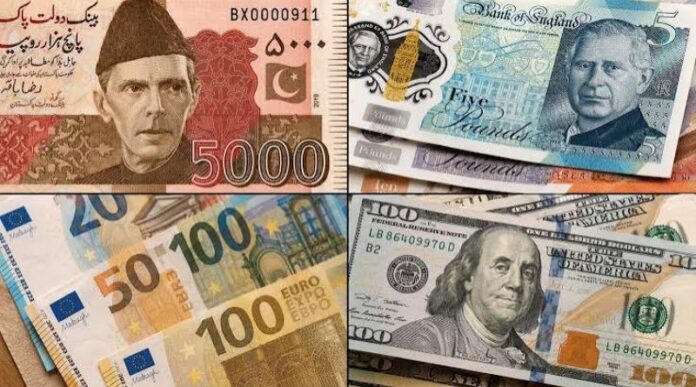

The British Pound and the Euro have recorded a noticeable decline against the Pakistani Rupee, with both major foreign currencies losing around Rs. 3 in value. The latest movement has attracted attention in Pakistan’s currency market as traders, businesses, overseas Pakistanis, and people planning foreign travel closely watch changes in exchange rates.
Currency rates in Pakistan can change frequently because they are affected by several local and international factors. Demand for foreign currency, imports, exports, remittances, global market conditions, and economic developments can all influence the value of the Pakistani Rupee. A small change in the exchange rate can also have an impact on businesses and individuals who deal with foreign currencies.
The recent fall in the Pound and Euro against the Pakistani Rupee means that people buying these currencies may now pay slightly less than before. At the same time, Pakistanis receiving payments in Pounds or Euros may get fewer rupees when they exchange their foreign currency.
Pound and Euro Decline Against Pakistani Rupee
The British Pound and Euro are among the most important foreign currencies used by Pakistanis for international payments, education, travel, business, and remittances. Their recent decline of around Rs. 3 against the Pakistani Rupee has created a noticeable change in the currency market.
The Pound is widely watched because the United Kingdom has strong links with Pakistan. Many Pakistani families have relatives living in the UK, while students, workers, businesses, and travelers regularly need British Pounds.
Similarly, the Euro is important for Pakistan because it is used in many European countries. Pakistanis traveling to Europe, studying there, or doing business with European companies often need Euros.
When these currencies lose value against the Rupee, the cost of buying them becomes slightly lower in local terms. However, the actual effect depends on the rate offered by banks, exchange companies, and the open market.
What Does a Rs. 3 Drop Mean?
A Rs. 3 decline may look small when considering only one unit of currency, but the impact becomes more visible when larger amounts are exchanged.
For example, a person purchasing £1,000 would see a difference of around Rs. 3,000 if the Pound falls by Rs. 3. Similarly, someone exchanging €1,000 could receive around Rs. 3,000 less when the Euro falls by the same amount.
The impact is also different for people depending on whether they are buying or selling foreign currency.
Someone who needs Pounds or Euros for travel may benefit from a lower exchange rate because the foreign currency becomes slightly cheaper in terms of Pakistani Rupees. On the other hand, overseas Pakistanis sending money back home may receive fewer Rupees for the same amount of foreign currency if the exchange rate has fallen.
Why Are Exchange Rates Changing?
Currency rates do not remain fixed. They move according to supply and demand as well as economic conditions in Pakistan and other countries.
When demand for a foreign currency increases, its value can rise against the Pakistani Rupee. When demand becomes weaker or the Rupee gains some strength, foreign currencies may lose value.
Several factors can influence these movements.
One major factor is the supply of foreign currency in Pakistan. Remittances from overseas Pakistanis are an important source of foreign exchange. Export earnings also bring dollars and other foreign currencies into the country.
At the same time, Pakistan needs foreign currency to pay for imports, debt obligations, energy purchases, machinery, and other international payments. Changes in these flows can affect the currency market.
Role of the Pakistani Rupee
The performance of the Pakistani Rupee is closely connected with the country’s overall economic situation. When market conditions improve and the supply of foreign currency increases, the Rupee can come under less pressure.
On the other hand, higher demand for foreign currency can put pressure on the local currency.
The State Bank of Pakistan and other financial institutions closely monitor developments in the foreign exchange market. Changes in monetary policy, foreign exchange rules, reserves, and economic conditions can influence market expectations.
For ordinary Pakistanis, these movements are often visible when they check exchange rates at banks or currency exchange companies.
Impact on Overseas Pakistanis
Millions of Pakistanis live and work outside the country, including in the United Kingdom and European countries. Their financial transactions are directly connected with currency exchange rates.
When the Pound or Euro becomes weaker against the Pakistani Rupee, families receiving remittances may get a smaller amount in Rupees for the same amount of foreign currency.
For example, if a person sends £500 to Pakistan, the amount received in Pakistani Rupees depends on the exchange rate at the time of conversion. Even a small change in the rate can affect the final amount received by the family.
This is why overseas Pakistanis often keep an eye on currency rates before sending money.
However, the rate shown in the market is not always the exact amount received by the sender or recipient. Banks and money transfer services may apply their own rates, fees, or charges.
Effect on Pakistani Travelers
The decline in the Pound and Euro can also be important for Pakistanis planning trips abroad.
Travelers need foreign currency for hotel bookings, transport, food, shopping, and other expenses. A lower exchange rate can reduce the Rupee cost of purchasing Pounds or Euros.
For someone planning a large trip, even a small movement in the exchange rate can make a difference to the total travel budget.
However, travelers should not make their plans based on a single day’s currency rate. Exchange rates can move again depending on market conditions.
It is also important to compare rates offered by different banks and exchange companies before buying foreign currency.
Impact on Students Studying Abroad
Foreign exchange rates are especially important for Pakistani students studying in the UK and Europe.
Students and their families often have to pay tuition fees, accommodation costs, food expenses, and other charges in foreign currencies. Because these expenses can be large, changes in the exchange rate can affect the total amount required in Pakistani Rupees.
A weaker Pound or Euro can make some foreign expenses slightly less expensive when converted into Rupees. However, students still face many other costs, and exchange rates can change before payments are made.
Families therefore need to plan carefully and keep some room in their budgets for currency movements.
Businesses Also Watch Currency Rates
Companies involved in international trade closely monitor foreign exchange rates. Pakistani businesses that import goods from Europe or the UK may need Euros or Pounds to make payments to foreign suppliers.
A decline in these currencies against the Rupee can reduce the Rupee cost of those payments, depending on the timing of the transaction.
Exporters can experience a different effect. Businesses earning foreign currency may receive fewer Pakistani Rupees when converting their foreign earnings if the foreign currency becomes weaker against the Rupee.
This makes currency movements an important part of financial planning for businesses.
What About Prices in Pakistan?
Changes in foreign exchange rates can sometimes influence local prices, especially when imported products or raw materials are involved.
Pakistan imports a wide range of products and materials from other countries. The cost of imports can be affected by currency rates, international prices, shipping costs, taxes, and other charges.
If a foreign currency becomes cheaper against the Rupee, the local cost of some imports may come under less pressure. However, this does not automatically mean that retail prices will immediately fall.
Businesses have other costs to consider, including transportation, taxes, storage, wages, and operating expenses.
Therefore, consumers should not expect every product connected to the UK or Europe to become cheaper simply because the Pound or Euro has fallen by Rs. 3.
Currency Market Remains Important
Foreign exchange rates are an important part of Pakistan’s economy. The country needs foreign currency to meet international payment requirements and maintain trade activities.
The Rupee’s performance is therefore closely followed by financial institutions, importers, exporters, investors, overseas Pakistanis, and ordinary consumers.
The latest decline in the Pound and Euro shows how quickly exchange rates can change. A difference of only a few Rupees can have a larger effect when large amounts of money are involved.
For this reason, people dealing with foreign currency should check the latest rates before making important financial decisions.
Open Market and Bank Rates Can Differ
One important point for consumers is that currency rates can vary between different sources.
The rate displayed online may not be exactly the same as the rate offered by a bank or exchange company. Buying and selling rates can also be different.
This difference is known as the spread between the buying and selling price.
For example, an exchange company may purchase a foreign currency from a customer at one rate and sell it at a slightly higher rate. Banks and other financial institutions may also have their own rates and charges.
People planning to exchange large amounts should therefore compare available rates and understand any additional fees before completing a transaction.
What Could Happen Next?
The future direction of the Pound and Euro against the Pakistani Rupee will depend on several factors. Global currency markets can change because of economic data, interest-rate decisions, inflation, political developments, and investor expectations.
Conditions in Pakistan will also remain important. Foreign exchange reserves, remittances, exports, imports, government policies, and overall economic activity can all affect the Rupee.
Because of these factors, a short-term fall does not necessarily mean that foreign currencies will continue to decline. Rates can move in either direction.
People should therefore treat daily exchange-rate changes as part of a wider market trend rather than assuming that one day’s movement will continue for a long period.
Why People Should Keep Checking Currency Rates
For people who regularly deal with foreign currency, checking the latest rate can help with financial planning.
Overseas Pakistanis can compare rates before sending remittances. Students can monitor currency movements when planning tuition or living expenses. Travelers can check rates before purchasing foreign currency, while businesses can use current rates when preparing international payments.
Even for people who do not regularly exchange foreign currency, major changes can eventually affect the prices of imported goods and services.
The recent Rs. 3 decline in the Pound and Euro is therefore relevant to more than just currency traders.
Final Thoughts
The British Pound and Euro have lost around Rs. 3 against the Pakistani Rupee, highlighting another movement in Pakistan’s foreign exchange market. While the change may appear small, it can become significant when larger amounts of money are exchanged.
The impact will vary from person to person. Travelers and students buying foreign currency may find a lower exchange rate helpful, while overseas Pakistanis receiving remittances may see a smaller Rupee value for the same amount of Pounds or Euros.
Businesses involved in imports and exports will also continue to monitor these movements as part of their financial planning.
Currency rates can change quickly, so the latest market information remains important. The Pound and Euro may move again depending on local economic conditions and developments in international financial markets.
For Pakistanis dealing with foreign currencies, the key point is to check current buying and selling rates, compare available options, and consider exchange charges before making a transaction. A small change in the exchange rate can make a meaningful difference when the amount involved is large.
Read Also: check