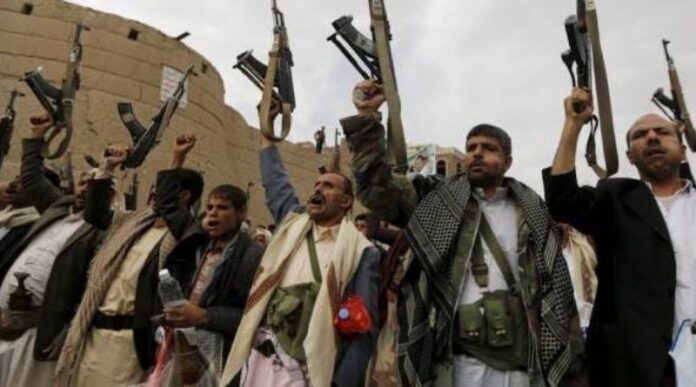

The question of whether Pakistan should formally declare Yemen’s Houthi movement a terrorist organisation has gained fresh attention as tensions in the Middle East continue to rise. The issue has become more important for Pakistan because the Houthis have carried out attacks on Saudi Arabia and commercial shipping in the Red Sea, while Islamabad has repeatedly condemned these actions.
Pakistan has not formally declared the Houthis a terrorist organisation. However, its recent statements have become increasingly strong. The government has condemned Houthi attacks on Saudi territory, commercial ships and, most recently, an attempted drone attack targeting the Holy City of Makkah. Pakistan has also warned that any attack on Pakistani-flagged vessels or its maritime interests would be treated as a serious threat to national security.
This has raised an important policy question: would formally designating the Houthis as terrorists help Pakistan protect its security interests, or could such a move create new diplomatic and regional challenges?
Pakistan’s Position on the Houthis
Pakistan has consistently criticised Houthi attacks against Saudi Arabia and commercial shipping. In July 2026, the Foreign Office said that continued Houthi threats against Saudi Arabia and ships in the Red Sea were a threat to regional security, freedom of navigation and global trade. Islamabad also said that threats against commercial shipping were unacceptable and against established principles of international law.
At the same time, Pakistan has continued to support dialogue and diplomacy. The government has repeatedly called for restraint from all sides and has maintained communication with countries involved in the wider Middle East crisis.
This position shows that Pakistan is strongly opposed to Houthi attacks, but it has so far stopped short of announcing a formal terrorist designation.
The distinction is important. A government can condemn an armed group’s actions, impose restrictions, support international action against it or respond to attacks without necessarily giving the group a specific legal terrorist designation under domestic law.
Why the Issue Has Become More Serious
The situation has changed significantly in recent months.
The Houthis have been accused of carrying out attacks against ships in the Red Sea and attacks against Saudi targets. These developments have created concerns about international trade because the Red Sea is an important route for ships travelling between Asia, Europe and other major markets.
Pakistan has a direct interest in the safety of this route. Pakistani nationals work on commercial ships, Pakistani businesses depend on international trade, and the country has important economic and diplomatic ties with Gulf states.
In August 2026, Pakistan condemned a Houthi attack on a non-combatant commercial vessel in the Red Sea. According to Pakistan’s Foreign Office, three Pakistani nationals were killed and another Pakistani citizen was injured in the incident. Islamabad said such attacks put innocent lives at risk and threatened maritime security and freedom of navigation.
The issue became even more sensitive in September when Pakistan condemned an attempted Houthi drone attack targeting Makkah. The Pakistani government described the incident as a serious threat to Saudi Arabia and the security of the Holy Mosques.
These developments have increased pressure for Pakistan to consider whether its current policy is sufficient.
What Would a Terrorist Designation Mean?
A terrorist designation is more than a political statement. It can create legal and financial consequences for an organisation and people linked to it.
Depending on the country’s laws, a terrorist designation can lead to restrictions on financial transactions, fundraising, travel, assets and other forms of support. It can also make cooperation with the organisation legally difficult or prohibited.
For Pakistan, such a decision would therefore require careful consideration of its domestic laws, foreign policy and national security interests.
The legal process also matters. Different countries use different systems for designating terrorist organisations. For example, India has stated that terrorist designations are handled under its Unlawful Activities Prevention Act and considered by the relevant government departments.
Pakistan would similarly need to consider its own legal framework before taking such a step.
The Argument for a Formal Designation
Supporters of a tougher policy could point to the nature of recent Houthi attacks.
The movement has been accused of targeting commercial vessels and threatening maritime routes. Pakistan itself has described such attacks as a threat to international shipping and global trade.
The deaths of Pakistani nationals in the August 2026 Red Sea incident provide another reason for concern. For Islamabad, protecting Pakistani citizens and commercial interests is a central part of its foreign and national security policy.
A formal designation could also send a clear message that attacks against civilians, commercial shipping and important international routes are not acceptable.
Pakistan has already taken strong positions against militant organisations in other parts of the region. In 2025, the government welcomed the United States’ designation of the Balochistan Liberation Army and Majeed Brigade as terrorist organisations.
Supporters of a Houthi designation could therefore argue that a similar approach would provide a clearer legal and diplomatic position.
Possible Diplomatic Challenges
However, declaring the Houthis terrorists could also create diplomatic complications.
Pakistan shares a border with Iran and has repeatedly tried to maintain working relations with Tehran. The Houthis are widely described by international governments and media as being backed by Iran, although the exact nature and level of that support is part of a broader regional dispute.
Pakistan has continued diplomatic engagement with Iran even while condemning Houthi actions.
In July 2026, for example, Pakistan said it was continuing diplomatic efforts and dialogue in an attempt to prevent a wider regional conflict. The Iranian Interior Minister also visited Pakistan during that period and held meetings with senior Pakistani officials.
A formal terrorist designation could therefore affect Pakistan’s ability to maintain its current diplomatic balance.
This is particularly important because Islamabad has tried to avoid becoming directly involved in the wider confrontation between Iran, Saudi Arabia and other regional powers.
Pakistan and Saudi Arabia
Pakistan’s relationship with Saudi Arabia is another major factor.
Saudi Arabia is an important partner for Pakistan in economic, political and security matters. Islamabad has repeatedly expressed support for Saudi Arabia’s sovereignty and territorial security.
In September 2026, Pakistan strongly condemned Houthi attacks against Saudi targets and reaffirmed its support for the Kingdom. Pakistan and Saudi Arabia are also part of a wider defence arrangement involving Turkey.
Pakistan’s Foreign Office has said that the country remains committed to its defence agreements with Saudi Arabia.
At the same time, Islamabad has not automatically treated every regional development as a reason for immediate military action. On September 10, Pakistani officials said that no military response had been discussed under the new defence pact following Houthi attacks on Saudi Arabia.
This shows the difference between supporting a partner diplomatically and taking additional legal or military steps.
The Humanitarian Question
Another issue Pakistan would need to consider is the humanitarian situation in Yemen.
Yemen has experienced years of conflict, and millions of people have faced serious economic and humanitarian problems.
Any sanctions or restrictions connected to a terrorist designation could have effects beyond the leadership of the Houthi movement. For this reason, governments that have previously designated or sanctioned the group have also considered ways to reduce the impact on ordinary Yemeni people.
The United States, for example, announced a terrorist designation for Ansarallah, commonly known as the Houthis, in January 2024. At the time, Washington also said it would take steps to protect humanitarian assistance and the supply of essential goods to Yemen.
This provides an example of one of the challenges Pakistan would face if it considered a similar legal step.
The Impact on Maritime Trade
The Red Sea issue is particularly important for Pakistan because attacks on ships can affect international trade even when Pakistan is not directly involved in the conflict.
Ships may be forced to take longer routes to avoid dangerous areas. Longer journeys can increase fuel costs, insurance expenses and delivery times. These additional costs can eventually affect businesses and consumers.
Pakistan has already made clear that attacks on Pakistani vessels or maritime interests would be treated as a serious national security issue.
In July, the Foreign Office said Pakistan reserved the right to take necessary measures, including lawful self-defence, to protect its maritime interests.
This means Pakistan has already established a position on protecting its ships without necessarily making a formal terrorist designation.
International Examples
The Houthis have been treated differently by different countries.
The United States has used terrorist-related designations against Ansarallah, while other countries have taken different approaches based on their own legal systems and foreign policy interests.
The international community has also focused heavily on protecting freedom of navigation and commercial shipping.
This difference in policy shows that there is no single international approach toward the Houthis. Each government considers its own security, legal obligations, diplomatic relationships and economic interests.
For Pakistan, any decision would therefore need to fit within its own laws and wider foreign policy.
What Pakistan Could Consider
If the debate continues, several factors are likely to remain important.
First is the safety of Pakistani citizens. The deaths and injuries of Pakistani nationals in the Red Sea have already shown that the conflict can directly affect Pakistanis.
Second is maritime security. Pakistan has a major interest in keeping international shipping routes safe and open.
Third is the country’s relationship with Saudi Arabia. Islamabad has repeatedly supported Riyadh’s security and territorial integrity.
Fourth is Pakistan’s relationship with Iran. Islamabad has continued to engage Tehran diplomatically even during periods of serious regional tension.
Fifth is the humanitarian situation in Yemen. Any legal or financial measures would need to consider their possible effect on ordinary civilians.
Finally, Pakistan would need to examine whether a formal designation would provide practical security benefits beyond the measures it is already taking.
A Decision With Wider Consequences
The question of whether Pakistan should declare the Houthis terrorists is therefore not limited to a single political statement.
It involves national security, international law, maritime trade, relations with Saudi Arabia, ties with Iran, the safety of Pakistani citizens and the humanitarian situation in Yemen.
Pakistan has already made its opposition to Houthi attacks clear. It has condemned attacks on Saudi Arabia, criticised threats to commercial shipping and expressed concern about attacks that could endanger Pakistani citizens and maritime interests.
At the same time, Islamabad has continued to call for dialogue and regional de-escalation.
The debate over a formal terrorist designation will therefore depend not only on how Pakistan views Houthi actions but also on what legal, diplomatic and security results such a designation would produce.
For Pakistan, the central questions are likely to be whether the designation would strengthen the country’s ability to protect its citizens and interests, how it would affect relations with regional countries, and what safeguards could be used to prevent harm to civilians.
As tensions in the Middle East continue, these questions are likely to remain part of Pakistan’s foreign policy debate. The country’s recent statements show a firm position against attacks on civilians and commercial shipping, while its continued diplomatic engagement shows that Islamabad is also trying to keep channels for dialogue open.
Read Also: Check