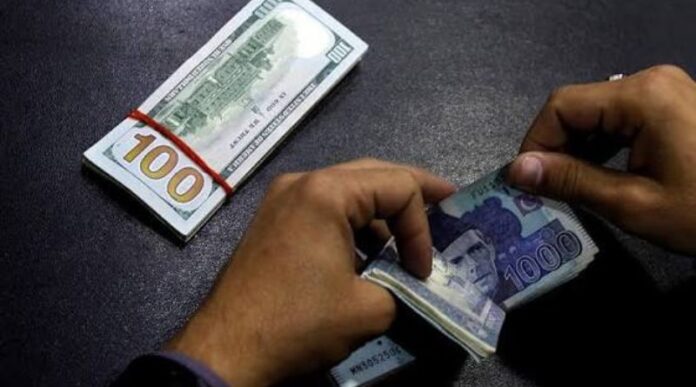

Pakistan’s government has prepared its borrowing plan for the financial year 2026-27 by using an exchange rate of around Rs. 290 against the US dollar. The assumption has been included in the government’s financial planning as it estimates how much money will be needed from local and foreign sources during the year.
The exchange rate is an important part of Pakistan’s borrowing calculations because a large portion of the country’s external debt is linked to foreign currencies, especially the US dollar. Any major change in the value of the rupee can therefore affect the amount Pakistan has to pay in rupee terms.
By setting the planning rate at Rs. 290 per dollar, the government has created a base for calculating its foreign borrowing, debt repayments, interest costs and other external financial requirements for FY27. However, the actual exchange rate during the year may remain different from this assumption depending on market conditions and economic developments.
Exchange Rate Assumption for FY27
The government uses different assumptions when preparing the annual budget and borrowing strategy. These assumptions include expected economic growth, inflation, interest rates, tax collection, foreign exchange earnings and the value of the Pakistani rupee.
For FY27, the Rs. 290 per dollar rate has been used as a planning benchmark. This does not necessarily mean that the rupee will remain at exactly Rs. 290 throughout the financial year. Instead, it provides the government with a working figure for its financial calculations.
Such assumptions are necessary because the government has to estimate its future expenses and revenues months before the financial year begins. Foreign loans and repayments are particularly difficult to calculate because they are made in currencies other than the rupee.
For example, if Pakistan has to repay a dollar-based loan, the government needs rupees to buy the required dollars. If the rupee becomes weaker, the same dollar payment becomes more expensive in local currency terms.
This is why the exchange rate used in the borrowing plan can have a direct impact on the country’s overall debt position.
Why the Rupee-Dollar Rate Matters
Pakistan has a large amount of external debt and other foreign currency obligations. These liabilities are mainly connected to international financial institutions, bilateral lenders, commercial banks and other external sources.
When the rupee loses value against the dollar, the rupee value of these liabilities increases even if the actual amount of dollars owed remains unchanged.
For instance, a payment of $1 billion would be equal to Rs. 290 billion at an exchange rate of Rs. 290 per dollar. If the exchange rate moved to Rs. 300, the same payment would require Rs. 300 billion.
This simple difference shows why exchange rate movements can create additional pressure on the government’s finances.
On the other hand, a more stable rupee can make foreign debt planning easier. It allows the government to estimate its external debt payments with greater confidence and reduces the risk of sudden increases in rupee-based debt costs.
The Rs. 290 assumption therefore forms an important part of the government’s wider financial planning for FY27.
Borrowing Needed to Manage Government Finances
The government borrows money when its expected spending is higher than its available revenue. Pakistan has traditionally relied on both domestic and external borrowing to meet its financing requirements.
Domestic borrowing is generally raised through banks and the local financial market. External borrowing comes from foreign governments, international financial institutions and other overseas sources.
The government has to balance these sources carefully. Heavy dependence on domestic borrowing can increase pressure on local interest rates and raise the government’s interest payments. At the same time, excessive external borrowing can increase exposure to exchange rate risks.
The borrowing plan for FY27 is therefore not simply about arranging funds. It also involves deciding how much should be borrowed from domestic sources and how much should come from external sources.
The exchange rate assumption becomes particularly important for the second category.
External Debt and Currency Risk
Foreign borrowing brings a special type of risk because repayments are made in foreign currencies. Pakistan earns a major part of its foreign exchange through exports, remittances, investment and other external sources.
If foreign exchange earnings remain strong, the country can have more room to meet its international payment obligations. However, if external inflows fall or the rupee comes under pressure, managing foreign debt payments can become more difficult.
A weaker rupee means the government needs more local currency to purchase the same amount of dollars.
This is known as exchange rate risk. It is one of the major issues Pakistan has to consider when preparing its annual borrowing strategy.
The Rs. 290 per dollar assumption helps the government prepare a budget based on a fixed working estimate. Still, the final cost of foreign debt will depend on the actual exchange rate at the time payments are made.
Impact on Debt Servicing
Debt servicing is one of the biggest expenses faced by Pakistan’s government. It includes the repayment of loan amounts as well as interest and other related costs.
Foreign debt servicing is especially sensitive to exchange rate changes. When the rupee weakens, the local currency cost of foreign debt payments rises.
For example, if a debt payment is fixed at $500 million, the dollar amount does not change because of movements in the rupee. But its cost in Pakistan rupees can change significantly.
At Rs. 290 per dollar, $500 million would cost Rs. 145 billion. At Rs. 300 per dollar, the same payment would cost Rs. 150 billion.
The difference would be Rs. 5 billion for just one payment.
This is why even a small change in the exchange rate can have a noticeable effect on government finances when large amounts of foreign debt are involved.
Government Wants More Predictability
Using a fixed exchange rate assumption is also useful for budget management. The government needs to prepare spending limits and financing requirements in advance.
Without an exchange rate assumption, it would be difficult to estimate the rupee value of foreign loans, repayments and interest payments.
The Rs. 290 rate gives government departments and financial planners a common figure for their calculations. It also helps them estimate the possible impact of external borrowing on the overall budget.
However, the government may have to revise its calculations if market conditions change sharply.
Exchange rates are affected by several factors, including foreign exchange reserves, imports, exports, remittances, inflation, interest rates, international oil prices and investor confidence. Global economic developments can also influence the value of the rupee.
Link With Pakistan’s External Financing
Pakistan has regularly relied on international lenders and external partners to meet its financing needs. These sources can provide loans for budget support, development projects, balance-of-payments needs and other purposes.
External financing can help reduce immediate pressure on domestic resources. However, these loans also create future repayment obligations.
For this reason, the government has to consider both the immediate benefit and the long-term cost of external borrowing.
The exchange rate is part of this calculation because most foreign loans are denominated in foreign currencies. A change in the rupee’s value can increase or decrease the local currency cost of servicing those loans.
The Rs. 290 benchmark indicates that the government is using a specific exchange rate to estimate these costs while preparing its FY27 borrowing framework.
What Could Happen if the Rupee Weakens Further?
If the rupee falls below the assumed level during FY27, the government could face higher rupee costs for foreign debt servicing.
Suppose the exchange rate moves significantly above Rs. 290 per dollar. The government would then require more rupees to make the same dollar payment. This could put additional pressure on the budget.
Higher debt servicing costs could reduce the money available for other areas such as development projects, public services and infrastructure.
However, the impact would depend on several factors, including the timing of debt payments, the amount of foreign currency debt due during the year and the movement of other currencies against the rupee.
The government can also adjust its financial management strategy based on changing economic conditions.
Strong Foreign Exchange Inflows Can Help
Pakistan’s ability to manage foreign debt also depends on its foreign exchange inflows.
Remittances sent by overseas Pakistanis are an important source of foreign currency. Exports also play a major role, while foreign investment and other external inflows can provide additional support.
If these inflows remain strong, Pakistan may have greater capacity to meet its external obligations.
A stable external account can also reduce pressure on the rupee. This, in turn, can make foreign debt servicing more predictable.
For this reason, improving exports, attracting investment and maintaining strong remittance flows remain important for the country’s broader economic position.
Borrowing Strategy Remains Important
The government’s borrowing strategy will be closely linked with its overall fiscal position during FY27. If tax revenues perform better than expected and spending remains under control, the government may face less pressure to borrow.
On the other hand, weak revenue collection or higher-than-expected spending could increase financing needs.
Interest rates will also matter. The cost of domestic borrowing depends heavily on prevailing interest rates, while external borrowing costs can vary depending on the lender, currency and terms of the loan.
The government therefore has to manage several risks at the same time.
The Rs. 290 exchange rate is one of the key assumptions, but it is only one part of the wider borrowing framework.
Exchange Rate Could Affect the Budget
The exchange rate can influence more than just external debt payments. It can also affect the cost of imported goods, energy and other products purchased from international markets.
Pakistan imports large quantities of fuel, machinery, raw materials and other goods. A weaker rupee can increase the local cost of these imports.
Higher import costs can then affect inflation and government spending in different sectors.
This makes exchange rate stability important for the wider economy. A stable currency can make business planning easier and help the government prepare more accurate financial estimates.
At the same time, the exchange rate is influenced by market forces and economic conditions that cannot always be controlled by the government.
A Planning Figure, Not a Guarantee
It is important to understand that the Rs. 290 per dollar figure is a planning assumption rather than a guarantee about the future exchange rate.
Actual market rates can move above or below the government’s estimate.
If the rupee remains close to the assumed level, the government’s borrowing and debt calculations may remain broadly in line with the budget plan. If the rupee moves sharply in either direction, the financial impact could be different from the original estimates.
This is common in economic planning. Governments around the world use assumptions for exchange rates, inflation, interest rates and economic growth when preparing annual budgets.
The actual situation is later compared with these estimates as the financial year progresses.
Looking Ahead to FY27
Pakistan’s FY27 borrowing plan will be closely watched because borrowing requirements remain an important part of the country’s economic management.
The use of Rs. 290 per dollar provides a clear base for calculating the rupee value of foreign borrowing and external debt payments. It also gives the government a reference point for preparing its annual financing strategy.
However, the final outcome will depend on how the rupee performs during the year and how the country’s external financial position develops.
Strong exports, healthy remittances, stable foreign exchange reserves and better investment flows could support currency stability. On the other hand, higher import costs, weaker external inflows or unexpected global developments could create pressure.
For Pakistan, the key challenge will be to keep borrowing under control while ensuring that the government has enough funds to meet its financial responsibilities.
The Rs. 290 per dollar exchange rate assumption is therefore an important part of the FY27 borrowing plan, but it should be viewed as a working estimate rather than a fixed prediction. The actual exchange rate, external financing needs and debt servicing costs will become clearer as the financial year progresses.
Overall, the government’s decision to base its FY27 borrowing calculations on Rs. 290 per dollar shows how closely Pakistan’s financial planning remains linked to the value of the rupee. With a large share of external obligations tied to foreign currencies, exchange rate movements can have a direct impact on the country’s budget.
Managing this risk will remain an important task for policymakers throughout FY27, particularly as Pakistan works to maintain financial stability, meet external obligations and control its overall borrowing needs.
Read Also: check