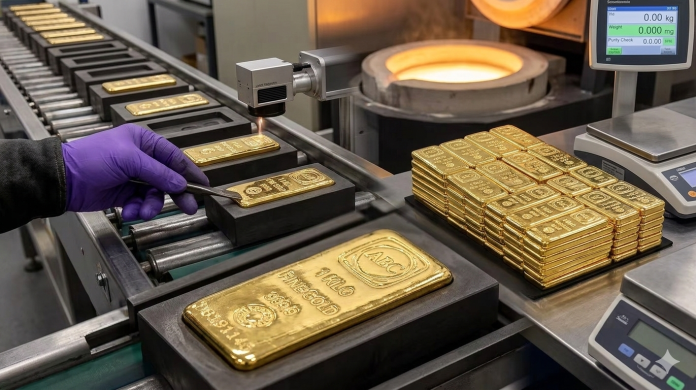

Gold traders in Dubai are offering significant discounts on bullion as the ongoing conflict in the Middle East continues to disrupt business operations and logistics across the region. The situation has affected transportation routes, delayed shipments, and created uncertainty among buyers, forcing traders to lower prices to keep transactions moving.
Dubai is widely known as one of the world’s leading gold trading centers. The city serves as a major hub for refining, trading, and exporting bullion to various international markets, especially across Asia. However, recent developments in the region have created logistical challenges that are impacting the normal flow of gold shipments.
Heavy Discounts Offered to Buyers
Due to the disruptions, traders in Dubai have started offering gold at substantial discounts compared to global benchmark prices. In some cases, bullion is being sold at prices up to $30 per ounce lower than international rates.
The discounts reflect the challenges faced by traders who are struggling with delayed shipments and increased transportation costs. With uncertainty surrounding delivery timelines, many buyers have temporarily paused new orders, leading traders to adjust prices in order to maintain business activity.
Market participants say the current situation has created unusual pricing conditions in the local gold market. Normally, Dubai’s gold prices remain closely aligned with international benchmarks, but the present logistics challenges have forced traders to offer more competitive deals.
Flight Disruptions Affect Gold Shipments
One of the major factors behind the discounts is the disruption to air travel in the region. Gold is typically transported in the cargo sections of passenger aircraft, making regular flight operations essential for the bullion trade.
Following recent security developments, parts of regional airspace were temporarily restricted, causing airlines to suspend or delay flights. As a result, several gold shipments remained stranded or delayed for days.
Although limited air traffic operations resumed earlier in the week and some shipments began moving again, the backlog of delayed cargo has continued to create pressure on traders and logistics companies.
Security Concerns Impact Alternative Routes
The disruptions have also affected alternative transportation methods. Logistics companies have been cautious about transporting high-value cargo by road to airports in neighboring countries due to security concerns.
Under normal circumstances, traders could shift shipments to nearby regional airports if flight operations are disrupted in one location. However, the current situation has made such alternatives more difficult, further complicating supply chains.
These challenges have increased shipping costs and insurance premiums for transporting precious metals. The added expenses have contributed to the decision by traders to offer discounts in order to keep the market active.
Dubai’s Role in the Global Gold Trade
Dubai has developed into one of the largest gold trading centers in the world. The city plays a critical role in the international bullion market by acting as a key transit and refining hub for gold shipments.
Large quantities of gold pass through Dubai every year before being shipped to markets across Asia and other regions. The city’s strong infrastructure, free trade environment, and strategic location have helped it become a major center for global gold commerce.
In recent years, the volume of gold imports handled by the country has reached significant levels, with shipments valued in the tens of billions of dollars annually.
Impact on International Buyers
The disruption in Dubai’s gold trade has also affected buyers in other major markets that depend on shipments from the region. Countries with strong cultural and investment demand for gold often rely on Dubai as a major supply channel.
With shipments delayed and logistics challenges continuing, buyers in these markets have experienced supply uncertainty. Some traders have chosen to delay purchases until transportation conditions stabilize.
Outlook for the Gold Trade
Market participants expect the situation to improve once transportation networks fully return to normal and security conditions stabilize. As flight schedules resume and supply chains recover, the price gap between Dubai’s gold market and global benchmarks may gradually narrow.
However, until logistics operations fully normalize, traders may continue offering discounts to manage inventory and maintain market activity. The current situation highlights how sensitive the global bullion trade can be to geopolitical developments and disruptions in transportation networks.
Despite the temporary challenges, Dubai’s role as a major international gold trading hub is expected to remain strong once the regional situation stabilizes and normal trade flows resume.
Read More
Turkish Firms Eye Investment in Pakistan’s Electricity Distribution Sector