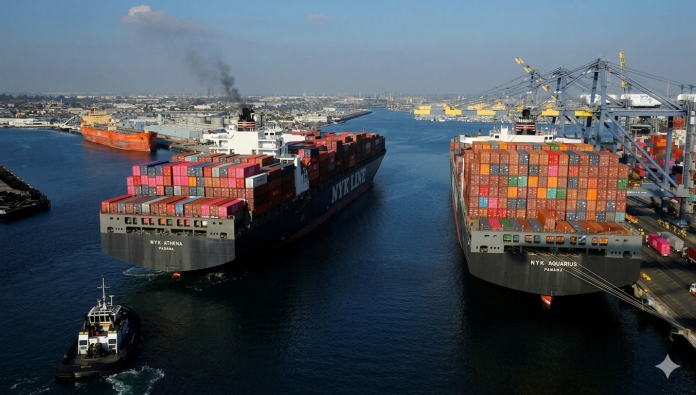

Pakistan may have an opportunity to earn billions of dollars in foreign exchange as global shipping routes shift due to ongoing conflict in the Middle East. Industry representatives have urged authorities to quickly revise existing transshipment regulations so the country can capture a share of the cargo flows that are being diverted away from traditional regional routes.
Shipping companies and cargo operators are currently searching for safer and more stable ports as regional tensions disrupt maritime trade. Given its strategic geographic location along major international shipping lanes, Pakistan could potentially emerge as an important transit point for rerouted cargo if policy adjustments are implemented in time.
Disruptions in Global Maritime Trade
The ongoing conflict in the Middle East has created considerable uncertainty for global shipping operations. Security concerns, disrupted sea routes, and delays at key maritime chokepoints have forced shipping companies to reconsider their logistics strategies.
Many international cargo operators are now exploring alternative ports that offer safer and more reliable routes for their shipments. This shift in global trade patterns has created opportunities for countries that can quickly adapt their policies and infrastructure to accommodate the increased traffic.
For Pakistan, this situation presents a potential economic opening. If shipping lines begin diverting cargo toward alternative regional ports, the country could benefit by serving as a transshipment hub for goods moving between major markets.
Strategic Location Offers a Competitive Advantage
Pakistan’s geographic position places it close to major international shipping routes connecting Asia, the Middle East, and Europe. This strategic location makes its ports well positioned to handle cargo that may be diverted from conflict-affected areas.
Industry experts believe that if the right policies are introduced, Pakistan could attract large volumes of transshipment cargo that would otherwise pass through other regional hubs. Increased cargo traffic would not only boost port revenues but could also generate additional economic activity in logistics, transportation, and related sectors.
Regulatory Barriers Limiting Potential
Despite the opportunity, industry representatives have warned that current customs regulations may prevent Pakistan from fully benefiting from the situation. Under existing rules, transshipment cargo cannot be stored at off-dock terminals.
Off-dock terminals are storage facilities located outside the main port area that are commonly used to handle overflow cargo and improve port efficiency. In many major shipping hubs, these facilities play a key role in managing large volumes of international cargo.
However, the current restrictions mean that transshipment cargo must remain within the port terminals themselves. With limited storage capacity at these terminals, handling a sudden increase in diverted cargo could become difficult.
Call for Immediate Policy Amendments
To address the issue, industry representatives have urged the government to introduce urgent amendments to transshipment rules. They have requested that authorities allow international transshipment cargo to be temporarily stored at off-dock terminals.
Such a change could be implemented through an amendment to existing regulatory orders governing customs procedures. By allowing off-dock storage, ports would be able to accommodate larger volumes of cargo and improve operational efficiency.
Potential Economic Benefits
If the proposed reforms are implemented quickly, Pakistan could see significant financial gains from the rerouting of global cargo. Increased transshipment activity would generate revenue through port handling charges, storage fees, and logistics services.
The growth in maritime activity could also stimulate related sectors such as trucking, warehousing, and freight forwarding. This broader economic impact could create jobs and contribute to stronger trade performance.
Conclusion
The disruption of maritime trade routes due to regional conflict has created both challenges and opportunities for countries involved in global shipping networks. For Pakistan, the situation presents a chance to strengthen its role in international trade and generate substantial economic benefits.
By implementing targeted policy reforms, expanding storage capacity, and improving port operations, the country could attract rerouted cargo and position itself as a key transshipment center in the region. Quick action and coordinated policy support will be essential to ensure that Pakistan can seize this opportunity and turn it into long-term economic growth.
Read More
Pakistan and IMF Set for Talks Today on PIA Future and Key Reforms