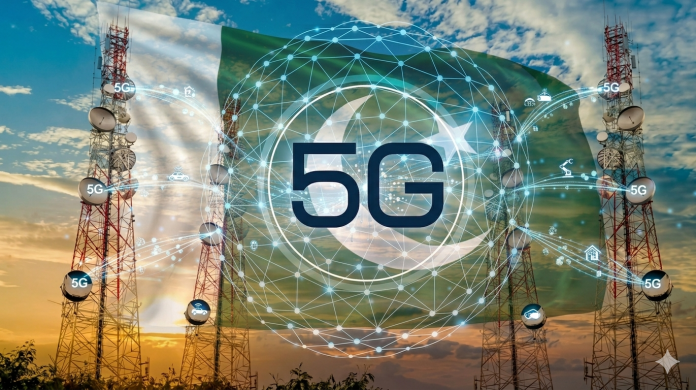

Second Stage of Pakistan’s 5G Auction Officially Starts
The second stage of Pakistan’s 5G spectrum auction has officially started as authorities move forward with the next phase of the country’s next-generation mobile network rollout. This stage focuses on the assignment and positioning of spectrum bands that were purchased during the earlier phase of the auction.
The process is taking place at the headquarters of the national telecommunications regulator, where officials have initiated the bidding rounds to determine how telecom operators will be positioned within key frequency bands. The outcome of this phase will play a major role in shaping the performance and coverage of future 5G networks in the country.
Three major telecom operators are participating in the auction process. All of them are competing to secure favorable spectrum positions that can help them deliver faster speeds, improved network capacity, and better service quality for customers.
Competitive Bidding for Spectrum Positioning
The second phase focuses on assigning spectrum positioning within high-value frequency bands used for advanced mobile services. Operators are currently bidding to secure placement within the 2600 MHz band, which is considered an important spectrum range for high-speed wireless connectivity.
During this stage, telecom companies compete for top, mid, and lower positions within the band. The positioning is significant because it can influence network efficiency, interference management, and the overall quality of services offered to users.
If more than one operator wants the same band position, the auction moves into competitive bidding rounds until only one company remains for that position. This process ensures fair allocation and maximizes the value of the spectrum.
The base price for positioning within the 2600 MHz band has been set at $100,000 for the current round. However, if bidding competition intensifies, the price may rise significantly in later rounds.
Structure of the Auction Process
The ongoing auction process follows a structured format to ensure transparency and efficiency. Each round of bidding lasts for fifteen minutes, allowing telecom operators to submit their bids within the given timeframe.
After each bidding round, officials take another fifteen minutes to compile and verify the results before announcing them. This ensures accuracy and maintains the integrity of the auction process.
To provide adequate time for participants and regulators to assess the situation, a thirty-minute break is scheduled after every round. This break allows telecom operators to evaluate their strategies and decide whether to continue bidding in the next round.
Focus on High-Value Frequency Bands
The current stage of the auction begins with the 2600 MHz spectrum band. Once the bidding process for this band is completed, the auction will move to the 3500 MHz band, another critical frequency range for 5G technology.
These frequency bands are widely used around the world for high-speed mobile broadband services. They allow telecom operators to deliver faster data speeds, lower latency, and higher network capacity, which are essential features of 5G networks.
By carefully assigning these bands, regulators aim to ensure efficient spectrum usage and encourage healthy competition among telecom operators.
Results from the First Phase of the Auction
The first phase of the country’s 5G auction concluded earlier and marked a significant milestone in the nation’s digital development. During that phase, a large portion of the available spectrum was successfully sold to telecom operators.
Out of a total of 597.2 MHz available spectrum, around 480 MHz was purchased by participating companies. This strong demand highlighted the growing importance of next-generation connectivity and the telecom sector’s readiness to invest in advanced infrastructure.
The first stage of the auction generated approximately $507 million in revenue. This not only represents a major financial outcome for the government but also reflects the telecom industry’s commitment to expanding digital services.
Moving Closer to 5G Connectivity
The ongoing second stage of the auction will determine how telecom companies position their spectrum holdings to build efficient 5G networks. These networks are expected to transform communication, enable faster internet speeds, and support emerging technologies.
5G technology has the potential to improve digital services across multiple sectors including business, healthcare, education, transportation, and smart infrastructure. The rollout of 5G will also help strengthen the country’s digital economy by supporting innovation and advanced technological solutions.
Officials expect the current phase of bidding to generate an additional one to two million dollars through spectrum positioning fees. Once this stage concludes, telecom operators will move closer to launching commercial 5G services in the country.
The successful completion of the auction process represents a major step toward modernizing the telecommunications landscape and expanding access to high-speed connectivity for millions of users.
Read More
Pakistan Allows Oil Imports on CIF Basis for a Limited Period