
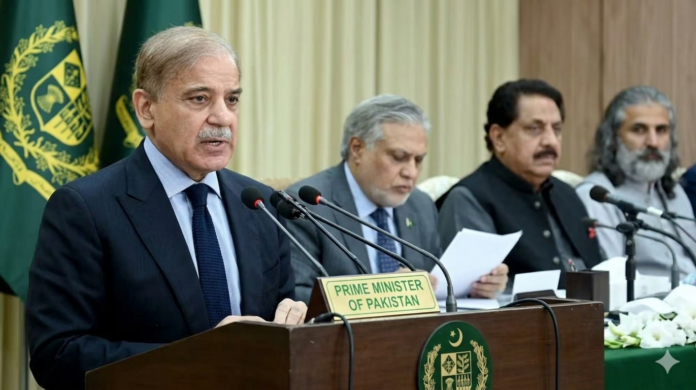

GOVERNMENT FORMS WAR COUNCIL TO COUNTER GULF CRISIS IMPACT
Amid rising uncertainty caused by escalating tensions in the Middle East, the government has taken a decisive step by forming a powerful coordination body aimed at protecting the national economy and maintaining internal stability. The newly established National Coordination and Management Council is designed to respond swiftly to economic disruptions, security challenges, and policy needs arising from the ongoing crisis.
This move reflects a growing sense of urgency within the government as global geopolitical developments begin to ripple through domestic markets. With increasing pressure on trade routes, fuel supplies, and financial systems, authorities are prioritizing a unified and structured response to safeguard the country’s economic interests.
A CENTRALIZED APPROACH TO CRISIS MANAGEMENT
The formation of the council marks a shift toward a more centralized decision-making framework. Previously, multiple committees were handling different aspects of the crisis independently, which often led to fragmented responses and delays. The new body consolidates these efforts into a single platform, ensuring better coordination, faster execution, and clearer policy direction.
By bringing together key stakeholders from federal and provincial levels, the council is expected to streamline communication and eliminate duplication of efforts. This integrated approach will allow policymakers to respond more effectively to rapidly changing conditions in both domestic and international markets.
FOCUS ON ECONOMIC STABILITY AND MARKET CONFIDENCE
One of the primary objectives of the council is to maintain economic stability during a period of heightened global uncertainty. The body will closely monitor critical economic indicators, including foreign exchange reserves, currency movements, commodity supplies, and trade flows.
Ensuring market confidence is a key priority, as uncertainty can lead to capital flight, currency depreciation, and inflationary pressures. By keeping a close watch on financial trends and responding proactively, the council aims to prevent panic in markets and maintain investor trust.
The government is also expected to use data-driven strategies, leveraging real-time monitoring systems to track developments and make informed decisions. This modern approach to governance highlights the importance of technology in managing complex economic challenges.
STRENGTHENING INTERNAL SECURITY MEASURES
Beyond economic concerns, the council has been tasked with addressing internal security risks that may arise as a result of the Gulf crisis. One major concern is the potential influx of displaced individuals, which could place additional strain on resources and infrastructure.
Authorities are preparing contingency plans to manage such scenarios, ensuring that any humanitarian challenges are handled efficiently without compromising national security. The council will also work to maintain law and order, particularly in areas that may be vulnerable to instability.
Another critical aspect of its mandate is managing public perception and countering misinformation. In times of crisis, false narratives can spread quickly, creating unnecessary panic and confusion. The council will implement strategies to ensure accurate information is communicated to the public in a timely manner.
ENERGY MANAGEMENT AND FUEL SUPPLY STRATEGY
Energy security has emerged as a central concern, given the region’s importance in global oil supply chains. The council has already taken steps to address domestic energy needs by approving the export of surplus furnace oil after confirming that local demand is fully met.
This decision highlights a balanced approach to resource management, ensuring that domestic requirements are prioritized while also supporting the energy sector. Local refineries, which had raised concerns over storage limitations, are expected to benefit from this move.
At the same time, authorities are working to maintain strategic fuel reserves to cushion against potential supply disruptions. By building adequate запас reserves, the country can better withstand external shocks and avoid sudden price spikes.
TRADE DIVERSIFICATION AND SUPPLY CHAIN RESILIENCE
The ongoing crisis has underscored the importance of diversifying trade partnerships and reducing dependence on any single region. The council has been tasked with exploring alternative import sources and strengthening trade links with new markets.
This strategy aims to enhance supply chain resilience, ensuring that essential goods continue to flow even if traditional routes are disrupted. By broadening its trade network, the country can mitigate risks associated with geopolitical instability.
Efforts are also being made to monitor freight costs and logistics challenges, which can have a significant impact on overall trade performance. Keeping transportation costs under control is essential for maintaining competitiveness in global markets.
SUPPORT MEASURES FOR VULNERABLE POPULATIONS
Recognizing the potential impact of rising prices on ordinary citizens, the council is also focusing on social protection measures. Plans are being developed to provide targeted subsidies to low-income households, helping them cope with inflation and increased living costs.
Such initiatives are crucial for maintaining social stability during times of economic stress. By supporting vulnerable groups, the government aims to reduce the risk of unrest and ensure that the burden of the crisis does not fall disproportionately on those least able to afford it.
These measures are expected to be carefully designed to maximize impact while minimizing fiscal strain, reflecting a balanced approach to economic management.
REAL-TIME MONITORING FOR FASTER DECISION-MAKING
A key feature of the council’s strategy is the use of real-time digital dashboards to monitor critical indicators. This system will provide up-to-date information on currency trends, remittance flows, commodity prices, and other economic variables.
Access to real-time data enables quicker and more effective decision-making, allowing authorities to respond immediately to emerging challenges. This proactive approach is expected to improve the overall efficiency of crisis management efforts.
The integration of technology into policymaking also reflects a broader shift toward data-driven governance, which is becoming increasingly important in today’s fast-paced global environment.
LONG-TERM STRATEGY BEYOND THE CRISIS
While the immediate focus is on managing the current situation, the council has also been given a broader mandate to strengthen long-term economic resilience. This includes developing strategies for sustainable growth, enhancing energy security, and building a more robust financial system.
By addressing structural challenges alongside short-term risks, the government aims to emerge stronger from the crisis. The emphasis on long-term planning highlights the importance of turning challenges into opportunities for reform and improvement.
CONCLUSION: A PROACTIVE STEP TOWARD ECONOMIC PROTECTION
The establishment of the National Coordination and Management Council represents a proactive and strategic response to the challenges posed by the Gulf crisis. By bringing together key stakeholders, leveraging technology, and focusing on both immediate and long-term priorities, the government is positioning itself to navigate a complex and uncertain environment.
As global conditions continue to evolve, the effectiveness of this initiative will depend on timely decision-making, strong coordination, and the ability to adapt to changing circumstances. For now, the formation of the council sends a clear message that safeguarding the economy and ensuring stability remain top priorities.
Read More