
A Major Geopolitical Development Unfolds
A significant global development has taken place as the Strait of Hormuz, one of the most strategically important waterways in the world, has been reopened for all commercial traffic. The announcement has triggered widespread reactions across political, economic, and diplomatic circles, as the reopening of this critical route holds far-reaching implications for global trade and energy markets.
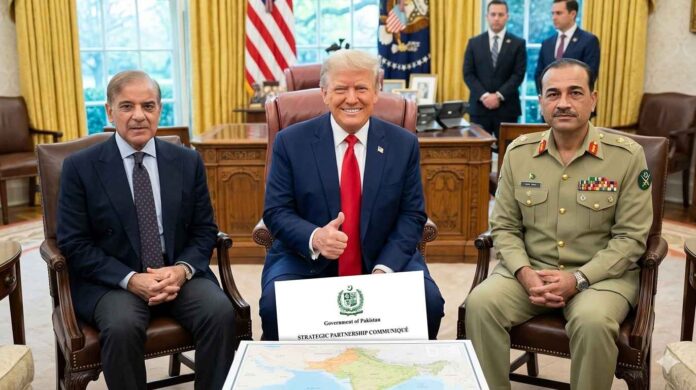
Amid this development, the President of the United States publicly expressed appreciation for Pakistan’s leadership, highlighting their role in facilitating stability during a tense geopolitical moment. The acknowledgment underscores the increasing importance of diplomatic engagement in resolving complex international challenges.
Public Praise for Pakistan’s Leadership
In a series of public statements shared on his social media platform, the US President extended thanks to Pakistan’s Prime Minister and the country’s top military leadership. He described both figures in highly positive terms, referring to them as “fantastic people” and recognizing their contributions to the evolving situation.
This public endorsement reflects a notable moment in international relations, where Pakistan’s leadership has been openly credited for playing a constructive role in easing tensions surrounding one of the world’s most critical maritime corridors.
Such statements not only highlight diplomatic cooperation but also signal a broader recognition of Pakistan’s influence in regional and global affairs.
Iran’s Commitment to Keeping the Strait Open
A key aspect of the development is Iran’s reported commitment to keeping the Strait of Hormuz open for international shipping. According to official statements, the waterway will remain accessible for all commercial vessels, ensuring the uninterrupted flow of global trade.
The assurance that the strait will not be used as a geopolitical tool marks a significant shift in regional dynamics. Historically, the possibility of closure has been a major source of concern for global markets, given the strategic importance of the route.
By committing to openness, Iran appears to be signaling a willingness to reduce tensions and contribute to regional stability.
The Strategic Importance of the Strait of Hormuz
The Strait of Hormuz is widely regarded as one of the most vital chokepoints in the global energy supply chain. A significant portion of the world’s oil passes through this narrow waterway, making its stability essential for maintaining steady energy supplies.
Any disruption in this route can lead to immediate spikes in oil prices, affecting economies worldwide. For countries heavily dependent on imported energy, the stability of the strait is particularly crucial.
The reopening of the waterway, therefore, represents more than just a regional development; it is a global event with direct implications for economic stability and energy security.
Global Economic Implications
The reopening of the Strait of Hormuz is expected to have a stabilizing effect on global markets. Reduced geopolitical risk often leads to lower volatility in oil prices, which can positively impact economies across the world.
For businesses, stable energy prices translate into more predictable operating costs. For consumers, it can mean relief from inflationary pressures driven by high fuel prices.
Financial markets are likely to respond to this development with increased confidence, as the risk of supply disruptions diminishes. This could encourage investment and support economic growth in both developed and emerging markets.
Pakistan’s Role in Regional Diplomacy
The recognition of Pakistan’s leadership highlights the country’s growing role in international diplomacy. By facilitating dialogue and contributing to de-escalation efforts, Pakistan has positioned itself as an important player in addressing regional conflicts.
This development could enhance Pakistan’s global standing and open new opportunities for diplomatic engagement. It also demonstrates the potential for countries outside traditional power centers to play meaningful roles in resolving complex geopolitical issues.
The acknowledgment from a major global leader further reinforces the importance of Pakistan’s contributions in this context.
Reactions Across Social and Political Platforms
The statements praising Pakistan’s leadership have sparked widespread reactions across social media and political platforms. Supporters have welcomed the recognition, viewing it as a validation of Pakistan’s diplomatic efforts.
At the same time, the comments have generated debate and discussion in other regions, reflecting the complex and often polarized nature of international politics.
Such reactions highlight how global events are increasingly shaped not only by official statements but also by public discourse and digital engagement.
Iran’s Official Announcement on Maritime Access
Iranian authorities have also issued statements confirming the reopening of the Strait of Hormuz for commercial shipping. The announcement emphasized that vessels can pass through the waterway under coordinated routes, ensuring safety and efficiency.
This move aligns with broader efforts to maintain stability during a period of ceasefire and reduced tensions in the region. By facilitating uninterrupted maritime traffic, Iran is contributing to the normalization of trade flows.
The coordination involved in managing such a critical route underscores the importance of cooperation among regional stakeholders.
Impact on Energy Markets and Oil Supply
Energy markets are closely monitoring the situation, as the Strait of Hormuz plays a central role in global oil supply. The reopening of the route reduces the risk of supply disruptions, which can help stabilize prices.
Lower oil prices can have a cascading effect on various sectors, including transportation, manufacturing, and agriculture. This can ultimately benefit consumers by reducing the cost of goods and services.
For oil-producing countries, stable prices provide a more predictable revenue environment, supporting economic planning and development.
A Shift Toward De-Escalation
The reopening of the Strait of Hormuz and the accompanying diplomatic developments suggest a broader shift toward de-escalation in the region. After periods of heightened tension, such moves indicate a willingness among key players to pursue stability and cooperation.
De-escalation efforts are critical for preventing conflicts and ensuring the smooth functioning of global systems. They also create opportunities for dialogue and collaboration on other pressing issues.
This shift, if sustained, could lead to a more stable and predictable geopolitical environment.
Challenges and Future Outlook
Despite the positive developments, challenges remain. Maintaining the openness of the Strait of Hormuz will require ongoing cooperation and vigilance from all parties involved.
Geopolitical tensions can resurface, and any changes in the regional landscape could impact the current situation. Ensuring long-term stability will depend on continued diplomatic engagement and adherence to commitments.
The coming weeks and months will be crucial in determining whether this development represents a lasting change or a temporary easing of tensions.
Conclusion: A Defining Moment in Global Stability
The reopening of the Strait of Hormuz marks a significant moment in global geopolitics, with implications that extend far beyond the region. The public acknowledgment of Pakistan’s leadership adds another dimension to the development, highlighting the importance of diplomacy in achieving stability.
As global markets respond and diplomatic efforts continue, this event serves as a reminder of the interconnected nature of today’s world. Decisions made in one region can have far-reaching effects, influencing economies, politics, and international relations.
The focus now shifts to sustaining this momentum and building on the progress achieved, ensuring that the benefits of stability and cooperation are realized on a global scale.
Read More
US Considers $20 Billion Deal With Iran for Uranium Surrender