
High-Stakes Diplomacy Set to Unfold in Islamabad
A new phase of high-stakes diplomacy is about to begin as U.S. officials prepare to arrive in Pakistan for crucial negotiations with Iran. The talks come at a time of heightened geopolitical tension, particularly surrounding the Strait of Hormuz, a vital global energy corridor that has recently been at the center of conflict and uncertainty.
The announcement has intensified global attention on Pakistan, which is once again stepping into a key diplomatic role by hosting discussions that could influence regional stability and international energy markets. The upcoming negotiations are expected to address multiple sensitive issues, including maritime security, nuclear concerns, and broader geopolitical tensions.
Warnings of Escalation Raise Stakes of Negotiations
The diplomatic effort is accompanied by strong warnings from the United States regarding potential consequences if an agreement is not reached. The possibility of targeting critical infrastructure has added urgency to the talks, signaling that the situation remains volatile and could escalate rapidly.
Such warnings highlight the fragile nature of the current ceasefire and underscore the importance of successful negotiations. The international community is closely watching developments, as any escalation could have far-reaching implications for global security and economic stability.
The emphasis on a “fair and reasonable” deal suggests that the negotiating parties may be seeking a balanced outcome, though the path to consensus remains uncertain.
Strait of Hormuz Tensions Continue to Disrupt Stability
The Strait of Hormuz remains a central issue in the ongoing tensions. As one of the world’s most important shipping routes for oil and gas, any disruption in this المنطقة has immediate global consequences.
Recent reports of ceasefire violations and continued shipping disruptions have raised concerns about the reliability of this critical passage. The situation has been further complicated by conflicting announcements regarding the reopening of the waterway.
The uncertainty surrounding maritime security has not only affected energy markets but also heightened military and diplomatic tensions in the region. Ensuring safe passage through the strait is likely to be a key focus of the upcoming talks.
Accusations of Maritime Incidents Add Complexity
The situation has been further complicated by allegations of hostile actions near the shipping route. Reports of vessels being targeted have increased concerns about the safety of international التجارة and the risk of further escalation.
Such incidents, if confirmed, could undermine trust between the parties and make negotiations more challenging. Addressing these concerns will require careful diplomacy and confidence-building measures to prevent further deterioration of relations.
Ensuring the protection of commercial shipping remains a top priority for the global community, given its critical role in maintaining economic stability.
Pakistan Emerges as a Key Diplomatic Host
Pakistan’s role as the host of these negotiations highlights its growing importance in regional diplomacy. By providing a neutral platform for dialogue, the country is contributing to efforts aimed at resolving complex international disputes.
Hosting such high-level talks also reflects Pakistan’s strategic موقع and its ability to facilitate communication between major global players. This role not only enhances its diplomatic standing but also underscores its commitment to promoting peace and stability.
The success of these negotiations could further strengthen Pakistan’s position as a reliable mediator in international conflicts.
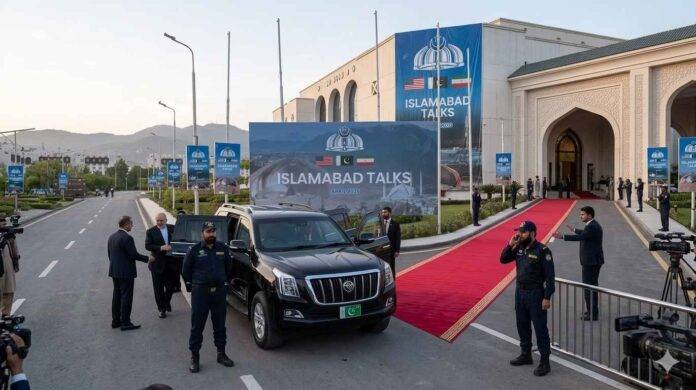
Security Measures Intensified Across the Capital
In anticipation of the high-profile talks, security measures have been significantly increased across Islamabad and surrounding areas. Authorities have implemented strict protocols to ensure the safety of visiting delegations and maintain order during the مذاکرات.
Road closures, traffic diversions, and additional checkpoints have been put in place to manage movement and prevent any potential security threats. Key locations, particularly those associated with diplomatic activities, are under heightened surveillance.
The increased security presence reflects the حساس nature of the discussions and the importance of ensuring a safe environment for all participants.
Key Locations Prepared for Diplomatic Engagements
Major venues in the capital have been prepared to host the مذاکرات, with access restricted to authorized personnel only. These locations have previously been used for similar high-level engagements, providing a controlled and secure setting for dialogue.
The preparations include not only physical security measures but also logistical arrangements to facilitate smooth communication between the delegations. Such meticulous planning is essential for the success of negotiations involving multiple stakeholders and complex issues.
The العاصمة has effectively transformed into a مركز for international diplomacy, drawing attention from across the world.
Background of Previous Negotiations
The upcoming talks follow earlier rounds of negotiations that were also held in Pakistan. While those discussions did not result in a comprehensive agreement, they did lead to some progress on key issues.
Topics such as nuclear terms and maritime security were addressed, laying the groundwork for further dialogue. The continuation of these discussions indicates that both sides remain committed to exploring diplomatic solutions despite ongoing challenges.
Building on previous efforts, the new round of talks aims to achieve more concrete outcomes and move closer to a lasting agreement.
Global Implications of the Talks
The outcome of these negotiations will have significant implications beyond the immediate region. Stability in the Strait of Hormuz is critical for global energy supplies, and any disruption can affect markets worldwide.
Additionally, the resolution of tensions between major الدول could contribute to broader geopolitical stability. Successful diplomacy could reduce the risk of conflict and create opportunities for التعاون in other areas.
Conversely, failure to reach an agreement could lead to further escalation, impacting not only regional security but also the global economy.
Economic and Energy Market Concerns
The ongoing uncertainty has already affected global energy markets, with fluctuations in oil and gas prices reflecting concerns about supply disruptions. Countries that rely heavily on imported energy are particularly vulnerable to such changes.
For Pakistan, the situation has direct implications for its own energy security and economic stability. As a host of the talks, the country has a vested interest in achieving a positive outcome that ensures uninterrupted energy flows.
The negotiations therefore carry both diplomatic and economic significance, making their success all the more critical.
Challenges Ahead for Diplomacy
Despite the أهمية of the talks, several challenges remain. Deep-seated differences, mutual distrust, and ongoing incidents could hinder progress and complicate efforts to reach a توافق.
Effective diplomacy will require compromise, patience, and a willingness to address underlying issues. Confidence-building measures and clear communication will be essential in overcoming obstacles and moving toward a sustainable solution.
The involvement of multiple stakeholders also adds complexity, requiring careful coordination and negotiation strategies.
Potential Pathways to Resolution
Achieving a breakthrough will likely involve a combination of diplomatic engagement, security assurances, and economic incentives. Addressing concerns related to maritime safety, infrastructure security, and regional stability will be key components of any agreement.
The emphasis on a balanced deal suggests that both sides may be looking for solutions that address their core interests while avoiding further escalation. This approach could pave the way for a more stable and cooperative relationship in the future.
The role of Pakistan as a facilitator will be crucial in guiding discussions and fostering an environment conducive to constructive dialogue.
Conclusion: A Defining Moment for Regional Stability
The arrival of U.S. officials in Pakistan for negotiations with Iran marks a defining moment in ongoing efforts to address one of the most complex geopolitical challenges of recent times. With tensions high and stakes even higher, the outcome of these talks could shape the future of regional and global stability.
As the world watches closely, the focus remains on diplomacy as the primary path forward. Success will depend on the ability of all parties to engage in meaningful dialogue, build trust, and find common ground.
For Pakistan, this moment represents both an opportunity and a responsibility to contribute to peace and stability on the international stage. The coming days will be critical in determining whether these efforts can lead to a lasting resolution or further uncertainty in an already volatile region.
Read More
Pakistan Confronts Power Crisis as 3 LNG Cargoes Stuck Near Strait of Hormuz