
What is the G7? Its Purpose and History of Influence
Thousands of demonstrators gathered in Geneva, Switzerland, on Sunday to protest against the leaders of the Group of Seven (G7) ahead of the annual summit taking place in neighboring France. The three-day summit, held in the French spa town of Evian-les-Bains, is expected to focus on major international issues, including the conflicts in the Middle East and Ukraine, as well as global economic imbalances.
The protest, initially authorized by Swiss authorities, attracted a diverse coalition of activists, environmental groups, feminist organizations, independent media advocates, and supporters of Palestinian rights. Demonstrators assembled in a lakeside park before marching through the streets of Geneva.
However, tensions escalated near the headquarters of the United Nations (UN) when clashes erupted between protesters and police. According to Geneva police spokesperson Alexandre Brahier, approximately 20,000 people participated in the demonstration, including around 600 activists associated with the radical “Black Bloc” movement.
As the situation deteriorated, some protesters threw bottles, stones, concrete fragments, and firecrackers at law enforcement officers. Police responded with tear gas and water cannons in an attempt to restore order. Several vehicles were set on fire, public and private buildings were damaged, and numerous businesses reported vandalism.
Observers on the ground reported the presence of individuals identified as members or sympathizers of the Polisario Front, a separatist movement that advocates for the independence of Western Sahara. Some participants were seen carrying flags and banners associated with the self-proclaimed Sahrawi Arab Democratic Republic (SADR). Photographs from the demonstration showed these symbols appearing near areas where violent confrontations and barricades had been established by masked protesters.
The visible presence of separatist symbols during the unrest has sparked debate regarding the involvement of various political networks in international demonstrations. While there is no official evidence linking these groups to the violence, their participation has drawn attention amid broader concerns about the infiltration of peaceful protests by radical factions.
Swiss authorities stated that the presence of approximately 600 radical activists contributed significantly to the escalation of violence. Police were forced to intervene in several parts of the city after hours of confrontations between demonstrators and security forces.
Meanwhile, Swiss and French authorities implemented extensive security measures to protect the G7 summit. French officials announced the deployment of more than 13,000 police officers and gendarmes, supported by over 800 border-control agents—far above the usual staffing levels. Authorities also imposed restrictions on unauthorized gatherings, closed certain roads, and offered financial assistance to businesses that could be affected by security operations.
In Evian-les-Bains, dozens of shops boarded up their storefronts as a precaution against potential disturbances. The incidents in Geneva serve as a reminder of the tensions that often accompany major international summits and the challenges governments face in balancing security concerns with the right to protest.
What Is the G7?
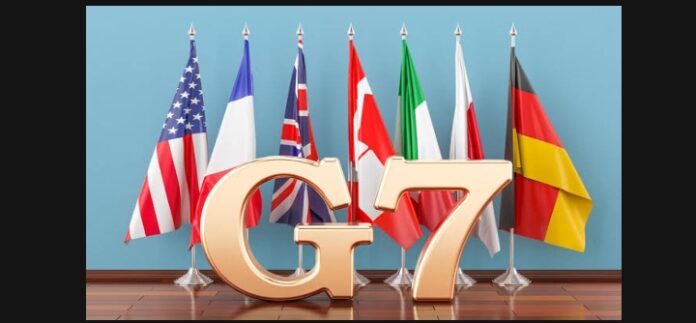
The Group of Seven (G7) is an informal forum of the world’s leading advanced economies. Its members are Canada, France, Germany, Italy, Japan, the United Kingdom, and the United States. The European Union also participates in G7 meetings but is not counted as an official member.
Established in the 1970s during a period of economic uncertainty, the G7 was created to facilitate cooperation on global economic policy. Over time, its agenda expanded to include international security, climate change, energy policy, trade, development, and global health issues.
Although the G7 has no legislative authority, its decisions and coordinated policies often influence international economic and political developments. Critics argue that the group represents a limited number of wealthy nations and does not adequately reflect the interests of developing countries, while supporters view it as an important platform for addressing global challenges through dialogue and cooperation.
As world leaders gather in Evian-les-Bains, the demonstrations in Geneva highlight the continuing debate over globalization, international governance, and the role of major powers in shaping the global agenda.