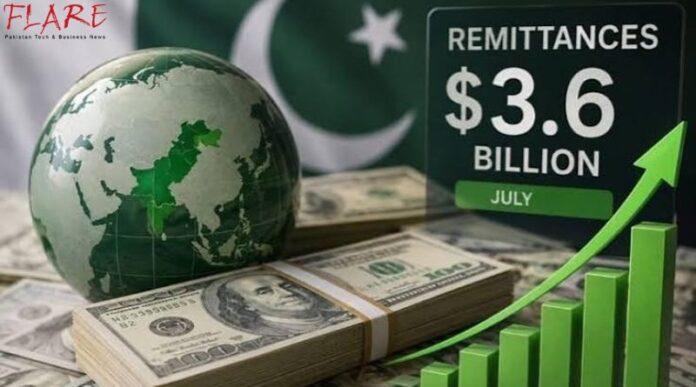

Pakistan has started the new financial year with another strong increase in money sent home by overseas Pakistanis. The country received around $3.6 billion in workers’ remittances during July 2026, showing that Pakistanis living and working abroad continue to send a large amount of money back to their families.
According to provisional data released by the State Bank of Pakistan (SBP), remittances reached $3.631 billion in July, compared with about $3.215 billion during the same month last year. This means the inflow increased by around 13 percent on a year-on-year basis.
The latest figure is important because remittances have become one of Pakistan’s most dependable sources of foreign currency. They help families meet their daily needs while also supporting the country’s foreign exchange position. The strong July figure also continues the positive trend seen during the previous financial year.
A Strong Start to FY2026-27
July is the first month of Pakistan’s financial year 2026-27. Starting the year with more than $3.6 billion in remittances is a positive sign for the country’s economy.
During the previous financial year, overseas Pakistanis sent a record $41.6 billion to the country. The SBP said remittances increased by 8.6 percent in FY2026 compared with $38.3 billion received during FY2025.
The latest July number shows that the strong flow of money from overseas Pakistanis has not slowed down at the beginning of the new financial year. Instead, the country has again recorded a major monthly inflow.
This is especially important for Pakistan because the country regularly needs foreign currency to pay for imports, debt payments and other international expenses. Remittances provide a steady source of dollars and other foreign currencies without creating the same type of repayment burden as foreign borrowing.
Saudi Arabia Remains the Biggest Source
Saudi Arabia continued to be the largest source of remittances sent to Pakistan in July.
Pakistan has a very large community of workers in Saudi Arabia, and their regular money transfers make the Gulf country one of the most important sources of foreign exchange for Pakistan.
The United Arab Emirates also remained a major contributor. The United Kingdom and the United States were other important sources of remittances.
The strong contribution from these countries shows the importance of overseas Pakistani workers to the local economy. Millions of Pakistanis work in the Gulf, Europe, North America and other parts of the world. A large number of them regularly send part of their earnings to their families in Pakistan.
Why Remittances Matter So Much
For an ordinary Pakistani family, remittances can mean money for food, school fees, medical costs, rent, house construction and other daily expenses.
For the country as a whole, their importance is even bigger.
When overseas Pakistanis send dollars through banks and other formal channels, these funds become part of the country’s official foreign exchange inflows. This helps Pakistan manage its external payments and maintain foreign exchange reserves.
Remittances can also reduce pressure on the country’s current account. This is particularly useful when imports are high or exports are not growing quickly enough.
The Pakistan Economic Survey has described remittances as one of the country’s most reliable sources of external financing. During July-March FY2026, remittances rose by 8.2 percent to $30.3 billion.
Formal Channels Are Becoming More Important
One reason behind the strong remittance numbers is the greater use of formal channels.
Pakistan has taken several steps in recent years to encourage overseas Pakistanis to send money through banks, exchange companies and digital payment services instead of informal methods.
The government and SBP have also worked on making formal transfers easier, faster and less expensive.
The Pakistan Economic Survey noted that digital payment systems, including Raast, have helped improve the speed and transparency of payments. Measures aimed at reducing transfer costs have also encouraged people to use official channels.
This is important because money sent through formal systems can be properly recorded and becomes part of Pakistan’s official foreign exchange inflows.
A Positive Sign for Foreign Exchange Reserves
Pakistan has faced foreign exchange pressure for years. The country needs dollars for imports, debt repayments, energy purchases and other international payments.
Higher remittances provide some relief.
When more dollars enter the country through official channels, banks and the central bank have greater access to foreign currency. This can help support the balance of payments and reduce some pressure on the rupee.
The latest remittance figure therefore has importance beyond the families receiving the money. It also gives wider support to Pakistan’s external economic position.
The country entered the new financial year with stronger foreign exchange reserves than it had in earlier periods. The Pakistan Economic Survey reported that total foreign exchange reserves had reached $22.6 billion by May 22, 2026, including $17.1 billion held by the SBP.
Overseas Pakistanis Continue to Play a Major Role
The July figure is another reminder of the important role played by Pakistanis living abroad.
Many overseas workers leave their homes to find better employment opportunities. Their earnings support not only their immediate families but often their wider relatives as well.
A worker in Saudi Arabia, the UAE, the UK, the US or another country may send money every month to parents, children, brothers or sisters in Pakistan.
These transfers can make a major difference to household income. For some families, remittances are their main source of financial support.
The money is also spent across many parts of the economy. Families may use it to buy food and clothing, pay school fees, build homes, purchase land, start small businesses or cover healthcare costs.
As a result, remittances can support economic activity at the local level as well.
July Growth Comes After a Strong FY2026
The July performance did not come out of nowhere. Pakistan had already recorded strong remittance inflows during FY2026.
The SBP reported that remittances reached $41.6 billion in the full financial year ending June 2026. This was an increase of 8.6 percent over the previous year.
There were also several months during FY2026 when monthly remittance inflows crossed the $3 billion mark.
In May 2026, for example, workers’ remittances reached $4.3 billion, showing the ability of overseas Pakistanis to send very large amounts during certain periods.
June then recorded around $3.5 billion. Although this was lower than May, it still represented a strong monthly inflow.
The July figure of $3.631 billion therefore keeps Pakistan on a strong path as FY2027 begins.
What Is Driving the Increase?
Several factors may be helping Pakistan maintain high remittance inflows.
One major factor is the large number of Pakistanis working overseas. Gulf countries, particularly Saudi Arabia and the UAE, employ millions of foreign workers, including a large Pakistani workforce.
Another factor is the improved use of formal payment systems. When people find official channels easier and more affordable, they are more likely to use them.
Exchange rate stability can also encourage overseas Pakistanis to send money through formal channels. When the difference between official and informal exchange rates is smaller, there is less reason to avoid banks and registered exchange companies.
Government incentives and better digital payment services have also played a role.
Remittances Give the Economy a Cushion
Pakistan’s economy faces many challenges, including high import costs, external debt payments and pressure on foreign exchange.
Remittances do not solve all these problems, but they provide a useful cushion.
For example, if Pakistan imports more oil or machinery, the country needs additional foreign currency to pay international sellers. Strong remittance inflows can help meet part of this demand.
Remittances also provide support when export earnings are not enough to cover the country’s external needs.
This is why economic managers closely monitor monthly remittance figures.
Government Welcomes the Latest Numbers
The latest increase has also been welcomed by the government.
Prime Minister Shehbaz Sharif expressed satisfaction over the $3.6 billion remittance inflow recorded in July.
The government has repeatedly encouraged overseas Pakistanis to send their money through official channels. Strong remittances are seen as an important part of efforts to improve Pakistan’s economic position.
The continued rise also supports the government’s expectations for another strong year of remittance inflows.
Can Pakistan Maintain This Growth?
The big question now is whether Pakistan can continue receiving more than $3 billion in remittances every month.
There is reason for some optimism because the country has a large overseas workforce and remittances have remained strong for several years.
However, monthly numbers can change because of seasonal factors, economic conditions in host countries, currency movements and the employment situation abroad.
Pakistan also needs to continue making formal money transfers easy and affordable. If overseas workers find official channels convenient, more money can enter the country through the banking system.
The government will therefore need to keep improving digital payment services, banking access and exchange company services.
A Major Benefit for Ordinary Families
While economists focus on dollars, reserves and the balance of payments, the real impact of remittances can be seen in Pakistani homes.
A monthly transfer from a family member working abroad can help pay household bills, school expenses and medical costs. It can also help families save money or invest in a small business.
In rural areas and smaller cities, remittance money can have an especially visible impact. Families may use overseas earnings to construct houses, improve farms, buy vehicles or open shops.
This means that the benefits of remittances are spread across many parts of the country.
What the July Figure Means for Pakistan
The $3.631 billion received in July 2026 is more than just another monthly economic number. It shows that overseas Pakistanis continue to provide strong financial support to the country.
The 13 percent year-on-year increase compared with July 2025 is particularly encouraging.
After receiving a record $41.6 billion during FY2026, Pakistan has entered FY2027 with another strong monthly result. If this trend continues, remittances could once again become one of the biggest sources of foreign exchange for the country.
For the government, the challenge will be to maintain this positive trend while improving the wider economy. For families, the money sent by relatives abroad will continue to provide much-needed support.
Overall, the July remittance figure gives Pakistan a positive start to the new financial year. It strengthens the country’s foreign exchange position, supports millions of households and shows the continued economic importance of Pakistanis working overseas.
As the year moves forward, all eyes will remain on the monthly remittance numbers. If the strong inflows continue, they could provide valuable support to Pakistan’s economy and help the country manage some of its external financial pressures.
Read Also:check