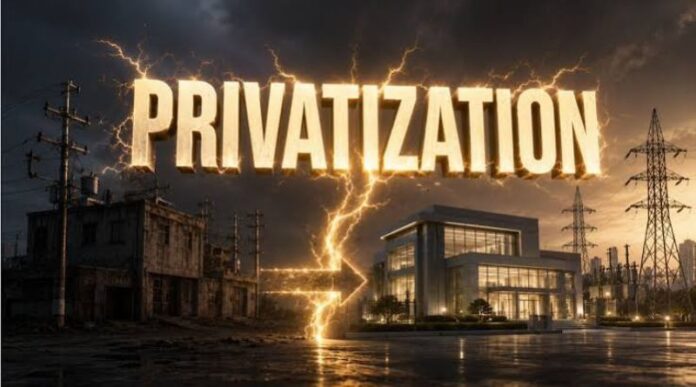

Pakistan is moving ahead with plans to bring private-sector management into three major electricity distribution companies as part of its wider effort to reform the power sector. The first group includes Faisalabad Electric Supply Company (FESCO), Gujranwala Electric Power Company (GEPCO), and Islamabad Electric Supply Company (IESCO).
The government has been working on the plan for some time, but the process has faced delays because of investor concerns and the need to prepare the companies properly before offering them to private investors. According to the latest information, the process is now moving forward, with the government expecting the first three DISCO transactions to be completed around early 2027.
The development is important because electricity distribution is one of the biggest problem areas in Pakistan’s power sector. Poor recovery, electricity theft, technical losses, weak management, and unpaid bills have placed a heavy financial burden on the government. Officials believe that greater private-sector involvement can help improve the performance of these companies and reduce pressure on the national budget.
Three DISCOs Selected for the First Phase
The three companies selected for the first phase are FESCO, GEPCO, and IESCO. They are among the major electricity distribution companies in the country and serve millions of customers across Punjab and the Islamabad region.
The government formally invited Expressions of Interest (EOIs) from local and international investors in May 2026. Investors have been offered the opportunity to acquire between 51 percent and 100 percent shareholding in each company along with management control.
Together, the three companies serve more than 14 million consumers, making them highly important parts of Pakistan’s electricity network. Their areas include major cities, industrial zones, commercial centres, and residential communities.
The government sees these companies as attractive investment opportunities because of their large customer bases and important role in the economy. The plan is not simply about selling government-owned assets. Officials also want new management to improve electricity services and make the companies financially stronger.
Why Pakistan Wants to Privatize DISCOs
Pakistan’s electricity distribution system has struggled with several long-running problems. These include electricity theft, poor bill recovery, technical losses, outdated equipment, weak customer service, and financial losses.
When distribution companies fail to recover the full cost of the electricity they supply, the financial impact eventually reaches the government. The state then has to provide support or manage growing liabilities within the power sector.
The government believes private-sector participation can bring better management and stronger financial discipline. Private investors are expected to have greater motivation to reduce losses, improve billing, control theft, and invest in the distribution network.
The International Monetary Fund has also linked private-sector participation in DISCO management with better performance, efficiency, and governance. The IMF has said that improving DISCO performance can help reduce the financial problems that continue to affect Pakistan’s power sector.
Privatization Process Has Already Started
The plan is not starting from zero. Pakistan’s Privatisation Commission has already completed several important steps.
In April 2026, the Privatisation Commission Board approved the proposed transaction structure, pre-qualification rules, and restructuring plans for FESCO, GEPCO, and IESCO. The recommendations were then moved forward through the Cabinet Committee on Privatisation.
In May, the government formally invited investors to submit their Expressions of Interest. Separate submissions were required for each DISCO because each company has its own financial and operational position.
The government has also been conducting investor outreach and international roadshows. Officials said these efforts were aimed at attracting investors from countries including Saudi Arabia, Türkiye, and China.
Prime Minister Shehbaz Sharif has directed officials to speed up the process while maintaining transparency. He has also called for a strong regulatory system after the DISCOs move towards private-sector management.
Why the Timeline Has Changed
The privatization plan was earlier expected to move faster. However, the process has been delayed because investors raised concerns about the structure of the transactions and the financial position of the companies.
The IMF’s latest assessment says the first batch of DISCO privatization has been delayed following feedback from market-sounding exercises. It adds that investor concerns have been addressed and the government is now moving forward, with finalization expected by early 2027.
This means that although the government is pushing the process during late 2026, the final transfer may take place around the beginning of 2027 rather than being fully completed during 2026.
This delay also shows why the government is taking time to prepare the companies before final bidding. If financial problems and unclear liabilities are not dealt with first, investors may either demand a lower price or avoid the transaction altogether.
Government Plans to Restructure the Companies
One of the key parts of the plan is restructuring.
According to recent information from the Privatisation Commission, restructuring plans and schemes of arrangement have been prepared using the audited financial statements of FESCO, GEPCO, and IESCO for the period ending March 31, 2026. A government-owned special purpose vehicle is also proposed to handle selected assets and liabilities as part of the transaction structure.
This approach is designed to make the companies more suitable for private investment.
In simple words, the government wants to organize the financial and operational side of the companies before handing management control to private investors. This can make the transactions easier to understand and reduce uncertainty for potential buyers.
The government also says that the structure is designed to increase the value of the companies while keeping the deals commercially attractive.
Investors Show Interest
The government says it has received strong interest from both local and international investors.
The three DISCOs are considered important because they already have large customer bases and operate in economically active areas. The government’s investment material describes FESCO, GEPCO, and IESCO as some of the better-performing distribution companies and says they serve around 13 million consumers.
The exact number of consumers can vary depending on the reporting period and source, but there is no doubt that the three companies serve a very large part of the electricity market.
For investors, a large customer base can offer significant business potential if electricity losses are controlled and collection improves.
However, investors will also look closely at debts, government dues, subsidies, unpaid bills, regulatory rules, and future electricity tariffs before making major financial commitments.
What It Could Mean for Electricity Consumers
For ordinary electricity consumers, the biggest question is whether privatization will actually improve service.
People across Pakistan often complain about long power outages, voltage problems, delayed complaint handling, incorrect bills, and slow repairs. Businesses also face losses when electricity supply is unreliable.
If private management improves operations, consumers could potentially see faster complaint resolution, better maintenance, improved billing systems, and fewer service problems.
However, privatization alone does not guarantee lower electricity bills.
Electricity prices are affected by many factors, including fuel costs, generation expenses, taxes, government policies, subsidies, and regulatory decisions. Therefore, consumers should not assume that handing DISCOs to private investors will automatically make electricity cheaper.
The government’s main target is better efficiency and service. A strong regulatory system will be necessary to protect consumers while allowing private companies to operate on a financially sustainable basis.
Strong Regulation Will Be Important
Prime Minister Shehbaz Sharif has specifically called for a strong regulatory framework after the transition of DISCOs to the private sector.
This is an important part of the plan.
Electricity distribution is not like a normal competitive business where customers can easily choose another company. A distribution company operates within a defined area and controls an essential service.
Because of this, regulators will have to make sure that private operators follow service standards and do not take unfair advantage of consumers.
The government will also need to clearly define responsibilities related to electricity theft, new connections, billing disputes, maintenance, outages, and customer complaints.
A proper regulatory system can help balance two goals: giving private investors enough room to run the companies efficiently while protecting consumers from poor service or unfair treatment.
DISCO Privatization Is Part of a Bigger Reform Plan
The government is not planning to stop with FESCO, GEPCO, and IESCO.
Other distribution companies are also being prepared for private-sector participation. The Privatisation Commission has already taken steps concerning Hyderabad Electric Supply Company (HESCO) and Sukkur Electric Power Company (SEPCO).
The IMF has said that work on HESCO and SEPCO is continuing in parallel. The government plans to complete important conditions related to their financial position and outstanding balances by the end of December 2026.
This shows that Pakistan is looking at DISCO reform as a long-term programme rather than a one-time sale of three companies.
The government is also working on preparing other distribution companies for possible private-sector involvement in the future.
The Financial Pressure Behind the Move
One major reason for these reforms is the financial pressure created by the power sector.
Pakistan has spent years dealing with circular debt and other financial problems linked to electricity generation and distribution. When power companies fail to recover money from consumers or face high losses, unpaid amounts move through the system and create additional pressure.
Reducing these losses is therefore important for both the power sector and the wider economy.
The IMF has included improvements in DISCO management as part of Pakistan’s broader power-sector reform programme. It expects better performance to help reduce financial problems and improve the overall sustainability of the electricity system.
For Pakistan, successful reform could reduce the need for government support and allow public money to be used for other important areas.
What Happens Next?
The next stage will focus on investor participation, qualification, due diligence, and the final transaction process.
The government has already received or invited interest from potential investors, while the exact timelines for each company continue to move through the required steps. Recent Privatisation Commission information listed different EOI deadlines for FESCO, GEPCO, and IESCO.
After investors are assessed, the government will need to move towards the bidding and final transaction stages.
The process will also require careful handling of employee issues, existing liabilities, assets, contracts, and regulatory matters.
The government has repeatedly said that transparency will be important throughout the process. This will be closely watched because privatization deals involving major public companies can attract strong public and political attention.
A Major Test for Pakistan’s Power Sector
The privatization of FESCO, GEPCO, and IESCO could become one of the most important changes in Pakistan’s electricity distribution system in years.
The government hopes private management will bring better performance, stronger collection, lower losses, improved investment, and better customer service. At the same time, investors will want clear rules, clean financial records, manageable liabilities, and a stable regulatory environment.
The process is now moving towards late 2026, but the final completion of the first batch is expected around early 2027, according to the latest IMF assessment.
For consumers, the real measure of success will not simply be whether the companies are transferred to private ownership. The bigger question will be whether people receive more reliable electricity, better customer service, and a more efficient billing and complaint system.
Pakistan has tried different approaches to solve its power-sector problems over the years. The privatization of these three DISCOs will now provide an important test of whether greater private-sector involvement can deliver lasting improvements.
If the first phase works well, it could create momentum for the reform of other distribution companies. If it fails to deliver better performance, it could lead to more questions about how Pakistan should manage its electricity distribution system in the future.
For now, the government is pushing ahead with the plan, investors are studying the opportunities, and the country’s power sector is entering another major stage of reform.
Read Also: check