
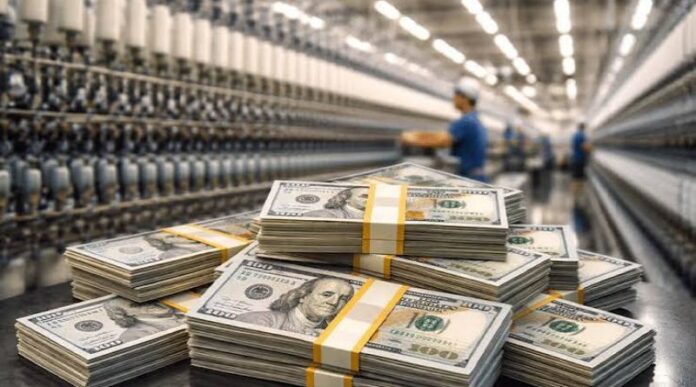

Pakistan’s textile industry has long been one of the most important parts of the country’s economy. It provides jobs to millions of people, supports factories and businesses across the country, and brings in a large amount of foreign exchange through exports. For years, the sector has been a major source of US dollars for Pakistan.
However, the industry is now facing serious problems. Textile exporters are warning that rising business costs, limited access to financing, and a growing shortage of cotton are making it harder for Pakistani companies to compete in international markets.
The situation has become more concerning because textile exports showed almost no growth during the 2025-26 financial year. According to the Pakistan Textile Council (PTC), textile and apparel exports increased by only 0.26 percent, reaching around $17.93 billion compared with $17.88 billion in the previous year.
For a country that depends heavily on exports to earn foreign currency, this slow growth is a serious warning sign.
Textile Exports Show Very Little Growth
Pakistan’s textile industry has traditionally been the backbone of the country’s export sector. Products such as cotton yarn, fabric, towels, knitwear, bedwear, garments, and other textile goods are sold in markets around the world.
The industry has built a strong position over many decades. But simply having a large textile industry is not enough. Pakistani exporters also need to remain competitive on price, quality, delivery time, and production costs.
The latest export figures show that the sector is struggling to grow.
Textile and apparel exports stood at about $17.88 billion in FY2024-25. In FY2025-26, the figure rose only slightly to $17.93 billion. This means the sector added just a small amount to its export earnings in an entire year.
Such limited growth is worrying because Pakistan needs stronger export earnings to meet its foreign currency needs. The country regularly spends large amounts of dollars on imports, including oil, machinery, chemicals, food products, and other essential goods.
When exports remain weak while imports rise, pressure on the country’s external account increases.
June Delivered Another Major Blow
The situation became even more difficult toward the end of FY2025-26.
According to the Pakistan Textile Council, textile exports dropped sharply in June. Exports fell 17 percent compared with the same month a year earlier and declined 23 percent compared with May.
June’s export figure was reportedly the lowest monthly level in 14 months.
This sudden fall has raised fresh concerns about the industry’s ability to maintain its position in international markets.
A weak month by itself may not always mean that an industry is in long-term trouble. However, when a major decline comes after a year of almost flat growth, it becomes harder to ignore.
Exporters are now asking the government to take quick steps to reduce the pressure on the industry and help Pakistani companies compete with producers from other countries.
Rising Production Costs Are Hurting Businesses
One of the biggest problems facing textile companies is the high cost of production.
Running a textile factory requires large amounts of electricity, gas, water, labour, raw materials, transport, and financing. When these costs increase, exporters have two difficult choices.
They can raise the price of their products and risk losing foreign buyers, or they can keep prices low and accept smaller profits.
Neither option is easy.
Pakistani textile companies are already competing with producers from countries that may have lower production costs or better support systems. Higher local costs can therefore make Pakistani products less attractive to international buyers.
The Pakistan Textile Council has called for changes that would help reduce these pressures. The council has also asked the government to review industrial electricity prices and make them more suitable for export-oriented businesses.
Lower and more predictable energy costs could give exporters greater confidence to plan production and accept new orders.
Financing Is Another Major Challenge
Textile businesses also need affordable financing to operate and expand.
Exporters often require loans to purchase raw materials, pay workers, maintain factories, buy machinery, and complete large international orders. When financing becomes expensive or difficult to obtain, companies may struggle to keep their operations running smoothly.
The PTC has raised concerns about delays in putting the expanded Export Refinance Scheme into operation.
Such schemes are important for exporters because they can provide financing on better terms and help companies manage their working capital.
If financial support is announced but businesses cannot access it on time, the benefit becomes limited.
For textile exporters, timing matters. International buyers do not always wait for a Pakistani company to solve its financial problems. If a company cannot produce and deliver an order on time, the buyer may move to another supplier.
Cotton Shortage Is Becoming a Serious Threat
Another major issue is the shortage of cotton inside Pakistan.
Cotton is one of the most important raw materials for the country’s textile industry. A large textile sector needs a strong and reliable cotton supply.
But Pakistan’s cotton production has fallen sharply over the years.
According to figures highlighted by the Pakistan Textile Council, domestic cotton production has dropped to around 5.5 million bales. This is far below the peak of about 14.8 million bales recorded in 2011-12.
This decline has forced textile companies to depend more on imported cotton.
Imports can help fill the gap, but they also increase costs. Companies have to spend foreign currency to purchase cotton from other countries, while additional transportation and other costs can make the raw material even more expensive.
For a sector that is supposed to bring dollars into Pakistan, relying heavily on imported cotton creates another challenge.
Why Is Cotton Production Falling?
There is no single reason behind Pakistan’s declining cotton production.
The industry has been affected by climate-related problems, water shortages, lower farmer confidence, and problems related to farming practices.
Changes in weather can damage cotton crops and reduce yields. Water shortages can also make it difficult for farmers to produce healthy crops.
Farmers need confidence that growing cotton will provide them with a reasonable return. If they believe other crops offer better returns or carry fewer risks, they may choose not to plant cotton.
This creates a wider problem for the textile industry.
If local cotton production falls, textile factories have to look outside the country for supplies. This increases their dependence on imports and can make production more expensive.
Pakistan Needs Better Cotton Planning
The textile industry believes cotton should be treated as a national priority.
The Pakistan Textile Council has suggested several steps to improve the situation. These include better seed varieties, support prices for farmers, protection of cotton-growing areas, and more realistic estimates of expected production.
Better seeds could help farmers achieve higher yields. At the same time, farmers need reliable information and support so they can make better decisions about planting and crop management.
Pakistan also needs better planning between farmers, textile companies, researchers, and government departments.
The textile industry cannot grow strongly if the supply of its most important raw material remains uncertain.
Pakistan’s Overall Exports Are Also Under Pressure
The textile sector’s problems are coming at a difficult time for Pakistan’s wider trade position.
According to the PTC, Pakistan’s total exports declined by around 6 percent during FY2025-26, while imports increased to their highest level in four years.
This combination creates pressure on the country’s foreign exchange position.
Pakistan needs to earn enough dollars through exports and other sources to pay for its imports and meet external financial obligations.
Textiles are especially important because they account for a major share of Pakistan’s merchandise export earnings.
If textile exports remain flat or start falling, Pakistan could face greater difficulty in increasing its overall export income.
The Industry Wants Support, Not Protection
Textile exporters are not simply asking for special treatment.
The PTC has said the industry wants a competitive business environment rather than protection from competition.
This is an important point.
Pakistani textile companies must compete internationally. They cannot depend forever on government support to survive.
Instead, exporters want policies that allow them to compete fairly.
This includes reasonable energy prices, timely financing, a stable tax system, better infrastructure, reliable cotton supplies, and policies that do not change suddenly.
When businesses know what their costs and rules will look like in the coming years, they can make better investment decisions.
Stable Policies Can Help Attract Investment
Investment is another important part of the textile industry’s future.
Factories need modern machines and better technology if they want to produce higher-quality goods at lower costs.
Pakistan has significant opportunities in value-added textiles. Instead of mainly exporting basic raw materials or lower-value products, companies can earn more by producing finished clothing, technical textiles, branded products, home textiles, and other higher-value goods.
But businesses are more likely to invest when they have confidence in the future.
Frequent changes in taxes, energy prices, trade rules, and other policies can make long-term planning difficult.
A stable policy environment could encourage companies to expand their factories, purchase modern equipment, improve worker skills, and target new international markets.
More Value-Added Products Could Boost Earnings
Pakistan already has a strong textile base, but there is still room to earn more from the same industry.
Selling finished and higher-value products can generate more export income than selling basic materials.
For example, instead of exporting only cotton yarn or fabric, companies can produce finished garments and other products that reach consumers directly.
This can create more jobs and increase the amount of foreign exchange earned from each unit of raw material.
Moving toward value-added products will require investment in technology, design, quality control, marketing, and worker training.
It will also require Pakistani companies to understand changing customer demands in major global markets.
The Industry Remains Important for Employment
The importance of textiles is not limited to export earnings.
The industry supports a large network of factories, suppliers, transport companies, traders, farmers, workers, and small businesses.
A strong textile sector creates jobs directly inside factories and indirectly through other parts of the supply chain.
This means problems in the textile industry can spread beyond exporters.
If factories reduce production because of high costs or weak orders, workers may face fewer working hours or job losses. Suppliers may also receive fewer orders, while transport and other supporting businesses can see lower activity.
That is why the industry’s current problems deserve attention at the national level.
What the Government Can Do
The government has several options to support the sector.
First, it can work to reduce unnecessary production costs and ensure that industrial electricity prices remain competitive.
Second, the Export Refinance Scheme should be implemented quickly so eligible exporters can access the financing they need.
Third, cotton production needs a long-term recovery plan.
The government can work with farmers to improve seeds, farming methods, water management, and access to reliable information.
Fourth, policies for the textile sector should remain stable. Businesses need to know that the rules will not change suddenly after they have made major investments.
Finally, Pakistan should encourage more investment in value-added textile products and help exporters enter new markets.
A Warning That Pakistan Cannot Ignore
Pakistan’s textile sector is not collapsing, but the latest figures are a clear warning.
The industry remains one of the country’s biggest sources of foreign exchange, yet its export growth has almost stopped. At the same time, production costs are increasing, financing remains a concern, and local cotton supplies have fallen sharply.
The latest situation shows that Pakistan cannot depend on the textile industry to keep generating more dollars without fixing the problems holding it back.
The good news is that the country already has a strong textile base, experienced exporters, skilled workers, established international buyers, and a long history in the global textile market.
What is needed now is timely action.
If the government and industry can work together to lower costs, improve cotton production, provide financing on time, encourage investment, and support value-added products, Pakistan’s textile sector can regain its growth.
But if these problems continue without proper action, Pakistan could lose export orders to competing countries.
For an economy that needs more foreign exchange, that would be a costly outcome.
The textile industry has already shown that it can earn billions of dollars for Pakistan. The next challenge is making sure it has the right conditions to grow further and remain competitive in the years ahead.
Read Also: check


