
Regional Diplomacy Shifts as India Seeks Strategic Visibility
A notable shift in regional diplomacy has emerged as India intensifies its engagement with the United Arab Emirates following its absence from key US-Iran discussions held in Pakistan. While Islamabad positioned itself as a diplomatic hub for high-level dialogue, New Delhi moved quickly to reinforce its presence in the Gulf, aiming to maintain relevance in an evolving geopolitical landscape.
The timing of this outreach has drawn considerable attention, as it reflects broader strategic recalibrations taking place across the region. With major negotiations unfolding without its participation, India has turned to established partnerships to reaffirm its diplomatic standing.
High-Level Engagement in the Gulf
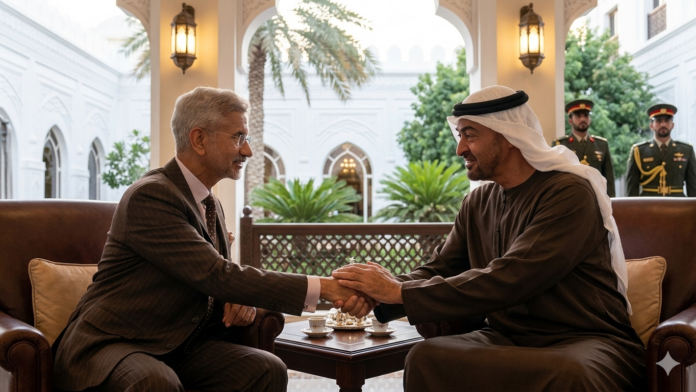
India’s outreach was marked by a high-level meeting between its external affairs leadership and the UAE’s top leadership in Abu Dhabi. The discussions focused on strengthening bilateral relations, with emphasis on expanding cooperation in economic, security, and strategic domains.
During the engagement, appreciation was expressed for the UAE’s role in ensuring the safety and welfare of Indian nationals during recent regional tensions. This acknowledgment underscores the importance of the Gulf region for India, not only in terms of diplomacy but also in safeguarding the interests of its large expatriate population.
The visit was framed as part of ongoing diplomatic engagement with key partners, reinforcing the depth of ties between the two countries.
Pakistan’s Rising Diplomatic Profile
At the same time, Pakistan has gained increased visibility on the global stage by hosting indirect discussions between the United States and Iran. This development has elevated its diplomatic profile, positioning it as an important player in facilitating dialogue between major powers.
The hosting of such talks reflects a growing recognition of Pakistan’s role in regional stability and conflict resolution. It also highlights the country’s ability to engage with multiple stakeholders and create platforms for sensitive negotiations.
This shift has not gone unnoticed, particularly among regional players who view diplomatic influence as a key component of strategic power.
India’s Absence from Critical Talks
India’s exclusion from the US-Iran dialogue has raised questions about its role in ongoing regional developments. Despite its longstanding economic and energy ties with Middle Eastern countries, it was not part of the discussions that have drawn global attention.
This absence has been interpreted by some analysts as a sign of shifting dynamics in regional diplomacy, where new alignments and priorities are shaping participation in key negotiations.
For India, maintaining a visible and active diplomatic presence becomes essential in ensuring that its interests remain represented in the region.
Strengthening Ties with a Key Regional Partner
The United Arab Emirates remains one of India’s most important partners in the Middle East. The relationship is built on strong economic links, extensive trade, and a large community of Indian nationals living and working in the country.
By engaging closely with the UAE, India is reinforcing a partnership that has long served as a cornerstone of its regional strategy. This relationship provides economic benefits, strategic cooperation, and a platform for broader engagement in the Gulf.
Such ties are particularly valuable at a time when regional dynamics are rapidly evolving.
Economic and Strategic Importance of the Gulf Region
The Gulf region holds significant importance for India’s economy and energy security. It serves as a major source of energy imports and a key destination for exports, while also acting as a hub for investment and financial flows.
In addition, the presence of millions of Indian workers in the region creates a strong human connection that further deepens bilateral ties. Ensuring their safety and welfare remains a top priority in India’s foreign policy.
Engagement with Gulf countries is therefore not only a diplomatic necessity but also an economic and social imperative.
Balancing Regional Influence and Global Perception
India’s outreach to the UAE can also be seen as an effort to balance regional influence and manage global perception. In a competitive geopolitical environment, maintaining visibility is crucial for projecting influence and securing strategic interests.
By engaging with key partners, India aims to demonstrate that it remains an active and relevant player in regional affairs, even when excluded from specific negotiations.
This approach reflects a broader strategy of leveraging established relationships to navigate shifting diplomatic landscapes.
Reactions and Interpretations
The timing of India’s engagement has sparked discussions among observers and commentators. Many view the move as a calculated effort to remain diplomatically visible amid changing regional dynamics.
Such interpretations highlight the importance of perception in international relations. Diplomatic actions are often analyzed not only for their substance but also for their timing and context.
For India, maintaining a proactive approach is essential in shaping these perceptions and reinforcing its role in the region.
Underlying Tensions and Regional Sensitivities
The broader context of these developments includes underlying tensions and sensitivities within the region. Diplomatic engagements, alliances, and exclusions can influence relationships and create ripple effects across multiple countries.
Recent financial and political interactions between regional players have added another layer of complexity to the situation. These factors contribute to an environment where strategic decisions are closely watched and carefully interpreted.
Navigating this landscape requires a balance of diplomacy, economic considerations, and long-term strategic planning.
The Importance of Strategic Partnerships
In an increasingly interconnected world, strategic partnerships play a vital role in shaping foreign policy outcomes. For India, maintaining strong ties with key Gulf partners provides stability and access to critical resources.
These partnerships also offer opportunities for collaboration in areas such as trade, technology, and security. By strengthening these relationships, India can enhance its influence and adapt to changing regional dynamics.
The focus on partnerships underscores the importance of cooperation in achieving long-term objectives.
A Changing Landscape of Regional Diplomacy
The developments surrounding the US-Iran talks and subsequent diplomatic engagements reflect a broader shift in regional diplomacy. New alliances, emerging platforms, and evolving priorities are redefining how countries interact and cooperate.
In this changing landscape, adaptability becomes essential. Countries must continuously reassess their strategies and engage with partners to remain relevant and influential.
For India, this means leveraging existing relationships while exploring new avenues for engagement.
Conclusion: Navigating Influence in a Dynamic Region
India’s engagement with the UAE following its absence from key regional talks highlights the complexities of modern diplomacy. In a rapidly changing environment, maintaining visibility and strengthening partnerships are critical for safeguarding national interests.
The situation underscores the importance of proactive engagement and strategic positioning in a region that plays a central role in global politics and economics.
As regional dynamics continue to evolve, the ability to adapt and respond effectively will determine the extent of influence and success in the international arena.
Read More
FBR Approves Use of Seized Luxury Cars for Anti-Smuggling Operations