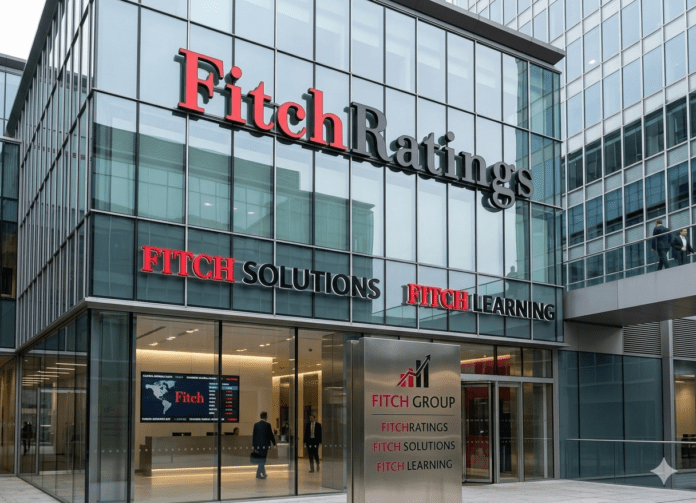

FITCH AFFIRMS PAKISTAN’S B- CREDIT RATING WITH STABLE OUTLOOK
Fitch Ratings has reaffirmed Pakistan’s Long-Term Foreign-Currency Issuer Default Rating at B- with a stable outlook, signaling cautious confidence in the country’s ongoing macroeconomic stabilization efforts. The decision reflects a balance between recent economic improvements supported by international assistance and persistent structural vulnerabilities that continue to weigh on long-term financial stability.
The rating affirmation highlights progress in fiscal discipline, ongoing reforms under an international financial assistance program, and gradual rebuilding of foreign exchange buffers. However, it also underscores Pakistan’s continued exposure to external shocks, particularly in relation to global energy markets and geopolitical uncertainty.
This dual assessment of improvement and vulnerability reflects Pakistan’s fragile but stabilizing economic position in a complex global environment.
IMF PROGRAM REMAINS THE BACKBONE OF ECONOMIC STABILITY
A key factor supporting Pakistan’s credit rating is its continued engagement with an international financial assistance program. The country has reached a staff-level agreement on program reviews, which is expected to unlock approximately 1.2 billion dollars in external financing upon final approval.
This inflow of funds plays a crucial role in maintaining fiscal discipline and supporting external account stability. It also helps ensure that Pakistan can meet near-term financing needs without facing severe balance of payments pressure.
The program has become central to economic management, guiding policy decisions related to taxation, subsidies, and public spending. It has also contributed to improved investor confidence, even as structural challenges remain.
Fitch notes that without this external support, Pakistan’s ability to manage financing requirements and stabilize its economy would be significantly more constrained.
IMPROVING FOREIGN EXCHANGE BUFFERS PROVIDE LIMITED RELIEF
One of the positive developments highlighted in the rating assessment is the gradual rebuilding of foreign exchange reserves over the past year. These reserves act as a critical buffer against external shocks, particularly those linked to energy imports and global financial volatility.
Stronger reserve levels provide short-term stability and help reduce the risk of sudden external financing stress. However, these buffers remain limited in comparison to the country’s overall external obligations.
While improvements have been made, Pakistan’s reserve position is still considered vulnerable, especially in the event of rising global commodity prices or disruptions in financial inflows.
ENERGY DEPENDENCE REMAINS A MAJOR VULNERABILITY
A significant structural challenge facing Pakistan is its heavy dependence on imported energy, particularly oil sourced from Gulf countries. Nearly ninety percent of its energy needs are met through imports, leaving the economy highly exposed to fluctuations in global oil prices.
This dependency creates a direct link between international geopolitical tensions and domestic economic stability. Any disruption in supply routes or sharp increase in oil prices can quickly translate into pressure on foreign exchange reserves and inflation.
Recent adjustments in fuel pricing and subsidy reductions have helped stabilize fiscal accounts, but these measures have also increased domestic cost pressures. The balancing act between fiscal discipline and public affordability remains a persistent policy challenge.
INFLATION EXPECTED TO REMAIN MANAGEABLE BUT ELEVATED
Fitch projects inflation to rise moderately in the coming fiscal year, driven primarily by energy costs and ongoing subsidy reforms. Although inflation is expected to remain significantly lower than peak levels seen in previous years, it is still likely to exert pressure on household incomes and purchasing power.
The stabilization of inflation reflects tighter monetary policy and improved supply conditions. However, external shocks such as oil price volatility could quickly reverse this trend.
Maintaining price stability remains a key priority for policymakers as they attempt to balance growth objectives with macroeconomic stability.
ECONOMIC GROWTH SHOWS MODEST IMPROVEMENT
Economic growth is projected to improve slightly, supported by greater confidence, easing financial conditions, and stabilization in macroeconomic indicators. However, growth remains modest and below levels required for long-term development needs.
The economy is gradually recovering from previous periods of instability, but structural weaknesses continue to limit expansion potential. Investment levels remain constrained, and productivity growth is relatively slow.
Despite these limitations, the outlook suggests cautious improvement, provided external conditions remain stable and reform momentum continues.
RISING EXTERNAL FINANCING REQUIREMENTS POSE CHALLENGES
Pakistan faces significant external financing obligations in the coming fiscal period, including substantial debt repayments and financial commitments to international partners. Total external repayments are expected to rise sharply, placing additional pressure on funding requirements.
A portion of these obligations includes repayments related to previously received deposits and bilateral arrangements. Meeting these commitments will require continued inflows from multilateral institutions, friendly countries, and capital markets.
Any disruption in external financing channels could increase pressure on reserves and complicate economic management.
FISCAL DEFICIT AND DEBT LEVELS REMAIN HIGH
Despite progress in fiscal consolidation, Pakistan continues to run a relatively large fiscal deficit. While improvements have been made through revenue measures and expenditure controls, overall fiscal imbalance remains a concern.
Debt levels also remain elevated compared to peer economies. Although a slight decline in the debt-to-gross domestic product ratio is projected, the overall burden remains high and limits fiscal flexibility.
High debt servicing costs continue to consume a significant portion of government revenue, reducing the space available for development spending and social investment.
CURRENT ACCOUNT PRESSURES RETURN
After a period of relative improvement, Pakistan is expected to return to a current account deficit. This shift reflects rising import needs, particularly in energy, and continued external payment obligations.
The return to deficit conditions highlights the fragility of external stability and reinforces the importance of sustained inflows from financial partners.
Managing the current account remains a central challenge for policymakers, particularly in balancing import needs with limited export growth.
FOREIGN EXCHANGE RESERVES EXPECTED TO EASE
Foreign exchange reserves are projected to decline moderately in the coming fiscal year, reflecting ongoing external payments and financing requirements. Although reserves are expected to remain at manageable levels, they are still insufficient to provide strong long-term protection against external shocks.
Coverage of external payments is projected to remain below optimal levels, indicating continued vulnerability to global financial and commodity market volatility.
Strengthening reserves will depend heavily on sustained external financing and improved export performance.
GEOPOLITICAL RISKS ADD TO ECONOMIC UNCERTAINTY
In addition to economic challenges, geopolitical risks remain a key concern. Regional tensions and border-related security issues add uncertainty to the economic outlook.
Such risks can affect investor confidence, disrupt trade flows, and increase fiscal pressures through higher security and defense-related spending.
These factors contribute to an already complex economic environment, where external shocks can have amplified effects on domestic stability.
OUTLOOK BALANCED BETWEEN RISKS AND REFORMS
The outlook for Pakistan’s credit rating remains stable, reflecting a balance between reform progress and persistent vulnerabilities. On the positive side, continued engagement with international financial institutions, gradual fiscal consolidation, and improved macroeconomic management provide support.
On the downside, risks remain elevated due to external financing needs, energy dependence, and structural fiscal weaknesses.
A potential upgrade would require sustained improvements in external financing access, stronger reserve accumulation, and deeper structural reforms. Conversely, deterioration in external funding conditions, rising commodity prices, or stalled reforms could place downward pressure on the rating.
CONCLUSION: A FRAGILE BUT STABILIZING ECONOMIC POSITION
Fitch’s affirmation of Pakistan’s B- rating reflects a cautiously optimistic view of the country’s economic trajectory. While significant challenges remain, recent policy measures and international support have helped stabilize the situation.
The coming years will be critical in determining whether these gains can be sustained and expanded. Continued reform efforts, combined with stable external financing, will be essential for improving long-term economic resilience and creditworthiness.
Read More
Gulf War Disrupts $400 Billion Fashion Industry as UAE Sales Plunge