

Introduction
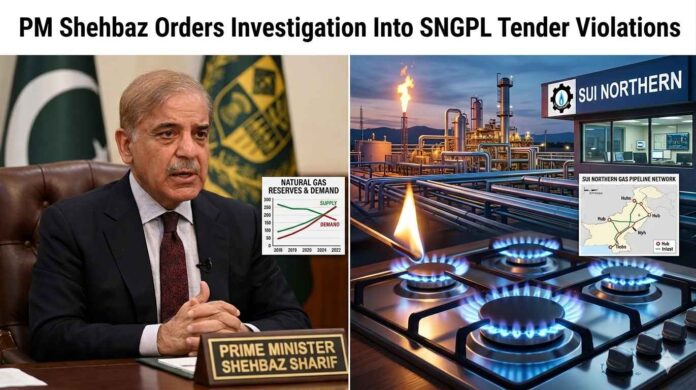
Public procurement transparency has once again come under scrutiny in Pakistan after serious allegations were raised regarding tender processes within one of the country’s largest utility companies. Prime Minister Shehbaz Sharif has taken formal notice of a complaint alleging violations of procurement rules in tenders issued by Sui Northern Gas Pipelines Limited.
The complaint, submitted by a transparency watchdog organization, has raised concerns about possible irregularities in the awarding of contracts and compliance with public procurement regulations. In response, the Prime Minister has ordered a comprehensive investigation to determine whether any rules were breached during the tendering process.
This development highlights the increasing focus on accountability in public sector organizations, particularly those handling large-scale contracts and public funds. The outcome of the investigation could have significant implications for governance, procurement practices, and institutional transparency.
Background of the Complaint
The issue emerged after concerns were raised regarding the procurement activities of Sui Northern Gas Pipelines Limited, one of the country’s key gas distribution companies. The complaint alleges that certain tenders may not have fully complied with established procurement regulations.
These concerns were formally brought to the attention of the Prime Minister’s Office, prompting a review of the situation. The allegations specifically relate to potential violations of public procurement rules that govern transparency, fairness, and competition in awarding government-related contracts.
While the details of the complaint have not been fully disclosed, the seriousness of the allegations was sufficient to prompt immediate action at the highest level of government.
Prime Minister’s Response
Upon receiving the complaint, Prime Minister Shehbaz Sharif directed relevant authorities to initiate a detailed investigation without delay. The directive emphasizes the need for a thorough and evidence-based inquiry into the matter.
The Prime Minister has reportedly instructed that the investigation should be conducted strictly on merit, ensuring that all findings are supported by factual evidence rather than assumptions or unverified claims.
This approach reflects a broader commitment to accountability and transparency in public sector governance. By ordering an independent review, the government aims to ensure that procurement processes remain fair and compliant with legal frameworks.
Focus on Procurement Transparency
Public procurement plays a critical role in the functioning of government institutions and state-owned enterprises. It involves the acquisition of goods, services, and infrastructure projects funded by public resources.
To ensure fairness and prevent misuse of authority, procurement activities are governed by strict regulations. These rules are designed to promote competition, prevent favoritism, and ensure that public funds are used efficiently.
Allegations of violations in this area are taken seriously because they can undermine trust in public institutions and lead to financial losses for the state.
Role of Procurement Regulations
The Public Procurement Regulatory Authority framework establishes guidelines for how government contracts should be awarded. These regulations require transparency in bidding processes, equal opportunity for all participants, and clear documentation of decisions.
Any deviation from these rules can raise concerns about fairness and accountability. In cases where violations are proven, corrective actions may include cancellation of contracts, disciplinary measures, or legal proceedings.
The current investigation will examine whether these rules were followed properly in the tendering process under scrutiny.
Significance of SNGPL
Sui Northern Gas Pipelines Limited is one of the largest gas distribution companies in Pakistan. It plays a vital role in supplying natural gas to households, industries, and commercial sectors across the northern region of the country.
Given its scale and importance, the company frequently engages in large procurement activities involving significant financial resources. This makes transparency and compliance in its operations particularly important.
Any allegations of irregularities within such a key organization naturally attract public attention due to their potential impact on energy supply and public trust.
Previous Concerns Over Procurement Practices
While the current case is still under investigation, there have been past instances where procurement practices in large state-owned entities have faced scrutiny. Such concerns often relate to transparency, competitive bidding, and procedural compliance.
However, it is important to note that no findings have been officially confirmed in the current case. The ongoing inquiry will determine whether any violations actually occurred and whether corrective measures are necessary.
Importance of the Investigation
The investigation ordered by the Prime Minister is expected to play a crucial role in clarifying the situation. It will assess whether procurement rules were followed and whether any procedural lapses occurred during the tendering process.
Such inquiries are essential for maintaining institutional integrity and ensuring that public resources are managed responsibly. They also help reinforce confidence in governance systems by demonstrating that allegations are taken seriously and addressed through proper channels.
Government’s Stance on Accountability
The directive from the Prime Minister also reflects a broader policy stance on accountability and governance. The government has repeatedly emphasized the importance of transparency in public sector operations and zero tolerance for corruption or irregular practices.
By ordering an immediate investigation, the leadership aims to reinforce the message that procurement processes must remain fair, competitive, and fully compliant with regulations.
If any wrongdoing is identified during the inquiry, strict action has been promised against those responsible. This includes both administrative and legal consequences, depending on the findings.
Impact on Public Trust
Allegations involving public sector organizations can have a significant impact on public trust. Citizens expect transparency and accountability in the management of state-owned enterprises, particularly those involved in essential services.
Investigations such as this are important not only for identifying potential violations but also for restoring confidence in institutional processes. A transparent and fair inquiry can help reassure the public that oversight mechanisms are functioning effectively.
Procurement Challenges in Public Sector Entities
Public sector procurement in large organizations often involves complex procedures and high-value contracts. This complexity can sometimes lead to challenges in ensuring full compliance with regulations.
Common issues include documentation gaps, procedural delays, and inconsistencies in evaluation processes. Strengthening internal controls and improving oversight mechanisms are key to addressing these challenges.
The outcome of the current investigation may also highlight areas where procurement systems can be improved to prevent similar concerns in the future.
Role of Oversight Bodies
Oversight institutions play a critical role in monitoring procurement activities and ensuring compliance with regulations. These bodies are responsible for reviewing processes, investigating complaints, and recommending corrective actions where necessary.
Their involvement helps maintain a system of checks and balances, ensuring that no single entity has unchecked authority over public procurement decisions.
The current case will likely involve coordination between multiple oversight bodies to ensure a comprehensive review of the allegations.
Possible Outcomes of the Investigation
The investigation into the alleged tender violations could lead to several possible outcomes depending on the findings. If no irregularities are found, the matter may be closed without further action.
If procedural lapses are identified, corrective measures may be recommended to improve compliance in future procurement processes. In cases where serious violations are proven, disciplinary or legal action could be taken against those responsible.
Regardless of the outcome, the investigation is expected to provide greater clarity on procurement practices within the organization.
Broader Implications for Governance
Beyond the specific case, the investigation has broader implications for governance and public sector reform. It highlights the importance of maintaining strict adherence to procurement rules and ensuring transparency in all government-related contracts.
Such cases also serve as reminders of the need for continuous improvement in institutional frameworks to prevent irregularities and strengthen accountability.
Conclusion
The decision by Prime Minister Shehbaz Sharif to order an investigation into alleged tender violations at SNGPL underscores the government’s focus on transparency and accountability in public procurement.
While the allegations are still under review and no conclusions have been reached, the inquiry represents an important step in ensuring that procurement processes are conducted in accordance with established rules.
The outcome of the investigation will be closely watched, as it has the potential to influence future procurement practices and reinforce public confidence in state institutions.
Ultimately, the case highlights the importance of strong oversight mechanisms and transparent governance in maintaining trust and efficiency in public sector operations.
Read More


