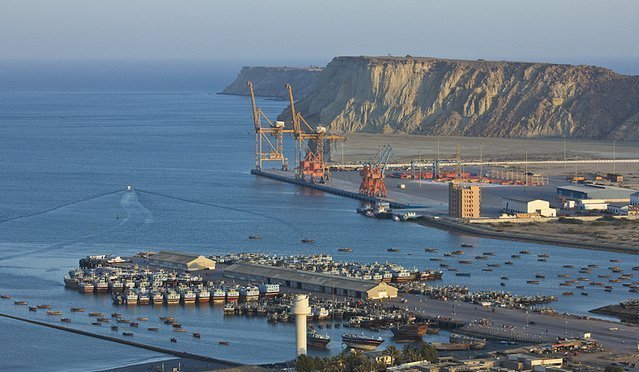

The government of Pakistan has announced a wide range of incentives aimed at increasing international transit traffic through Gwadar Port, marking another important step toward transforming the port into a major regional trade and logistics hub. The initiative includes significant reductions in port tariffs, shipping charges, and storage fees to attract global shipping companies, traders, and logistics operators.
Federal Minister for Ports and Shipping, Junaid Anwar Chaudhry, revealed the details of the new policy measures while emphasizing the government’s commitment to strengthening Gwadar Port’s role in international trade. According to the minister, the incentives are designed to improve the competitiveness of the port and encourage greater commercial activity in the region.
One of the key measures announced is a 25 percent reduction in berthing fees for container vessels. Berthing fees are among the major operational costs for shipping companies, and lowering these charges is expected to encourage more international cargo ships to use Gwadar Port for loading and unloading operations. Industry experts believe that reduced shipping costs can significantly improve the attractiveness of a port in the highly competitive global maritime sector.
In addition to the reduction in berthing charges, the government has also announced up to a 40 percent discount on port charges for transshipment containers. Transshipment refers to the process in which cargo containers are transferred from one vessel to another during their journey to final destinations. By offering substantial concessions on transshipment cargo, Pakistan hopes to position Gwadar as a strategic transit point for regional and international trade routes connecting South Asia, Central Asia, the Middle East, and Africa.
The government has also introduced a 31 percent reduction in port charges for transit container cargo. Transit cargo generally includes goods transported through one country to another destination. Officials believe that lowering these charges will encourage neighboring countries and international traders to use Gwadar Port as a preferred gateway for regional trade activities.
Speaking about the broader vision behind these reforms, Junaid Anwar Chaudhry stated that the government is determined to create a business-friendly environment that supports global trade and investment. He said the incentives being offered at Gwadar are among the most competitive in the region and are intended to attract record levels of international transit traffic.
Another major relief announced for traders and shipping companies is the extension of free storage facilities for general cargo. Previously, importers and exporters were allowed only five days of free storage at the port. Under the new policy, this period has been increased to one month. The decision is expected to provide significant financial relief to businesses by reducing warehousing and logistics costs.
Business leaders and shipping industry representatives have welcomed the government’s announcement, describing it as a positive step toward enhancing Pakistan’s maritime economy. They believe that lower operational costs and improved trade facilities can help Gwadar compete with other major regional ports.
Gwadar Port holds immense strategic importance due to its location on the Arabian Sea near key international shipping routes. It is considered a central component of Pakistan’s long-term economic development strategy, especially under regional connectivity and trade initiatives. Experts argue that with proper infrastructure, modern facilities, and investor-friendly policies, Gwadar has the potential to emerge as a leading commercial gateway for the region.
The government has been working to improve infrastructure around the port, including roads, logistics networks, and trade facilitation systems. Officials say these efforts are part of a broader policy aimed at turning Gwadar into a fully functional regional logistics hub capable of handling large-scale international trade operations.
Economic analysts note that increased activity at Gwadar Port could create new employment opportunities, boost local businesses, and strengthen Pakistan’s economy through higher trade volumes and foreign investment. Enhanced maritime trade could also improve regional connectivity and support economic integration among neighboring countries.
Despite the positive outlook, experts also stress the importance of maintaining efficient customs procedures, reliable transportation networks, and consistent policy implementation to ensure the long-term success of Gwadar Port. They believe that continued government support and international investor confidence will play a crucial role in achieving the port’s full potential.
The latest incentives announced by the government demonstrate Pakistan’s strong commitment to promoting Gwadar as a competitive and business-friendly port for international commerce. By reducing shipping costs, extending storage facilities, and offering major concessions on cargo operations, the authorities hope to attract global shipping lines and traders while increasing the port’s role in regional and international trade.
As competition among ports in the region continues to grow, the success of Gwadar Port will largely depend on sustained policy reforms, modern infrastructure development, and effective trade management. However, the newly announced incentives represent an important move toward making Gwadar a key center for maritime trade and logistics in the future.