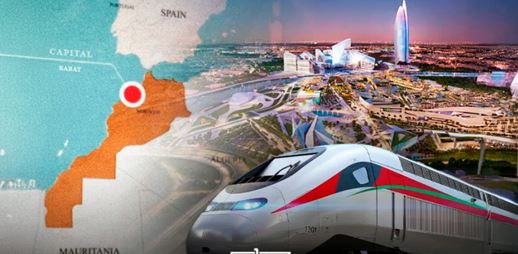

“Under the leadership of His Majesty King Mohammed VI, Morocco has been able to leverage its geographical position, its industrial policy, its infrastructure, its international partnerships and its diplomacy to become a strategic bridge between continents,” notes the Stimson Center in a report entirely devoted to the Kingdom.
Specializing in issues of international security, global governance, peace and public policy, this independent and non-partisan American think tank based in Washington highlights in a report, published on May 15 on its website , the rise of Morocco as a stable regional actor, industrial, diplomatic and energy-related.
Executive Summary
Morocco enters 2026 as a sophisticated middle power occupying a structurally unique position at the intersection of the Atlantic, Mediterranean, and Sahelian spheres. No longer merely a buffer state for European migration management, the Kingdom has evolved into a proactive regional actor and stable anchor at the crossroads of Europe and Africa. Under King Mohammed VI, Morocco has leveraged its geography to facilitate trade, investment, and security cooperation across continents, effectively reshaping the Maghreb’s strategic architecture through what analysts have termed “strategic transactionality,” a foreign policy based on disciplined alignment of interests- securing diplomatic and economic support while offering cooperation on shared priorities.
This report analyzes Morocco’s ongoing transition from a low-cost manufacturing platform to a high-tech industrial exporter, green energy pioneer, and emerging battery materials hub. It evaluates the New Development Model launched in 2021 against the persistent structural vulnerabilities that constrain it.
Three intersecting dynamics define Morocco’s current trajectory:
• The first is economic transformation: The rise of integrated automotive, aerospace, and critical minerals export clusters has materially shifted Morocco’s place in global supply chains, drawing sustained European and Gulf investment and positioning the country as a preferred nearshoring destination amid Western efforts to reduce Chinese supply chain dependence.
• The second is social consolidation: The 2021 social protection reform extending health coverage and family allowances to the full population represents the most ambitious domestic policy undertaking in a generation, though its fiscal sustainability depends on continued revenue performance and structural job creation.
• The third is diplomatic repositioning: The 2020 Abraham Accords normalization with Israel and the 2025 UN Security Council resolution centering Morocco’s autonomy plan for Western Sahara represent significant multilateral wins, yet a durable resolution to the Algeria impasse remains elusive.
This report synthesizes data from the IMF, World Bank, UN agencies, and leading think tanks to map Morocco’s essential developmental and geopolitical structures, identify the structural tensions between its reform ambitions and its institutional constraints, and contextualize the Kingdom’s role as a pivotal actor in an increasingly contested region.
Economic Landscape
Morocco’s GDP stood at approximately $154 billion in 2024 (World Bank), making it Africa’s fifth-largest economy. Real GDP growth accelerated to an estimated 4.9% in 2025, supported by a rebound in agricultural output and a surge in large-scale infrastructure projects, up from 3.2% in 2024 and 3.4% in 2023. Growth is projected at approximately 4.4% for 2026. Gross National Income (GNI) per capita reached $3,760 in 2024 (Atlas method), maintaining Morocco’s lower-middle-income classification. GNI per capita in purchasing power parity terms stood at approximately $10,150 (current international dollars). Inflation decelerated sharply from 6.1% in 2023 to 0.9% in 2024 and remained low at 0.8% in 2025, reflecting declining energy prices and easing global supply pressures. Bank Al-Maghrib lowered its policy rate twice in 2024 and has maintained a broadly neutral stance since. The central government fiscal deficit narrowed from 4.1% of GDP in 2024 to 3.5% in 2025, despite higher spending on public investment and transfers to state-owned enterprises, reflecting stronger-than-expected tax revenues from ongoing reforms. The government’s medium-term fiscal framework targets a gradual reduction in public debt toward 60.5% of GDP by 2031.
Morocco holds 70% of global phosphate reserves and automotive manufacturing is now the largest export sector. Public debt is approximately 68–70% of GDP, though the government maintains overall fiscal discipline and macroeconomic stability.
Economic Reforms and Vision 2035
Morocco has implemented broad economic and social reforms to drive development and address structural challenges. In 2021, King Mohammed VI’s advisory committee introduced the “New Development Model,” which outlines a strategy for inclusive and sustainable growth through 2035. The plan prioritizes private sector competitiveness, reducing inequality, strengthening education and health systems, empowering regional authorities, and improving governance. It also focuses on job creation, especially for youth, and advancing higher value-added industries.
A major reform launched in 2021 seeks to achieve universal social protection by 2025. This initiative extends health insurance to all citizens, expands pension coverage to self-employed and informal sector workers, and introduces family allowances for all families regardless of income. By 2024, 88% of the population has basic health coverage. The expanded social safety net is funded by reallocating resources from broad subsidies.
Fiscal reforms focus on simplifying and reducing corporate taxes. The standard corporate income tax rate of 30–31% is being replaced by a progressive system from 2023 to 2026, with lower rates for small and medium enterprises and a base rate of 20–25% for larger firms. The government is working to broaden the tax base by formalizing informal businesses and addressing tax evasion. Digitization of tax administration and customs is underway to enhance efficiency and transparency. Public financial management reforms target improved budget execution and accountability. Ongoing infrastructure investments in ports, highways, railways, and digital connectivity aim to strengthen economic competitiveness. Collectively, these reforms are designed to modernize Morocco’s economy, increase competitiveness and exports, and ensure that growth benefits a wider segment of society.
The Tanger Med-Algeciras corridor in the Strait of Gibraltar represents one of the most strategically significant maritime corridors in the world. The Strait itself serves as a chokepoint between the Atlantic and the Mediterranean, with approximately 100,000 vessels transiting annually, carrying more than 10% of global maritime trade. In 2024, Tanger Med handled 10.2 million TEUs (twenty-foot equivalent units), surpassing Algeciras’ 4.7 million TEUs and making it the largest container port in Africa and the Mediterranean. By 2025, Tanger Med had surpassed Algeciras and Valencia combined in throughput. Road freight and Ro-Ro (roll-on/roll-off) ferry traffic between Tanger Med and Algeciras reached nearly 500,000 units in 2025. Between 2008 and 2024, Morocco’s Liner Shipping Connectivity Index (LSCI) ranking improved from 34th to 21st globally, outperforming the M.E.N.A regional average. Foreign direct investment inflows to port-linked industrial zones increased by 12% between 2020 and 2024. Tanger Med has developed an end-to-end digital platform and now hosts over 1,200 companies in sectors including automotive manufacturing, aeronautics, textiles, and advanced logistics. The corridor’s competitiveness has been enhanced by Morocco’s free trade agreements with the EU and the United States, positioning Tanger Med as a preferred hub for near-shoring and export-oriented manufacturing targeting European markets.
Trade Policy and Partners
Morocco is highly open to trade, with trade representing approximately 95% of its GDP as of 2025. The European Union is its leading partner, accounting for 59% of total trade, and two-thirds of exports are directed to Europe, primarily Spain and France. Morocco has established free trade agreements with the EU (2000) and the United States (2006). Since rejoining the African Union in 2017 and joining the African Continental Free Trade Area, Morocco has sought stronger ties with Sub-Saharan Africa, and its firms have expanded across West and Central Africa. Partnerships with China through the Belt and Road Initiative and with Gulf states such as the UAE, Qatar, and Saudi Arabia are also increasing, although Europe remains Morocco’s primary trading partner.
Morocco operates several free zones offering companies tax breaks, subsidies, and reduced customs duties to attract export-oriented investment. Companies registered in Industrial Acceleration Zones are subject to a corporate tax rate of 20% following an initial five-year exemption, and benefit from a 20% income tax rate for employees for up to 10 years – significantly below the standard graduated income tax, which can reach 38%. As part of its strategy to become an African financial hub, Morocco has established Casablanca Finance City (CFC), its flagship financial and business hub offering equivalent incentives to both financial and non-financial firms, domestic and foreign. The CFC regime provides the same tax benefits and is designed to attract regional headquarters of multinational companies. Morocco does not currently have an investment screening process for critical industries such as telecommunications, critical minerals and rare earths, and renewable energy, which represents a gap noted by international investors. The government is also continuing efforts to combat widespread informality in the economy, which limits productivity growth and tax revenues.
Export Sectors
Morocco has diversified its exports beyond traditional products such as phosphates, citrus, and textiles to include higher value-added manufacturing. The automotive sector illustrates this shift, with exports of vehicles, wiring harnesses, engines, and components now representing about 25% of total goods exports, surpassing phosphates. This growth results from sustained investment in infrastructure and workforce development. Major manufacturers, including Renault and Stellantis/Peugeot, operate large factories focused on European markets, supported by hundreds of component suppliers that form an integrated automotive ecosystem. Morocco produces over a million vehicles annually as of 2026, ranking as Africa’s largest auto manufacturer surpassing South Africa.
Phosphate rock and its derivatives remain essential to Morocco’s economy. The state-owned OCP Company controls 70% of global phosphate rock reserves and has transitioned from exporting raw minerals to becoming a global integrated fertilizer producer. OCP operates mines in Khouribga and Youssoufia, processing facilities that convert phosphate rock into phosphoric acid and various fertilizers, and port terminals for export. Significant investments in capacity and downstream processing have positioned Morocco among the world’s leading fertilizer exporters, serving markets in Africa, Europe, Latin America, and Asia.
Morocco’s textile and apparel industry benefits from its proximity to Europe, supplying fast fashion brands such as Zara and H&M with short lead times. The sector faces strong competition from lower-cost Asian producers and must continually modernize to stay competitive. Agricultural and fish exports, including citrus fruits, vegetables, olive oil, and canned fish, remain important, with the EU and African markets as key destinations. The aerospace sector has developed into a high-tech export industry, with over 140 firms — including Bombardier, Safran, Eaton, and many smaller suppliers — producing cables, parts, and assemblies for commercial and military aircraft. Electronics and electrical equipment, particularly automotive wiring systems and electronics assembly, are also expanding export areas.
Critical Minerals
Morocco plays an increasingly strategic role in the global critical minerals landscape. Beyond its dominant phosphate position, the country holds significant reserves of cobalt, copper, nickel, manganese, barite, and fluorine. Morocco is the world’s ninth-largest producer of cobalt and holds the eleventh-largest cobalt reserves globally. These minerals are essential inputs for electric vehicles, renewable energy systems, semiconductors, and defense industries. The state-owned mining company Managem is Morocco’s primary cobalt producer, operating the Bou Azzer mine and supplying battery-grade cobalt to major European automakers. Managem has signed supply agreements with BMW and Renault Group, committing to supply approximately 5,000 tonnes of low-carbon cobalt sulphate annually for seven years starting in 2025, supporting roughly 15 GWh of battery production per year. Morocco’s reserves include approximately 30 million metric tonnes of phosphates, 1.5 million metric tonnes of manganese, 45 million metric tonnes of cobalt and nickel combined, and 5 million metric tonnes of copper.
Morocco is positioning itself as a battery materials hub, leveraging its phosphate dominance for lithium iron phosphate (LFP) battery production. The OCP Group inaugurated its first lithium-ion battery materials manufacturing plant at Jorf Lasfar in June 2025. Chinese firms BTR New Material Group, Gotion High Tech, Huayou Cobalt, and CNGR have collectively pledged over $700 million in battery materials plants in Morocco. BTR is developing a cathode materials facility near Tangier with an initial capacity of 25,000 tonnes, expected to be operational by September 2026. Gotion is building a gigafactory in Kenitra with initial capacity of 20 GWh, targeting third quarter 2026, with potential to scale to 100 GWh. The growing Chinese presence in Morocco’s critical minerals sector is a point of geopolitical attention for Western partners, given FEOC (Foreign Entity of Concern) supply chain regulations in the United States and the EU’s Critical Raw Materials Act, both of which seek to diversify away from Chinese-dominated supply chains.
Foreign Direct Investment
Morocco has taken a systematic approach to improving its investment climate and attracting foreign direct investment. Before the pandemic, annual FDI inflows averaged $2–3 billion, placing Morocco among Africa’s leading recipients. FDI inflows have recovered strongly, supported by the 2022 Investment Charter, which introduced new incentive frameworks and strengthened protections for investors. Key source countries are France, particularly in banking, retail, and telecommunications; the UAE in real estate, ports, and logistics; Spain in banking and energy; and the United States in manufacturing and services. Net FDI flows rose in 2024, with international reserves reaching $37.2 billion (120% of the IMF’s adjusted ARA metric). The government has introduced regulatory reforms to simplify business registration, reduce bureaucracy, and strengthen investor protections. Morocco’s 2030 Digital Strategy provides a framework for attracting investment in technology sectors, targeting digital transformation across government and the private economy as a driver of competitiveness and job creation.
Free zones and industrial parks play a key role in attracting investment. The Tanger Med port complex features industrial zones specializing in automotive, logistics, and textiles, offering streamlined customs, tax incentives, and modern infrastructure. Automotive zones near Tangier and Kenitra host Renault and Stellantis/Peugeot factories that produce hundreds of thousands of vehicles each year. Aerospace zones in Casablanca and Nouaceur support suppliers for Boeing and Airbus. These zones provide one-stop services, reliable utilities, and close access to ports, supporting export-oriented manufacturing.
Morocco is recognized as a leading African country for ease of doing business, as reported by World Bank assessments, although certain challenges persist. Major sectors attracting foreign direct investment (FDI) include automotive manufacturing (notably Renault, Stellantis, and various component suppliers), aerospace (such as Bombardier, Safran, and Eaton), pharmaceuticals, renewable energy (including solar and wind projects), real estate, tourism, financial services, and business process outsourcing. Investment promotion agencies actively seek to attract foreign companies by providing sector-specific incentives and support.. The government is undertaking initiatives to streamline administrative procedures, improve transparency, and reinforce the rule of law to sustain FDI growth.
Artificial Intelligence and Technology Landscape
Morocco has established itself as one of Africa’s more advanced digital economies and is pursuing an ambitious national artificial intelligence strategy. In January 2026, Morocco unveiled plans for Maroc IA 2030, a national AI roadmap that builds on the broader Digital Morocco 2030 strategy launched in 2024. The roadmap aims to modernize public administration, support private sector innovation, develop domestic AI capacity, and reduce dependence on external digital solutions. Together, the two strategies are projected to generate approximately 240,000 digital jobs and contribute roughly $10 billion to Morocco’s GDP by 2030, while improving Morocco’s international AI readiness ranking.
A key institutional element of the roadmap is the planned creation of the Al Jazari Institutes, a national network of AI centers of excellence linking academic research with regional innovation needs. A General Directorate for AI and Emerging Technologies is also planned to coordinate public policy and oversee implementation.
Beyond national borders, Morocco aims to develop an Arab-African regional digital hub in partnership with the United Nations Development Programme, reflecting its ambition to position itself as a continental leader in AI and digital development. Morocco also co-initiated with the United States the first UN General Assembly Resolution on Artificial Intelligence, adopted by consensus in March 2024, and launched the first Group of Friends on AI at the UN, reinforcing its role in shaping global AI governance.
Morocco’s technology infrastructure supports these ambitions. The country has good internet penetration and a growing mobile ecosystem. The ICT sector is anchored by Maroc Telecom, which operates internationally across West and Central Africa. Casablanca serves as a regional hub for business process outsourcing and fintech. Morocco has invested in submarine cable connectivity linking it to Europe and West Africa. The country’s proximity to Europe, bilingual (Arabic-French) workforce, and competitive cost base have attracted nearshoring in IT services and call centers.
Financial and Banking Sector
Morocco has a well-developed banking sector by regional standards. Bank Al-Maghrib (BAM), the central bank, is an independent and well-regarded institution that has maintained macroeconomic stability through successive shocks. The sector is dominated by a small number of large commercial banks – most prominently Attijariwafa Bank, Banque Centrale Populaire (BCP), and BMCE Bank of Africa – which have expanded significantly across sub-Saharan Africa. Foreign banks, including French institutions such as BMCE, Société Générale, and Crédit Agricole, also operate in Morocco. Casablanca Finance City (CFC) serves as Morocco’s flagship financial hub and has attracted regional headquarters of major international firms, positioned as the leading financial platform for companies accessing African and MENA markets. The insurance, cap