
Fresh Military Confrontation Raises Fears of Wider Regional Conflict
The conflict between the United States and Iran has entered a dangerous new phase after Tehran launched retaliatory military action following American strikes on Iranian military targets. The latest exchange of attacks has intensified concerns about a broader regional escalation at a time when diplomatic negotiations aimed at ending months of hostilities remain fragile and uncertain.
The new round of military action highlights the volatility of the situation across the Middle East, where multiple flashpoints continue to threaten regional stability. Despite ongoing diplomatic efforts and ceasefire arrangements, both sides have demonstrated a willingness to use military force when they perceive their strategic interests or security assets are under threat.
The developments come amid a conflict that has already caused significant human suffering, economic disruption, and geopolitical uncertainty. With each new exchange of attacks, fears are growing that the region could slide into a prolonged confrontation with consequences extending far beyond the immediate battlefield.
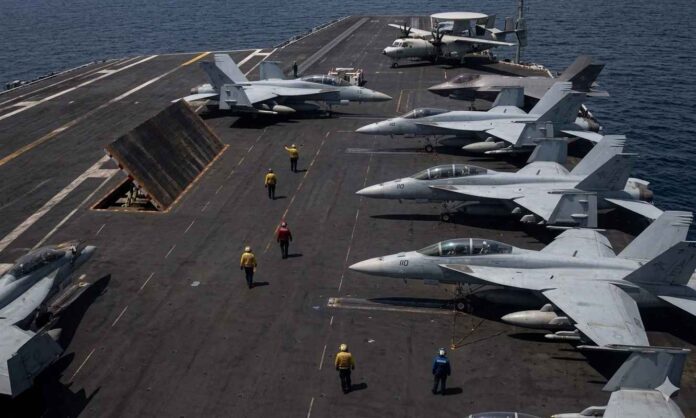
US Military Launches Strikes on Iranian Targets
The latest escalation began when the United States conducted military operations against several Iranian military installations along the country’s Gulf coastline.
According to American military officials, the strikes were launched in response to what Washington described as hostile Iranian actions that threatened regional security and international maritime activity.
US military authorities stated that the operation targeted air defense systems, command infrastructure, and unmanned aerial capabilities believed to pose risks to military and commercial assets operating in the region.
Officials characterized the operation as a defensive measure designed to protect American personnel, military facilities, and international shipping routes.
The strikes demonstrated Washington’s continued commitment to maintaining a strong military presence in the Gulf and responding forcefully to perceived threats against its interests.
Military analysts noted that the operation reflected a broader strategy of deterrence aimed at preventing further attacks on American assets while signaling that the United States remains prepared to act militarily when necessary.
Tehran Responds With Retaliatory Action
Iran responded swiftly to the American operation.
Military officials in Tehran announced that forces had targeted a military air base linked to the recent attacks on Iranian territory.
The retaliatory strike represented another chapter in the ongoing cycle of action and reaction that has characterized the conflict for months.
Iranian authorities framed the operation as a legitimate response to foreign military aggression and emphasized their determination to defend national sovereignty.
The retaliation underscored Tehran’s longstanding position that attacks on its territory will not go unanswered.
Observers noted that the response was carefully calibrated to send a political and military message while avoiding actions that might immediately trigger a larger regional war.
Nevertheless, the attack significantly increased tensions and highlighted the fragile nature of the existing ceasefire arrangements.
Regional Air Defenses Activated Amid Rising Tensions
The latest military exchanges quickly reverberated across neighboring countries.
Reports of missile and drone activity prompted heightened security measures throughout the Gulf region.
Air defense systems were activated in several locations as authorities sought to protect critical infrastructure and military installations from potential attacks.
The activation of regional defense networks illustrated how quickly localized military incidents can affect the broader Middle East security environment.
Many countries in the region host strategic military assets, energy infrastructure, and major shipping routes, making them vulnerable to the consequences of escalating conflict.
The heightened security posture reflects growing concerns that further military exchanges could threaten regional stability and economic activity.
Conflict Continues Despite Diplomatic Negotiations
One of the most concerning aspects of the current situation is that military confrontations continue even as diplomatic negotiations remain underway.
Efforts to achieve a lasting political settlement have been ongoing for months, yet progress has been slow and inconsistent.
Negotiators face numerous obstacles, including disagreements over security guarantees, sanctions relief, regional influence, and military activities.
The continuation of military exchanges during negotiations creates additional challenges for diplomats attempting to bridge differences between the two sides.
Every new strike increases political pressure on leaders and complicates efforts to build trust.
Experts warn that prolonged military activity could eventually undermine diplomatic channels altogether, making a peaceful resolution even more difficult to achieve.
The Origins of the Current Conflict
The conflict has evolved significantly since its initial outbreak.
What began as a series of military confrontations gradually expanded into a broader regional struggle involving multiple actors and strategic interests.
The war has affected several countries directly and indirectly, contributing to political instability and economic uncertainty across the Middle East.
Both sides accuse each other of provoking hostilities and undermining regional security.
The resulting cycle of escalation has produced repeated military exchanges, diplomatic crises, and growing concerns among international observers.
Despite periods of relative calm, the underlying disputes that fueled the conflict remain unresolved.
As a result, ceasefires have often proven fragile and temporary.
Nuclear Dispute Remains Central Issue
A major source of tension continues to be concerns surrounding Iran’s nuclear program.
The United States and its allies maintain that preventing the development of nuclear weapons remains a critical security objective.
Iran, meanwhile, insists that its nuclear activities are peaceful and intended for civilian purposes.
The disagreement has become one of the most significant obstacles to achieving a comprehensive settlement.
Negotiators have struggled to find common ground on issues related to uranium enrichment, international inspections, security guarantees, and future restrictions.
The nuclear dispute influences nearly every aspect of the broader conflict and remains at the center of ongoing diplomatic efforts.
Without meaningful progress on this issue, many analysts believe achieving a durable peace agreement will remain extremely difficult.
Economic Consequences Continue to Grow
The conflict has already produced substantial economic consequences.
Energy markets have been particularly sensitive to developments in the region due to the strategic importance of Gulf shipping routes.
Concerns about supply disruptions have contributed to fluctuations in global oil prices and increased uncertainty for businesses and consumers worldwide.
Higher energy costs have affected transportation, manufacturing, and household expenses across numerous countries.
The economic impact extends beyond energy markets.
Trade routes, investment flows, tourism, and financial markets have also been influenced by regional instability.
For many governments, the economic consequences of prolonged conflict are becoming an increasingly urgent concern.
Strategic Importance of Regional Shipping Routes
One of the key reasons the conflict attracts global attention is the strategic significance of regional maritime corridors.
These waterways serve as critical channels for international energy supplies and commercial trade.
Any disruption to shipping activity can have immediate effects on global markets.
The possibility of attacks on vessels, blockades, or military confrontations near major shipping routes remains a major source of concern for policymakers and businesses.
Maintaining freedom of navigation has therefore become a central objective for many countries with interests in the region.
The latest escalation has renewed discussions about maritime security and the protection of international trade routes.
Political Pressure Mounts on Both Sides
Political leaders on both sides face increasing domestic and international pressure.
Decision-makers must balance military objectives with economic realities, diplomatic considerations, and public opinion.
In the United States, concerns about energy prices, military commitments, and broader foreign policy priorities continue to shape political debate.
Meanwhile, Iranian leaders face pressure to demonstrate strength while managing the economic challenges associated with sanctions and conflict.
The complex political environment makes compromise difficult.
Leaders often face criticism from opposing factions regardless of whether they pursue military action or diplomatic engagement.
This dynamic complicates efforts to achieve lasting agreements and increases the risk of further escalation.
Regional Allies Closely Monitoring Developments
Countries throughout the Middle East are closely monitoring the evolving situation.
Many regional governments have significant security, economic, and political interests at stake.
Some nations are concerned about the possibility of conflict spreading beyond its current boundaries.
Others worry about disruptions to trade, investment, and energy exports.
Regional powers continue to engage in diplomatic consultations aimed at preventing a wider war.
At the same time, military preparedness has increased as governments seek to protect their populations and critical infrastructure.
The interconnected nature of regional security means that developments in one area can quickly influence stability elsewhere.
Diplomatic Efforts Continue Despite Setbacks
Despite repeated military confrontations, diplomatic efforts have not stopped.
Officials from multiple countries remain engaged in discussions aimed at reducing tensions and identifying potential pathways toward a negotiated settlement.
Diplomatic initiatives focus on confidence-building measures, ceasefire enforcement, humanitarian concerns, and long-term security arrangements.
While progress has been uneven, many observers believe diplomacy remains the only viable solution to the conflict.
Military action may alter battlefield dynamics, but it is unlikely to resolve the underlying political disputes driving the confrontation.
The challenge facing negotiators is maintaining dialogue while managing recurring crises.
Risk of Wider Escalation Remains High
Perhaps the greatest concern among analysts is the possibility of a broader regional escalation.
Every exchange of military strikes increases the likelihood of miscalculation or unintended consequences.
A single incident involving civilian casualties, strategic infrastructure, or regional allies could trigger a larger confrontation.
The presence of numerous military forces operating in close proximity further increases the risk.
While both sides may seek to avoid full-scale war, the ongoing cycle of retaliation creates persistent uncertainty.
Preventing further escalation will require careful diplomacy, effective communication channels, and restraint from all parties involved.
What Happens Next?
The future trajectory of the conflict remains uncertain.
Several scenarios are possible.
Diplomatic negotiations could eventually produce a breakthrough that reduces tensions and establishes a framework for lasting peace.
Alternatively, continued military exchanges could prolong instability and increase the risk of a wider conflict.
Economic pressures, domestic political considerations, and international diplomatic efforts will all influence decision-making in the coming weeks and months.
Much will depend on whether leaders choose escalation or engagement as their preferred path forward.
For now, the situation remains highly fluid.
Conclusion
The latest confrontation between the United States and Iran represents another dangerous escalation in a conflict that has already reshaped regional dynamics and affected global markets.
American strikes on Iranian military targets and Tehran’s subsequent retaliation demonstrate that tensions remain extremely high despite ongoing diplomatic efforts.
The conflict continues to influence security, economics, energy markets, and international relations across the Middle East and beyond.
While negotiations remain active, repeated military exchanges highlight the fragility of current ceasefire arrangements and the challenges facing diplomats.
As regional and global stakeholders seek to prevent further escalation, the coming weeks will be critical in determining whether the conflict moves toward de-escalation or enters an even more dangerous phase.
The stakes remain extraordinarily high, not only for the countries directly involved but also for the broader international community that continues to monitor developments with growing concern.
Read More
EU’s Top Diplomat Arrives in Islamabad for High-Level Strategic Talks