
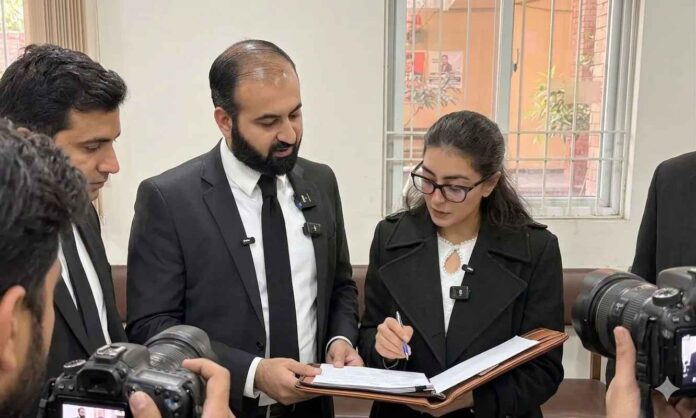

Islamabad High Court Adjourns Key Hearing Beyond Supreme Court Timeline
The Islamabad High Court has postponed the hearing of sentence suspension petitions filed by lawyers and human rights advocates Imaan Zainab Mazari-Hazir and Hadi Ali Chattha, despite a clear directive from the Supreme Court requiring the matter to be decided within a specified timeframe.
The development has drawn significant attention from legal circles, human rights advocates, and political observers because the hearing was expected to determine whether the couple could receive temporary relief while their appeals against conviction remain pending.
The Supreme Court had directed the Islamabad High Court to decide the sentence suspension applications within two weeks. However, the deadline expired without a decision, resulting in renewed debate over judicial delays, procedural challenges, and the rights of convicted individuals awaiting appeal proceedings.
The latest adjournment means that the legal uncertainty surrounding the case continues, while the petitioners remain incarcerated as their appeals move through the judicial process.
Court Proceedings Delayed Due to Absence of Prosecutors
The hearing was scheduled before the Islamabad High Court as part of ongoing proceedings related to the sentence suspension applications filed by the petitioners.
During the proceedings, the court was informed that two members of the prosecution team were unavailable to attend the hearing.
One prosecutor was reportedly traveling from another city, while another was engaged in separate proceedings before a different court bench.
As a result, the prosecution requested additional time, prompting the court to consider whether the hearing could proceed in their absence.
The situation ultimately resulted in the adjournment of the case and the scheduling of a new hearing date.
The delay became particularly significant because it occurred after the deadline established by the Supreme Court had already passed.
Supreme Court Had Ordered Expedited Decision
The Supreme Court’s involvement in the matter came after concerns were raised regarding delays in deciding the sentence suspension petitions.
Earlier proceedings before the apex court highlighted the importance of resolving the matter promptly while the primary appeals remain pending.
Recognizing the urgency of the issue, the Supreme Court directed the Islamabad High Court to decide the sentence suspension applications within two weeks.
The order was intended to ensure timely consideration of whether the petitioners should remain incarcerated while their appeals against conviction are heard.
The directive reflected broader judicial concerns regarding delays in criminal appeals and the importance of ensuring efficient administration of justice.
However, despite the clear timeline established by the apex court, procedural developments and scheduling issues prevented the matter from being resolved within the prescribed period.
Judge Raises Concerns Over Delays
During the hearing, the presiding judge reportedly expressed concern regarding the delay and emphasized the importance of complying with the Supreme Court’s instructions.
The court noted that the sentence suspension applications were being heard specifically because of the directive issued by the apex court.
Questions were raised regarding whether the prosecution team was fully aware of the Supreme Court’s timeline and the urgency associated with the matter.
The judge also highlighted personal efforts made to accommodate the hearing despite other professional commitments and training obligations.
These remarks reflected the court’s awareness of the significance of the case and the importance of addressing the pending applications without unnecessary delay.
The observations further underscored the growing pressure on the judicial system to process high-profile cases efficiently.
Defense Lawyers Object to Further Delays
Counsel representing the petitioners argued that the matter should proceed without additional postponements.
The defense highlighted that the deadline established by the Supreme Court had already expired and that any further delay would undermine the purpose of the apex court’s directive.
Lawyers for the petitioners urged the court to ensure that the prosecution did not seek repeated adjournments that could prolong the proceedings.
The defense position centered on the principle that sentence suspension applications are intended to provide timely consideration of temporary relief while appeals remain pending.
Extended delays in deciding such applications can have significant consequences for convicted individuals seeking judicial review of their cases.
The defense therefore emphasized the need for expedited proceedings and strict adherence to judicial timelines.
New Hearing Date Scheduled
Following discussions between the court, prosecutors, and defense counsel, a new hearing date was scheduled.
The court selected a date that accommodated the availability of both parties while seeking to ensure progress in the proceedings.
The rescheduling provides another opportunity for arguments to be presented regarding the sentence suspension requests.
However, the adjournment means that no immediate decision has been made regarding the petitioners’ request for temporary relief.
The outcome of the next hearing could prove crucial in determining whether the petitioners remain imprisoned while their appeals continue through the legal system.
Observers will closely monitor the proceedings given the public interest surrounding the case.
Background of the Case
The case has generated considerable attention since the arrest of the husband-wife duo earlier this year.
The arrests occurred amid allegations connected to protests outside the Islamabad High Court and related incidents involving members of the legal community.
The developments sparked widespread debate among lawyers, civil society organizations, journalists, and political figures.
Many observers raised concerns regarding due process, legal rights, and the broader implications of the case.
Supporters of the petitioners argued that they deserved a fair trial and full access to legal remedies.
Critics questioned aspects of the prosecution and expressed concerns regarding freedom of expression and civil liberties.
The case quickly became one of the most closely watched legal proceedings in Pakistan.
Cybercrime Allegations and Legal Charges
The controversy expanded significantly following the filing of cybercrime-related allegations against the petitioners.
Authorities accused the individuals of disseminating content through social media platforms that allegedly violated provisions of cybercrime legislation.
Investigators claimed that certain online activities fell within categories defined by relevant legal statutes governing electronic communications and digital content.
The allegations ultimately resulted in criminal proceedings that culminated in convictions and substantial prison sentences.
The prosecution maintained that the content in question violated multiple provisions of the law and justified criminal penalties.
Defense lawyers, however, challenged both the legal basis of the charges and the interpretation of the evidence presented during trial proceedings.
These disagreements now form part of the broader appellate process.
Seventeen-Year Prison Sentence Sparks Controversy
The trial court’s decision to impose a combined prison sentence of seventeen years generated significant public discussion.
The severity of the sentence became a focal point of legal and political debate.
Supporters of the petitioners described the punishment as excessive and argued that it raised important questions regarding proportionality and freedom of expression.
Others maintained that the court acted within the framework of existing laws and based its decision on evidence presented during the proceedings.
Regardless of differing opinions, the sentence ensured that the case would remain at the center of national legal discourse.
The subsequent appeals and sentence suspension requests became critical components of the petitioners’ efforts to challenge the verdict.
Appeals Filed Against Conviction
Shortly after the sentencing decision, the petitioners filed appeals challenging the convictions.
The appeals seek a review of the trial court’s findings and legal conclusions.
Appeal proceedings typically involve detailed examination of evidence, legal arguments, procedural matters, and judicial reasoning.
Because such reviews can take considerable time, petitioners often seek suspension of their sentences while appeals remain pending.
This is precisely the relief sought in the current proceedings before the Islamabad High Court.
The sentence suspension applications do not determine the ultimate outcome of the appeals but instead address whether temporary relief should be granted during the appellate process.
Why Sentence Suspension Matters
Sentence suspension is an important legal mechanism within criminal justice systems.
It allows courts to temporarily halt the execution of a sentence while an appeal is being considered.
Judges typically evaluate various factors when deciding whether to grant such relief.
These may include the nature of the offense, the strength of appellate arguments, the likelihood of success on appeal, public interest considerations, and the possibility of irreparable harm if relief is denied.
For convicted individuals, sentence suspension can have significant practical consequences because it determines whether they remain incarcerated while awaiting a final decision.
In high-profile cases, these applications often attract considerable public attention.
Role of the Supreme Court in the Ongoing Proceedings
The Supreme Court remains involved in the broader legal process surrounding the case.
Earlier proceedings before the apex court resulted in directives aimed at ensuring timely consideration of the pending applications.
The Supreme Court indicated that the matter would remain under consideration until the Islamabad High Court reached a decision regarding the sentence suspension requests.
This oversight reflects the significance attached to the case and the importance of ensuring procedural fairness.
The continued involvement of the country’s highest court also highlights the broader legal questions raised by the proceedings.
Future developments may determine whether further intervention becomes necessary.
Debate Over Judicial Delays
The latest postponement has reignited discussions regarding delays within the judicial system.
Legal experts frequently emphasize the importance of timely decisions, particularly in criminal matters involving imprisonment.
Delays can affect both defendants and victims while also influencing public confidence in judicial institutions.
Supporters of procedural reform argue that courts require additional resources, streamlined processes, and stronger case management mechanisms.
Others note that complex legal cases often involve unavoidable scheduling challenges and procedural requirements.
The current case illustrates how delays can become especially controversial when higher courts have established specific deadlines.
Human Rights Concerns and Public Interest
The case has attracted attention from human rights organizations and civil society groups because of its implications for freedom of expression, digital rights, and due process protections.
Advocates argue that cases involving speech-related allegations deserve careful judicial scrutiny given their potential impact on civil liberties.
The public interest surrounding the proceedings extends beyond the individuals involved.
Many observers view the case as part of a broader discussion regarding the balance between national security concerns, cybercrime enforcement, and constitutional freedoms.
As a result, developments in the case continue to be closely monitored by legal experts and rights advocates alike.
What Happens Next?
The next hearing is expected to focus on arguments regarding the suspension of the petitioners’ sentences.
Both prosecution and defense teams will have an opportunity to present their positions before the court.
The Islamabad High Court will then determine whether temporary relief should be granted pending the final outcome of the appeals.
A decision in favor of sentence suspension would allow the petitioners to seek release while their appeals proceed.
A decision against suspension would mean they remain incarcerated until the appeals are resolved or further legal remedies are pursued.
Either outcome is likely to influence the future direction of the case.
Conclusion
The Islamabad High Court’s decision to postpone the hearing on the sentence suspension petitions of Imaan Mazari and Hadi Chattha has extended legal uncertainty in one of Pakistan’s most closely watched cases.
The delay comes despite a Supreme Court directive requiring the matter to be decided within a two-week period, raising questions about procedural challenges and judicial timelines.
As the appeals process continues, the outcome of the sentence suspension applications will play a critical role in determining the immediate legal status of the petitioners.
With significant public interest, legal implications, and ongoing scrutiny from higher courts, the case remains an important test of Pakistan’s judicial processes, appellate mechanisms, and commitment to timely justice.
Read More
War Escalates as Tehran Retaliates After US Strikes Iranian Military Targets