
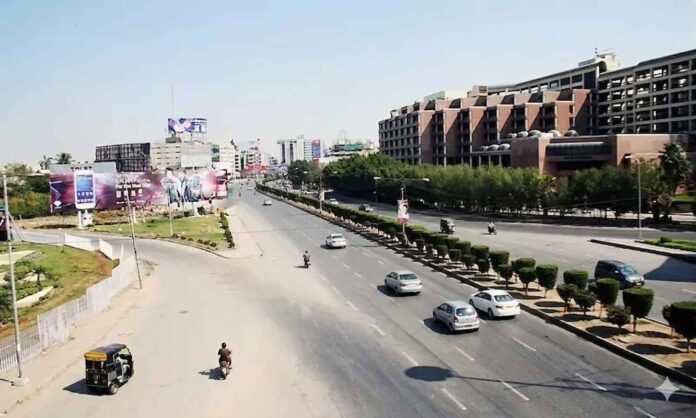

New Digital Traffic Enforcement System Goes Live on One of Karachi’s Busiest Roads
Karachi has entered a new phase of traffic management with the formal implementation of automated e-challan enforcement for lane violations on Sharea Faisal. The initiative represents one of the most significant traffic regulation measures introduced in recent years and is designed to improve lane discipline, reduce congestion, enhance road safety, and bring greater efficiency to traffic enforcement through digital technology.
As one of the busiest and most strategically important roads in the country, Sharea Faisal carries hundreds of thousands of vehicles every day. The corridor connects key residential neighborhoods, commercial centers, business districts, government offices, and transportation hubs, making it one of the most heavily used urban routes in Pakistan.
With increasing traffic volumes and persistent lane discipline issues, authorities have introduced a fully automated enforcement system that identifies violations electronically and generates penalties without the need for direct interaction between motorists and traffic officials.
The new system is expected to transform how traffic regulations are enforced while encouraging drivers to follow designated lane rules more strictly.
Why Sharea Faisal Was Chosen for Automated Enforcement
Sharea Faisal serves as a critical transportation artery for Karachi’s economy and daily mobility.
Every day, the road accommodates a diverse mix of vehicles including private cars, motorcycles, buses, trucks, commercial transport, ride-hailing vehicles, delivery fleets, and government vehicles.
Because of this heavy traffic load, lane violations have become a common problem, often contributing to congestion, slower travel times, traffic conflicts, and increased accident risks.
Authorities believe that improving lane discipline can significantly improve traffic flow without requiring major infrastructure expansion.
The decision to launch automated enforcement on Sharea Faisal reflects broader efforts to modernize traffic management using technology-driven solutions.
By monitoring lane usage electronically and applying penalties automatically, officials hope to create greater compliance while minimizing opportunities for inconsistent enforcement.
Understanding the New Lane Management Framework
The newly enforced lane management plan introduces specific rules governing how different categories of vehicles should use available road space.
Under the framework, commercial vehicles and motorcycles are required to remain within designated lanes reserved specifically for their movement.
The leftmost lanes have been allocated primarily for slower-moving traffic, including motorcycles and commercial transport.
Meanwhile, fast-moving private vehicles are required to utilize designated lanes intended for higher-speed traffic.
The purpose of this separation is to reduce conflicts between vehicles traveling at different speeds.
Traffic experts have long argued that mixing slow-moving and fast-moving vehicles within the same lanes contributes significantly to traffic instability, sudden braking, and accidents.
The new system seeks to address these challenges through structured lane allocation.
How Lane Segregation Improves Traffic Flow
Lane segregation is widely recognized as one of the most effective traffic management techniques used in major cities around the world.
When vehicles of similar speed profiles travel together, traffic becomes more predictable and efficient.
Motorcycles, commercial vehicles, buses, and heavy transport vehicles typically operate at lower average speeds than private cars.
Allowing these vehicle categories to occupy dedicated lanes reduces lane-changing behavior and minimizes disruptions to overall traffic movement.
Similarly, private vehicles traveling at higher speeds benefit from dedicated lanes that allow smoother traffic progression.
Urban transportation planners often emphasize that better lane discipline can improve road capacity without the need for costly road widening projects.
The Sharea Faisal initiative reflects this principle by focusing on traffic organization rather than physical expansion.
Fully Automated E-Challan System Eliminates Manual Enforcement
One of the most significant aspects of the new initiative is the introduction of a completely automated citation process.
Violations are identified electronically through advanced monitoring systems that track vehicle movement and lane usage.
When a vehicle is found violating lane regulations, the system automatically generates an e-challan.
This approach removes the need for direct roadside intervention by traffic officers.
Authorities believe that automation increases transparency and consistency while reducing opportunities for human error.
Drivers who violate lane rules can now expect enforcement to occur through digital monitoring rather than traditional roadside checks.
The transition toward technology-based enforcement reflects global trends in modern traffic management.
Many major cities have adopted automated systems to improve compliance and reduce administrative burdens associated with manual enforcement.
The Growing Role of Smart Traffic Technology
The introduction of e-challans is part of a broader transformation in urban transportation management.
Cities around the world are increasingly relying on digital systems to improve traffic operations.
Modern traffic management technologies include intelligent cameras, automated license plate recognition systems, real-time monitoring platforms, digital ticketing solutions, and integrated traffic control centers.
These technologies provide authorities with better visibility into traffic conditions while enabling faster enforcement of regulations.
For motorists, smart traffic systems create a more predictable environment where violations are identified objectively based on recorded data.
As urban populations continue to grow, technology-driven traffic management is becoming essential for maintaining mobility and safety.
Karachi’s adoption of automated lane enforcement aligns with these international trends.
Road Safety Benefits Expected From the New System
Improved lane discipline can generate substantial road safety benefits.
Traffic experts frequently identify improper lane usage as a contributing factor in many urban accidents.
When vehicles unexpectedly enter restricted lanes or weave between lanes, the risk of collisions increases significantly.
Lane violations often create dangerous situations involving motorcycles, buses, and commercial vehicles.
By ensuring that different categories of traffic remain within designated areas, authorities hope to reduce accident rates and improve overall road safety.
The initiative is particularly important for motorcycle riders, who are among the most vulnerable road users.
Dedicated lane allocation helps create a safer operating environment by minimizing interactions with faster-moving vehicles.
Safety improvements are expected to emerge gradually as compliance levels increase over time.
Impact on Daily Commuters
For daily commuters, the success of the system could lead to more predictable travel experiences.
Traffic congestion often results not only from high vehicle volumes but also from inefficient road usage.
Frequent lane changes, unauthorized overtaking, and improper lane occupation contribute to traffic slowdowns even when road capacity remains available.
If motorists comply with designated lane rules, traffic movement may become smoother and more organized.
Reduced congestion can lower travel times, decrease fuel consumption, and improve commuter satisfaction.
Businesses may also benefit from more reliable transportation conditions, particularly those dependent on logistics, deliveries, and employee commuting.
Over time, improved traffic efficiency can generate broader economic benefits for the city.
Public Awareness and Driver Education Remain Critical
While technology can support enforcement, public awareness remains essential for long-term success.
Traffic authorities have encouraged motorists to familiarize themselves with the new lane management rules and understand which lanes are designated for specific vehicle categories.
Driver education campaigns play a critical role in helping road users adapt to changing regulations.
Many transportation experts argue that successful enforcement requires a combination of technology, public outreach, and consistent implementation.
Motorists who understand the reasoning behind lane management measures are more likely to comply voluntarily.
Educational initiatives can therefore complement enforcement efforts by promoting safer driving behavior and encouraging respect for traffic regulations.
E-Challan Growth Reflects Increasing Digital Enforcement
Recent traffic enforcement trends indicate growing reliance on digital citation systems.
The number of electronically generated challans has risen significantly over recent months, reflecting expanded deployment of technology-based enforcement tools.
Traffic authorities view this trend as evidence that automated systems are becoming increasingly effective at identifying violations and promoting compliance.
Digital enforcement also provides valuable data regarding traffic patterns, driver behavior, and violation hotspots.
This information can help authorities make informed decisions about future traffic management strategies.
As technology infrastructure continues to improve, additional roads and corridors may eventually be integrated into similar enforcement programs.
Challenges That Authorities Must Address
Although the new system offers numerous advantages, successful implementation will require addressing several challenges.
Public acceptance is one important factor.
Some drivers may initially resist changes to long-established driving habits.
Others may require time to fully understand lane allocation rules.
Technical reliability is another key consideration.
Automated systems must operate accurately and consistently to maintain public confidence.
Clear communication regarding violation procedures, fine payments, and dispute resolution mechanisms will also be important.
Authorities will need to ensure that enforcement remains fair, transparent, and supported by accurate data.
Addressing these issues effectively can strengthen trust in the system and encourage broader compliance.
A Step Toward Smarter Urban Mobility
The launch of automated lane enforcement represents more than a traffic regulation initiative.
It signals a broader shift toward smarter urban mobility and digital governance.
As cities become increasingly complex, traditional traffic management methods often struggle to keep pace with rising transportation demands.
Technology provides new opportunities to improve efficiency, enhance safety, and optimize road usage.
The Sharea Faisal initiative demonstrates how digital tools can be used to address everyday transportation challenges.
If successful, the model could serve as a blueprint for expanding smart traffic management across other major corridors.
Such developments could play a significant role in shaping the future of urban transportation in Pakistan.
Conclusion
The implementation of automated e-challan enforcement for lane violations on Sharea Faisal marks a major milestone in Karachi’s ongoing efforts to modernize traffic management. By combining digital technology with structured lane regulations, authorities aim to improve traffic flow, enhance road safety, reduce congestion, and create a more disciplined driving environment.
The initiative introduces clear lane allocation rules, automated monitoring, and electronic enforcement mechanisms designed to ensure consistent compliance. As motorists adapt to the new system, authorities expect improved traffic organization and more efficient use of one of Karachi’s most important transportation corridors.
While challenges related to awareness, compliance, and system reliability remain, the move represents a significant step toward smarter, technology-driven urban mobility. The success of the program could pave the way for broader implementation of intelligent traffic management solutions across the city and beyond.
Read More
Aleema Rejects Reports of Imran Meeting Former Army Chief as Completely False


