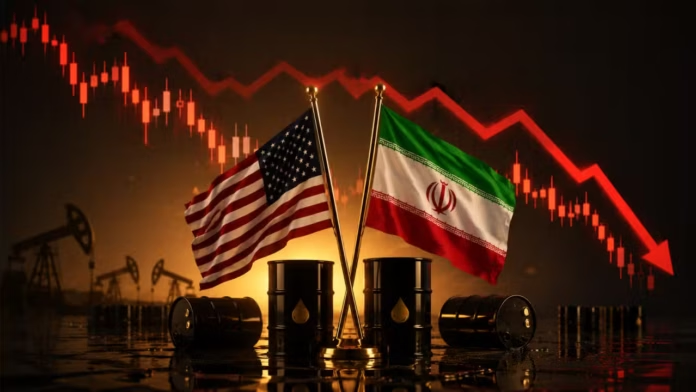

Global oil prices tumbled by more than 5% on Monday after the United States and Iran temporarily paused military operations, easing concerns over potential disruptions to global crude oil supplies. The de-escalation comes after nearly two weeks of heightened tensions that had driven Brent crude prices above the $100-per-barrel mark.
During early Asian trading, West Texas Intermediate (WTI) crude fell 5.39% to $84.47 per barrel, while Brent crude declined 5.15% to $91.80 per barrel. The sharp drop reflected investors unwinding positions that had been built during the recent geopolitical uncertainty.
The decline followed Washington’s decision to temporarily halt its military strikes against Iran. Speaking to CBS News’ Face the Nation, US Ambassador to the United Nations Mike Waltz said the pause was aimed at creating space for diplomatic efforts. However, he added that additional US military assets had been deployed to the region as a precaution should negotiations fail.
Iran also signalled a willingness to maintain the pause. Foreign Ministry spokesperson Esmaeil Baghaei said recent discussions with an Omani delegation had been positive and indicated progress toward reducing tensions.
According to Reuters, an Iranian official stated that Tehran’s policy remains “attack for attack,” meaning Iran will refrain from military action as long as the United States also avoids further strikes.
The easing of hostilities prompted investors to lock in profits after weeks of strong gains in the oil market. However, market analysts cautioned that a sustained decline in oil prices will depend on the restoration of normal shipping activity through the Strait of Hormuz and the Red Sea, where security concerns continue to affect global energy supply routes.
Experts also highlighted several factors behind the temporary pause, including the completion of initial US military objectives, increasing domestic political pressure ahead of upcoming US midterm elections, and rising fuel prices that have added pressure on policymakers.
Despite the latest decline, analysts warned that oil markets are expected to remain highly volatile, with future price movements largely dependent on developments in US-Iran relations.
Meanwhile, diplomatic efforts appear to be gaining momentum. Reuters reported that Pakistan is once again exploring ways to help revive stalled US-Iran negotiations as part of a China-backed initiative aimed at reducing regional tensions and promoting long-term stability.