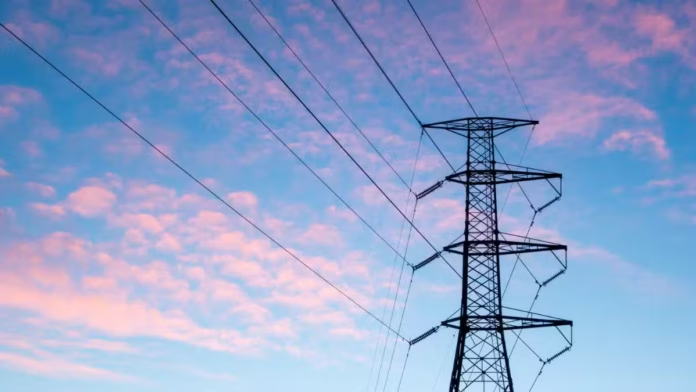

The Ministry of Privatization has formed a technical committee to evaluate whether Lahore Electric Supply Company (LESCO) and Multan Electric Power Company (MEPCO) should be divided into smaller electricity distribution companies before they are privatized. The proposal aims to improve the operational structure and increase the attractiveness of both utilities for potential investors.
According to government officials, the committee will study the possibility of splitting each company into two or three separate distribution entities before the privatization process begins. The committee includes representatives from the Privatization Commission, Power Division, National Electric Power Regulatory Authority (NEPRA), and the Power Planning & Monitoring Company (PPMC).
The review comes as both LESCO and MEPCO continue to face operational challenges. Compared with other power distribution companies in Punjab, they have reported higher levels of electricity theft, greater transmission and distribution losses, and weaker bill recovery rates.
The committee has been assigned to examine the operational, financial, and strategic impact of dividing the companies. It will also determine whether such a restructuring aligns with the National Electricity Plan, the government’s Power Policy, and the overall privatization strategy. In addition, the panel will review findings from any previous studies conducted on the subject.
MEPCO is Pakistan’s largest electricity distribution company in terms of customers. It serves approximately 8.76 million consumers across 13 districts of southern Punjab through a network of more than 82,000 kilometers of distribution lines and over 780 grid stations. The company has recently invested in smart metering and digital billing systems to improve service quality and operational efficiency.
LESCO supplies electricity to nearly 7.05 million consumers in Lahore, Kasur, Sheikhupura, Nankana Sahib, and Okara. The company is also expanding its smart meter program and digital services. However, shortages of transformers and electricity meters have delayed new customer connections and drawn attention from regulators.
Official audit reports for FY2024-25 found that both companies delivered below-average operational performance. These findings have strengthened the government’s interest in exploring structural reforms before moving ahead with their planned privatization.