
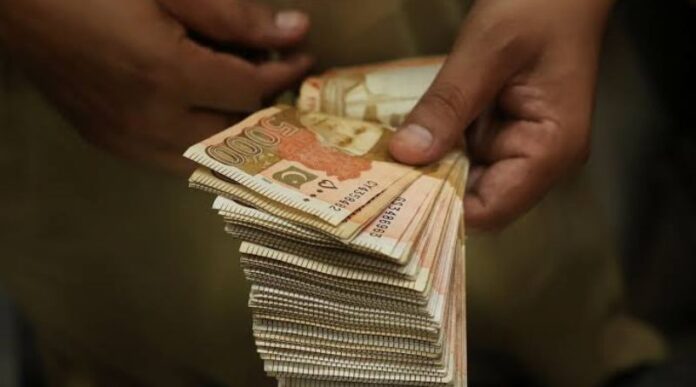

Pakistan has formally asked the United States for a $10 billion Exchange Stabilisation Support Facility to strengthen its foreign exchange reserves, reduce pressure on the Pakistani rupee and improve the country’s financial position. The request was made by Finance Minister Muhammad Aurangzeb during his meeting with US Treasury Secretary Scott Bessent in Washington in July 2026.
The proposed facility is being seen as an important step in Pakistan’s efforts to build stronger financial protection against future economic shocks. If the United States agrees to the request, the facility could give Pakistan additional access to dollars when needed and help the country manage pressure on its foreign currency reserves.
The request also comes at a time when Pakistan is trying to improve its relations with Washington and attract more international investment. The country has been working on economic reforms, increasing tax collection, improving its financial position and rebuilding confidence among international investors.
Pakistan Wants a $10 Billion Financial Safety Net
According to reports, Pakistan is seeking a bilateral facility worth up to $10 billion, with a possible maturity period of as long as five years. The facility would work as a financial safety net that could be used to support Pakistan’s foreign exchange position during difficult periods.
This does not simply mean that Pakistan is asking for $10 billion in cash to spend. An exchange stabilisation facility is designed to provide support when a country faces pressure on its currency or foreign reserves. Depending on the final agreement, such support can include loans, guarantees, dollar support or other financial arrangements.
For Pakistan, this type of facility could become useful if there is a sudden increase in demand for foreign currency. The country regularly needs dollars to pay for imports, external debt repayments, energy purchases and other international obligations.
A stronger reserve position can also give confidence to businesses and investors. When a country has enough foreign currency available, markets generally feel more comfortable about its ability to meet external payments.
Finance Minister Meets US Treasury Secretary
Finance Minister Muhammad Aurangzeb raised the matter during his meeting with US Treasury Secretary Scott Bessent in Washington. Pakistani officials confirmed the meeting and said the discussions focused on strengthening economic cooperation between the two countries.
Pakistan’s Embassy in Washington also confirmed the request, although it did not provide full details about the proposed arrangement. The US Treasury, meanwhile, did not publicly comment on the reported $10 billion request.
Pakistan’s Finance Ministry later highlighted the country’s efforts to improve access to international capital markets, increase foreign exchange reserves and strengthen its sovereign credit position. These areas are important because Pakistan wants to move towards a more stable and sustainable financial system.
The government is also trying to show international lenders and investors that Pakistan is making progress on economic reforms.
Why Foreign Exchange Reserves Matter
Foreign exchange reserves are extremely important for Pakistan because the country depends heavily on imports. Pakistan needs dollars and other foreign currencies to pay for products and services purchased from abroad.
These include petroleum, machinery, medicines, industrial equipment, technology and many other goods.
When foreign exchange reserves fall too low, a country can face serious financial pressure. It may become difficult to pay for imports or repay foreign loans. A shortage of dollars can also put pressure on the local currency.
This is why Pakistan has been focusing on increasing its reserves over the past few years.
A stronger reserve position can help the State Bank of Pakistan manage pressure in the currency market. It can also reduce fears about the country’s ability to meet upcoming international payments.
The proposed US facility could therefore act as an extra layer of protection for Pakistan.
Possible Support for the Pakistani Rupee
One of the main benefits of the proposed facility could be greater stability for the Pakistani rupee.
The rupee has faced major pressure during Pakistan’s recent economic difficulties. A shortage of foreign currency can increase demand for dollars and put downward pressure on the local currency.
If Pakistan has access to additional dollar support, it may be in a better position to deal with sudden pressure in the foreign exchange market.
A more stable rupee can have benefits for ordinary people as well. When the rupee loses value, imported products usually become more expensive. This can affect fuel, medicines, electronics, machinery and many other products.
A stable currency can make it easier for businesses to plan their costs and for consumers to manage household expenses.
However, the facility alone cannot solve all of Pakistan’s economic problems. Long-term currency stability depends on exports, investment, remittances, fiscal management, inflation control and strong economic policies.
Reducing Pressure on External Financing
Another important reason behind Pakistan’s request is to reduce its dependence on outside financial support.
Pakistan has relied on the International Monetary Fund and friendly countries for financial assistance during periods of serious economic pressure. IMF programmes have helped the country avoid major balance-of-payments problems, but they also require difficult economic reforms.
These reforms can include higher taxes, lower government spending, changes in energy prices and other steps designed to improve the country’s financial position.
A US exchange stabilisation facility could give Pakistan another source of financial support.
It would not necessarily replace the IMF programme, but it could provide an additional safety net. This could be especially useful when Pakistan faces a temporary shortage of foreign currency.
IMF Programme Still Important
Pakistan remains committed to its IMF programme, which has played a major role in the country’s recent economic stabilisation.
The IMF programme has pushed Pakistan to improve tax collection, control spending, strengthen its financial system and make other economic changes.
These measures are not always easy for the public or businesses. Higher taxes and other reforms can increase pressure on households and companies in the short term.
However, the government argues that these steps are necessary to create a stronger economic base.
The proposed US facility could work alongside these reforms rather than replace them. If approved, it could provide additional protection while Pakistan continues working to improve its economy.
Improving Investor Confidence
Foreign investors closely watch a country’s foreign exchange reserves, debt position, currency stability and relations with international financial institutions.
A $10 billion US-backed facility could send a positive message to international markets if an agreement is reached.
Investors may feel more confident if they know that Pakistan has additional financial support available during a period of market pressure.
This could potentially make it easier for Pakistani companies and the government to access international capital markets.
Pakistan has already been trying to improve its credit position. Recent economic progress has helped support better views about the country’s financial stability. S&P Global, for example, raised Pakistan’s sovereign credit rating from B- to B in July 2026, citing improvements including progress under the IMF programme and stronger economic conditions.
A stronger credit rating can help reduce borrowing costs and improve access to international funding.
Pakistan’s Growing Engagement With the US
The request also comes during a period of renewed economic and diplomatic engagement between Pakistan and the United States.
Pakistan has been trying to expand its relationship with Washington beyond traditional areas and focus more on trade, investment and economic cooperation.
The country wants greater American involvement in sectors where Pakistan sees opportunities for growth.
Pakistan has also been seeking better access to international markets and more foreign investment. Stronger relations with the United States could help create new opportunities for Pakistani businesses.
The proposed financial facility is therefore part of a wider effort to strengthen economic ties between the two countries.
Pakistan’s Diplomatic Role
The request reportedly followed Pakistan’s involvement in helping facilitate talks related to the Iran conflict. Pakistan’s role increased its diplomatic importance and created expectations that Islamabad could develop stronger cooperation with Washington and other international partners.
This does not mean that the $10 billion facility has been approved. The US Treasury has not publicly confirmed an agreement.
However, Pakistan’s diplomatic engagement has created an opportunity for the country to discuss broader economic cooperation with the United States.
For Islamabad, stronger diplomatic ties can potentially support trade, investment and financial cooperation.
What the Facility Could Mean for Pakistan
If approved, the proposed facility could offer several possible benefits.
First, it could strengthen Pakistan’s foreign exchange reserves. More reserves would provide greater protection against sudden external financial pressure.
Second, it could support stability in the foreign exchange market. Access to additional dollars could reduce some of the pressure on the rupee during difficult periods.
Third, it could improve investor confidence. International investors are more likely to consider a country attractive when they believe it has enough financial support to handle external shocks.
Fourth, it could reduce Pakistan’s dependence on emergency financial assistance from a small number of international partners.
Finally, the facility could improve Pakistan’s position when negotiating with international lenders and investors.
Approval Is Still Needed
Despite the potential benefits, the proposed $10 billion facility is not yet confirmed as an approved arrangement.
Reports say Pakistan has requested the facility, while US officials have not publicly provided full details about whether Washington will accept the proposal.
This means Pakistan still needs to negotiate the terms of any possible agreement.
Important questions would include the cost of the facility, repayment conditions, duration, guarantees and the exact way the funds or support could be used.
The final structure would determine how valuable the facility would be for Pakistan.
A Bigger Economic Challenge
Although a $10 billion facility could provide important short-term support, Pakistan still needs to address its deeper economic problems.
The country needs to increase exports, attract long-term foreign investment, improve tax collection and reduce its dependence on imported products.
Pakistan also needs to maintain stable economic policies so that businesses can plan for the future.
Foreign exchange reserves can provide protection, but they cannot replace strong economic growth.
If Pakistan wants to avoid repeated financial crises, it will need to continue improving its economic fundamentals.
What Comes Next?
The next step will depend on discussions between Pakistan and the United States.
If Washington agrees to consider the proposal, both sides will likely need to negotiate the structure and conditions of the facility.
For Pakistan, the main goal will be to secure reliable financial support without creating another major burden for the country.
The government will also need to continue working with the IMF and other international partners while improving domestic economic conditions.
At the same time, stronger foreign exchange reserves could provide breathing space for the government as it works on longer-term reforms.
Conclusion
Pakistan’s request for a $10 billion US Exchange Stabilisation Support Facility is an important development in the country’s efforts to strengthen its economy.
The proposed facility could provide a valuable financial safety net, support foreign exchange reserves, reduce pressure on the rupee and improve investor confidence. It could also help Pakistan reduce some of its dependence on emergency external financing.
However, the request should not be viewed as a complete solution to Pakistan’s economic challenges. The country still needs to increase exports, improve tax collection, control debt, attract investment and maintain sound economic policies.
The success of the proposal will ultimately depend on whether the United States agrees to provide the facility and what conditions are attached to it.
For Pakistan, securing additional financial support from Washington would be a significant step. But the bigger goal remains clear: building an economy that can generate enough foreign exchange and financial strength to stand on its own.
With better reserves, stronger exports, improved investor confidence and continued economic reforms, Pakistan can work towards reducing the risk of another serious financial crisis in the future.
Read Also: Check


