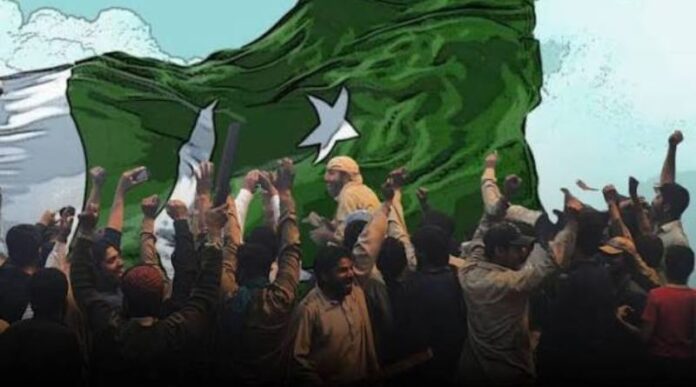

A country cannot build a better future if it remains trapped in the problems, failures, and disputes of the past. History is important because it teaches nations valuable lessons, but constantly looking backward can stop progress. A nation that wants to move ahead must learn from its past, correct its mistakes, and then focus its energy on the future.
Pakistan, like many other countries, has a long and complex history. The country has faced political changes, economic difficulties, security challenges, social problems, and periods of instability. These experiences have shaped the nation and continue to influence public thinking. However, remembering history should not mean remaining stuck in it.
The real challenge is to understand the past without allowing it to control the future.
Learning From History Without Living in It
There is nothing wrong with remembering the past. In fact, nations need history. It helps people understand how their country was created, what challenges it faced, and what mistakes were made along the way. History can also remind citizens of the sacrifices made by earlier generations.
The problem begins when history becomes a reason to avoid dealing with today’s problems.
A country cannot solve unemployment by repeatedly discussing old political conflicts. It cannot improve education by spending all its energy on past arguments. It cannot strengthen its economy by blaming previous governments forever. At some point, leaders and citizens have to stop looking for excuses and start looking for solutions.
Learning from history means asking simple questions: What went wrong? Why did it happen? What can we do differently now?
These questions are much more useful than simply repeating old debates.
The Cost of Staying Stuck in the Past
When a society remains focused on old disputes, it loses valuable time. Political parties may continue fighting over events that happened years or even decades ago. Institutions may remain busy defending past decisions instead of preparing for future challenges. Ordinary people can also become divided because of historical disagreements.
This kind of environment makes it difficult to create a shared national direction.
Every country has disagreements. Every society has difficult periods in its history. Successful nations do not ignore these problems, but they find ways to move beyond them. They understand that the future cannot be sacrificed because of endless arguments about the past.
Pakistan needs the same approach.
The country faces major challenges today. These include inflation, unemployment, population growth, energy problems, weak public services, climate change, education gaps, and pressure on the economy. These issues require attention, planning, investment, and cooperation.
They cannot be solved by repeatedly reopening old battles.
Pakistan Needs a Future-Focused Approach
Pakistan has a young population, and this can become one of its biggest strengths. Millions of young people enter the job market every year. They need quality education, technical skills, modern training, and decent employment opportunities.
Young Pakistanis are not only interested in the political debates of the past. They want to know what their future will look like.
They want better jobs. They want reliable internet. They want good schools and universities. They want safe cities, affordable housing, better healthcare, and a stable economy. Many also want opportunities to work online, start businesses, learn new skills, and compete in international markets.
A future-focused Pakistan must respond to these needs.
Instead of asking only who was responsible for yesterday’s problems, the country must also ask who will create tomorrow’s opportunities.
Economic Progress Must Be a Priority
No nation can move forward without a strong economy. Economic stability affects almost every part of daily life. When the economy is weak, businesses struggle, jobs become harder to find, prices rise, and families face greater financial pressure.
Pakistan has enormous economic potential, but that potential needs the right direction.
The country has a large consumer market, a young workforce, agricultural resources, a growing technology sector, and an important geographical location. Pakistani workers and businesses also have opportunities in global markets.
However, potential alone is not enough.
The country needs long-term economic policies that do not change with every political shift. Investors need confidence. Businesses need clear rules. Exporters need support. Small businesses need easier access to finance. Young people need skills that match the requirements of the modern economy.
Economic planning should not be limited to one government or one election cycle. It should be treated as a national goal.
Education Can Change the Future
One of the strongest ways to move forward is through education.
A nation that invests in its children and young people invests in its future. Schools should not only teach students how to pass exams. They should prepare them for real life.
Students need strong skills in science, technology, mathematics, communication, and problem-solving. They should also learn about business, digital tools, financial management, and modern careers.
Pakistan also needs to improve technical and vocational education. Not every student needs to follow the same academic path. Some may become engineers, doctors, teachers, or researchers, while others may become electricians, technicians, designers, developers, mechanics, or entrepreneurs.
All useful skills deserve respect.
A modern education system can help Pakistan reduce unemployment and create a workforce that can compete with people from other countries.
Technology Is Changing the World
The world is moving rapidly toward a digital economy. Artificial intelligence, cloud computing, digital payments, online education, e-commerce, robotics, and other technologies are changing the way people work and do business.
Pakistan cannot afford to stand outside this change.
The country has already produced talented software developers, freelancers, entrepreneurs, engineers, and technology professionals. Pakistani young people are using digital platforms to earn money and connect with customers around the world.
This opportunity needs greater support.
Better internet access, digital education, technology parks, startup support, and modern training can help create thousands of new opportunities. Instead of seeing technology only as entertainment, Pakistan should treat it as an important part of its economic future.
The countries that understand this change early will have an advantage.
Political Stability Matters
Political disagreement is a normal part of democracy. Different parties can have different ideas about how a country should be governed. Healthy debate can actually improve decision-making.
However, constant political conflict can damage national progress.
When governments and opposition parties spend most of their time fighting, important national issues can be ignored. Policies may change too quickly, development projects can slow down, and investors may become uncertain.
Pakistan needs political competition, but it also needs political maturity.
Political leaders should be able to disagree without making every issue a personal fight. They should also be willing to cooperate when the national interest requires it.
The country needs institutions that continue working regardless of which party is in power.
Young People Must Be Part of the Future
Pakistan’s young population is one of its greatest opportunities. But a large young population can become a challenge if young people do not have education, employment, and hope.
Young people need to feel that they have a future in their own country.
If talented people believe that their only chance for success is to leave Pakistan, the country loses valuable human resources. Providing better opportunities at home can encourage skilled people to stay, build businesses, create jobs, and contribute to national development.
The government, private sector, educational institutions, and society all have a role to play.
Young people should also be encouraged to take responsibility. They should not wait for governments to solve every problem. Starting small businesses, learning useful skills, volunteering, supporting communities, and using technology positively can all make a difference.
National Unity Is More Important Than Division
A country cannot make progress when its people are constantly divided.
Political, regional, ethnic, social, and economic differences can create distance between citizens. These differences should not become reasons for hatred or permanent conflict.
Pakistan needs a stronger sense of shared national purpose.
People may have different political opinions, languages, traditions, and lifestyles, but they can still work toward common goals. Better education, stronger institutions, economic growth, peace, and improved public services benefit everyone.
National unity does not mean that everyone must think alike. It means that people can disagree while still accepting that they belong to the same country and share responsibility for its future.
Stop Passing Problems From One Generation to Another
One of the biggest dangers of constantly looking backward is that problems are passed from one generation to the next.
A generation inherits economic problems, weak systems, poor infrastructure, political disputes, and social challenges. Instead of solving them, it sometimes passes them to the next generation.
This cycle needs to end.
Today’s leaders must make decisions that improve the lives of people who will live in Pakistan 10, 20, or 30 years from now. Decisions about water, energy, education, cities, technology, environment, and the economy should be made with the future in mind.
Short-term political gains should not always come before long-term national interests.
The World Is Moving Fast
Pakistan is not competing only with itself. The world is changing quickly.
Countries are investing heavily in technology, education, infrastructure, clean energy, artificial intelligence, manufacturing, and digital services. Global competition is becoming stronger every year.
If Pakistan spends too much time fighting old battles, other countries will move ahead.
This does not mean the country should forget its history or ignore past mistakes. Instead, history should become a guide.
The past should be a teacher, not a prison.
A New Mindset Is Needed
Moving forward requires a change in mindset.
People need to believe that problems can be solved. Leaders need to think beyond the next election. Institutions need to focus on performance. Businesses need to invest in innovation. Educational institutions need to prepare students for future careers.
Citizens also need to understand that national progress is not the responsibility of the government alone.
Keeping streets clean, following laws, paying taxes honestly, respecting others, protecting public property, supporting education, and rejecting violence are also forms of national service.
Small actions can create large changes when millions of people take them seriously.
The Future Is Still in Our Hands
Pakistan’s past cannot be changed. Mistakes that have already happened cannot be undone. But the future has not yet been written.
That is why the country must focus on what can still be changed.
The nation can improve its education system. It can create better jobs. It can support businesses. It can invest in technology. It can strengthen institutions. It can improve public services. It can build stronger cities and protect the environment.
None of these goals will be achieved overnight. Progress takes time, patience, consistency, and serious effort.
But progress is possible when a country has a clear direction.
A nation does not become successful by pretending that its past never happened. It becomes successful by understanding its history, learning from its mistakes, and refusing to repeat them.
Pakistan has faced many difficult periods, but its story does not have to end with those difficulties.
The country has people with talent, energy, ideas, and ambition. It has young people who are ready to learn and work. It has businesses that want to grow and compete. It has professionals working in different parts of the world who can contribute to national development.
What is needed is a shared focus on the future.
Looking backward can tell us where we came from. It can explain why some problems exist and remind us of lessons that should never be forgotten. But it cannot tell us everything about where we should go next.
For that, we need vision, courage, planning, and action.
A nation cannot move forward while constantly looking backward. The past deserves respect, but the future deserves our attention.
Pakistan’s next chapter should not be written only by the events of yesterday. It should be shaped by the choices made today.
Read Also: check