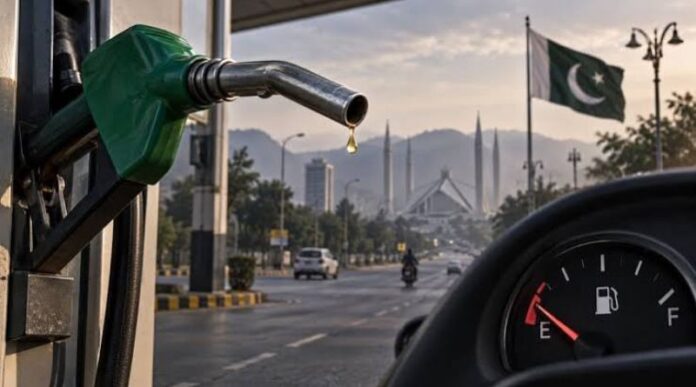

The government is considering a major step to reduce fuel consumption as petrol prices move closer to the Rs. 400 per liter mark. Among the options being discussed is a three-day lockdown across the country. The possible measure comes at a time when rising fuel costs are putting more pressure on households, businesses, transport operators, and the overall economy.
The idea of a short lockdown is being considered as authorities look for ways to reduce the use of petrol and diesel and manage the growing pressure caused by higher international oil prices. If approved, the move could affect normal business activities, public transport, offices, markets, and other daily activities for several days.
The possible decision has emerged because the recent increase in petroleum prices has created serious concerns about fuel demand and the country’s import bill. Pakistan depends heavily on imported petroleum products to meet its domestic energy needs. When international oil prices rise, the cost of bringing fuel into the country also increases.
Petrol Prices Create New Pressure
Petrol is one of the most important fuels used in Pakistan. Millions of people depend on motorcycles, cars, buses, rickshaws, and other vehicles for their daily travel. Any major increase in petrol prices therefore affects people directly.
When petrol becomes more expensive, the impact does not remain limited to vehicle owners. Transport costs rise, and businesses often pass these higher costs on to customers. Food, vegetables, medicines, courier services, and other goods can become more expensive because transporting them from one location to another costs more.
For salaried people and low-income families, the situation can become even more difficult. A person who travels to work every day may have to spend a much larger part of their monthly income on fuel.
Motorcycle users, who are often considered among the more fuel-efficient commuters, are also feeling the pressure. Many workers use motorcycles because public transport is not always available, reliable, or convenient.
As petrol approaches Rs. 400 per liter, the government is facing growing pressure to find ways to control fuel consumption and reduce the financial burden created by expensive petroleum products.
Why Is a Three-Day Lockdown Being Considered?
A three-day lockdown could temporarily reduce the number of vehicles on roads. If offices, schools, markets, businesses, and other activities are closed for a limited period, fuel consumption could fall significantly.
The government may see this as one possible emergency measure to control demand during a period of high fuel prices.
A lockdown would not solve the long-term problem of expensive oil, but officials could consider it a short-term step to reduce fuel usage. Fewer vehicles on roads would mean lower petrol and diesel consumption.
The proposal, however, would have to be carefully examined because a lockdown also has economic costs. Shops, factories, restaurants, transport companies, offices, and many other businesses depend on regular daily activity.
A three-day closure could reduce fuel demand, but it could also reduce business activity and affect workers whose income depends on daily work.
Impact on Ordinary Citizens
Any decision to impose a lockdown would have a direct impact on ordinary citizens.
For people who can work from home, the effect may be limited. However, millions of workers still need to physically travel to their workplaces. Factory workers, shop employees, delivery riders, drivers, construction workers, domestic workers, and daily wage earners may face serious problems if movement is restricted.
Daily wage workers are particularly vulnerable because they usually earn money only when they work. If markets, construction sites, workshops, and other workplaces remain closed, they could lose several days of income.
Small businesses could also face difficulties. Many shops operate on daily sales, and even a short closure can affect their cash flow.
At the same time, families may have to change their plans and arrange food, medicines, and other essential items before a lockdown begins.
For these reasons, the government would need to consider exemptions for essential services if such a measure is approved.
Transport Sector Could Face More Difficulties
The transport sector is among the industries most affected by higher fuel prices.
Public transport operators already face high operating costs because fuel is one of their biggest expenses. Bus owners, taxi drivers, rickshaw drivers, and goods transporters have to pay more when petrol and diesel prices rise.
Higher fuel prices can lead to higher fares. This creates another burden for passengers who already have limited household budgets.
A lockdown could temporarily reduce this pressure because fewer vehicles would operate. However, transport workers would also lose income during the shutdown.
Goods transport could be another major concern. Pakistan’s supply chains depend on trucks and other vehicles to move food, medicines, raw materials, and consumer products between cities.
If movement is completely stopped, the government would need to make sure that essential goods continue to reach markets.
Businesses May Feel the Pressure
Pakistan’s business community could also be affected by a three-day lockdown.
Large companies may have the ability to shift employees to remote work, but many small and medium-sized businesses cannot operate without physical staff and customers.
Retail stores, restaurants, workshops, markets, wholesalers, and service providers rely on daily customer activity. A temporary closure could therefore reduce their earnings.
Manufacturing companies could face additional challenges if factories are forced to stop operations. Production delays can affect supply chains and orders.
However, businesses could also benefit indirectly if the measure succeeds in reducing fuel demand and easing pressure on the petroleum market.
The overall effect would depend on the length of the shutdown, the sectors included, and the exemptions provided by the government.
Rising Fuel Costs and Pakistan’s Import Bill
Pakistan imports a large amount of its petroleum requirements. This means changes in international oil prices can have a major impact on the country’s foreign exchange position.
When global oil becomes expensive, Pakistan has to spend more dollars to purchase petroleum products. This puts pressure on foreign exchange reserves and increases the country’s import bill.
Reducing fuel consumption can help lower the quantity of petroleum products imported into the country. This is one reason authorities may consider temporary measures to control demand.
However, reducing fuel use through a lockdown is only a short-term solution. Pakistan would need broader measures to reduce its dependence on imported fuel over the long term.
Greater use of renewable energy, better public transport, electric vehicles, improved fuel efficiency, and stronger energy planning could help reduce the country’s exposure to international oil price changes.
Public Transport Could Become More Important
The latest fuel crisis also highlights the need for better public transport in Pakistan.
In cities where reliable buses, trains, and other public transport options are available, people can reduce their dependence on private cars and motorcycles.
A strong public transport system can help lower fuel consumption because a single bus can carry many passengers. This is much more efficient than hundreds of people travelling separately in individual vehicles.
Pakistan’s major cities have made some progress in public transport, but many areas still lack affordable and reliable services.
If fuel prices continue to rise, investment in public transport could become even more important.
Authorities could also encourage carpooling and other ways of sharing transport. Such steps could reduce fuel use without requiring a complete shutdown of economic activity.
Will the Lockdown Be Implemented?
The proposal for a three-day lockdown does not automatically mean that the government has made a final decision.
Such a measure would require discussions between different government departments and stakeholders. Authorities would need to assess its expected benefits and economic costs before taking a final step.
The government would also need to decide which activities would remain open. Hospitals, pharmacies, emergency services, food supply chains, electricity and gas services, security services, and other essential departments would likely need to continue operating.
Clear communication would also be important. If people are not given enough notice, they may face difficulties buying essential items or arranging travel.
The government would need to explain the purpose of the measure and provide clear instructions to the public.
Alternative Measures Could Also Be Considered
Instead of a complete three-day lockdown, authorities could consider other ways to reduce fuel consumption.
For example, government offices could reduce working days or allow more employees to work from home. Educational institutions could also adjust schedules where possible.
Markets could be given specific opening and closing hours. Public transport could be encouraged, while unnecessary vehicle use could be discouraged.
Fuel-saving measures at government offices could also help. Official vehicles, unnecessary travel, and other avoidable fuel expenses could be reduced.
These steps would not completely solve the fuel crisis, but they could help reduce demand without stopping economic activity across the country.
Long-Term Energy Planning Is Needed
The situation once again shows how important long-term energy planning is for Pakistan.
The country cannot remain fully dependent on imported petroleum products while global energy markets remain uncertain. International conflicts, supply problems, shipping disruptions, and changes in global demand can all affect oil prices.
Pakistan needs to continue expanding alternative energy sources. Solar power, wind energy, hydropower, and other local energy resources can help reduce dependence on imported fuels.
Electric vehicles could also play a role in reducing petrol consumption. However, their wider use would require reliable electricity, charging infrastructure, affordable vehicles, and supportive government policies.
At the same time, improvements in public transport can reduce the number of private vehicles on roads.
These measures require time and investment, but they can provide more lasting benefits than temporary restrictions.
What Higher Petrol Prices Mean for the Economy
The effects of higher petrol prices can spread across almost every part of the economy.
When transportation becomes expensive, businesses face higher costs. When business costs increase, product prices can also rise. This can contribute to inflation and reduce people’s purchasing power.
Families may have to spend more on transportation while cutting spending on other items. Businesses may also delay expansion or investment because operating costs are increasing.
For an economy already facing financial challenges, another round of higher fuel costs can create additional pressure.
This is why the government’s response will be closely watched by businesses and ordinary citizens alike.
Public Reaction Will Also Matter
Any lockdown decision is likely to attract strong public attention.
People understand that the government needs to manage fuel consumption, but many may question whether shutting down economic activity is the right solution.
Some citizens may support a short shutdown if it helps control the fuel crisis. Others may argue that the government should focus on long-term solutions instead of restricting daily life.
The success of any such measure would depend partly on public cooperation. If people understand the reason behind the decision and believe it is necessary, compliance may be easier.
However, if people see the move as unnecessary or poorly planned, it could create frustration.
Conclusion
The government’s consideration of a three-day lockdown comes at a difficult time as petrol prices move closer to Rs. 400 per liter. Rising fuel costs are putting pressure on households, transport operators, businesses, and the wider economy.
A short lockdown could reduce fuel consumption by keeping vehicles off roads and limiting daily activity. However, it could also affect businesses, workers, transport operators, and daily wage earners.
For this reason, the government will need to carefully balance fuel savings with the economic cost of shutting down activity.
More importantly, Pakistan needs long-term solutions to reduce its dependence on imported fuel. Better public transport, renewable energy, electric vehicles, improved fuel efficiency, and stronger energy planning can help reduce the impact of future oil price shocks.
Whether the proposed three-day lockdown becomes reality or not, the situation highlights a larger challenge for Pakistan. As fuel prices continue to rise, reducing unnecessary fuel consumption and building a more secure energy system will become increasingly important for both the government and the public.
Read Also: check