
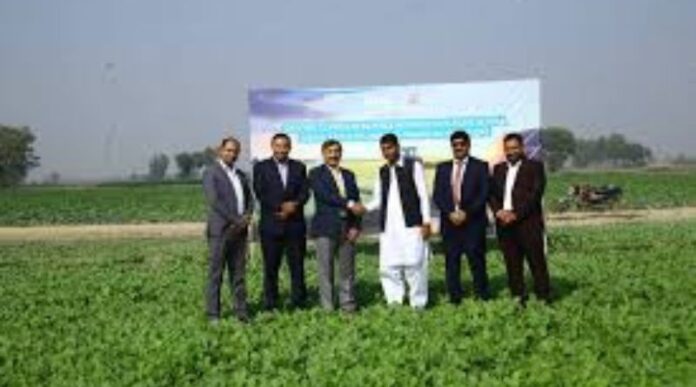

HBL Microfinance Bank and the Space & Upper Atmosphere Research Commission (SUPARCO) have joined hands to expand satellite-based agricultural financing in Punjab. The partnership aims to use modern satellite technology and digital data to help farmers get better access to financial services.
Agriculture remains one of the most important parts of Pakistan’s economy. Millions of people depend on farming for their income, while the sector also plays a major role in food production and rural employment. However, farmers often face problems when they need loans, especially small farmers who may not have detailed land records, strong financial histories, or easy access to traditional banking services.
The new cooperation between HBL Microfinance Bank and SUPARCO is designed to address some of these challenges by using satellite information to understand agricultural land and farming activity. The technology can help financial institutions make better decisions when providing loans to farmers.
Using Satellite Technology to Support Farmers
The partnership brings together banking services and space-based technology. SUPARCO can provide satellite data and information that can help identify agricultural areas, monitor crops, and assess land conditions. HBL Microfinance Bank, meanwhile, can use this information to improve its agricultural lending process.
Satellite images can provide useful information about farmland without requiring physical visits to every location. They can help show the size and location of agricultural fields and provide information about crop activity over time.
For a financial institution, such information can be useful when assessing a farmer’s financing needs. Instead of relying only on paperwork and traditional methods, banks can use additional data to better understand agricultural activity.
This can be especially helpful in rural areas where collecting accurate and updated information can be difficult.
A New Approach to Agricultural Financing
Agricultural lending has always been an important area for Pakistan’s financial sector. Farmers need money at different stages of the crop cycle. They may require financing to purchase seeds, fertilizers, pesticides, machinery, fuel, or other farming inputs.
Small farmers can face greater difficulties in obtaining formal loans. Some may have limited documentation, while others may live far away from bank branches. The process of assessing agricultural land can also take time and involve physical inspections.
Satellite-enabled financing can make this process more data-driven. By using satellite information, financial institutions can gain a clearer picture of farmland and farming conditions.
The goal is not simply to introduce another technology into banking. Instead, the partnership is focused on making agricultural finance more accessible, efficient, and suitable for the needs of farmers.
Why Punjab Is Important
Punjab is Pakistan’s largest agricultural province and has a major role in the country’s food supply. The province produces a wide range of crops and has a large population of farmers working across rural areas.
From wheat and rice to sugarcane, cotton, vegetables, and other crops, farming activity covers large parts of Punjab. Because of this, improvements in agricultural financing can have a wider impact on rural communities and the overall economy.
Farmers need timely financial support because agricultural activities follow specific seasons. If a farmer does not have enough money when seeds or fertilizers are needed, delays can affect the entire crop.
A faster and more informed financing system could therefore help farmers manage their expenses at important points in the farming cycle.
How Satellite Data Can Help Banks
Satellite technology has become increasingly useful in agriculture around the world. Images collected from space can provide information about land and crops over large areas.
For banks, one major benefit is the ability to gather information without depending entirely on physical field visits.
Satellite data can potentially help identify:
Agricultural land and field boundaries
Crop areas
Changes in vegetation
Farming activity
Possible crop conditions
Land-use patterns
Information that can support agricultural loan assessment
This information can then be combined with other financial and agricultural data.
The purpose is to give banks a better understanding of the farming activity linked to a financing application. This may help reduce uncertainty and improve the process of evaluating agricultural borrowers.
Helping Small Farmers Access Formal Finance
One of the biggest challenges in Pakistan’s agricultural sector is increasing access to formal financial services.
Large farmers and established businesses may have more experience dealing with banks. Small farmers, however, can sometimes find formal financing difficult to access.
Microfinance banks have an important role in this area because they focus on providing financial services to individuals and communities that may not be fully served by traditional banking.
HBL Microfinance Bank’s cooperation with SUPARCO could strengthen this role by providing additional information for agricultural financing decisions.
If satellite-based information makes loan assessment easier, more farmers could potentially be brought into the formal financial system.
This can also reduce farmers’ dependence on informal sources of borrowing, where financing may sometimes come with high costs or difficult repayment conditions.
Improving the Loan Assessment Process
Traditional agricultural loan assessment can require considerable time and effort. Bank staff may need to visit farms, check land details, review documents, and assess the farmer’s ability to repay the loan.
These steps remain important, but technology can support them.
Satellite information can provide a broader view of agricultural land and farming activity. When combined with on-ground verification and financial information, it can give lenders another tool for making decisions.
This could help make the process more efficient while reducing some of the challenges connected with manual assessment.
However, satellite data should be viewed as a supporting tool rather than a complete replacement for proper banking checks. Financial institutions still need to follow responsible lending practices and ensure that farmers receive loans according to their ability to repay.
Supporting Digital Transformation in Agriculture
Pakistan’s agriculture sector is gradually becoming more connected with digital technology. Mobile banking, digital payments, online marketplaces, weather information, and smart farming tools are changing how farmers and agricultural businesses operate.
The cooperation between HBL Microfinance Bank and SUPARCO adds another part to this digital transformation.
Instead of depending only on traditional records, financial institutions can use technology to collect and analyze information about agricultural activity.
This can eventually support the development of more modern financial products designed specifically for farmers.
For example, lenders could potentially develop financing solutions linked to crop cycles, land size, farming activity, or other verified agricultural information.
Better Information Can Lead to Better Decisions
A major benefit of satellite-enabled agricultural financing is improved access to information.
Lending decisions become more difficult when a bank has limited information about the borrower or the asset connected to the loan. Agriculture can be particularly challenging because crop conditions and land activity can change over time.
Satellite technology can provide updated information that helps lenders understand what is happening on the ground.
This does not eliminate all risks associated with agricultural lending. Farmers remain exposed to weather conditions, water shortages, pests, diseases, changing market prices, and other problems.
Still, better information can help financial institutions understand these risks and design financing solutions more effectively.
Technology Can Also Help Manage Agricultural Risks
Farming is naturally exposed to risks that are different from those faced by many other businesses. A farmer may invest heavily in a crop and then face losses because of heavy rain, drought, extreme temperatures, pests, or disease.
Satellite data can potentially help monitor changes in agricultural conditions. Over time, such information could support better risk assessment for agricultural finance.
It may also help financial institutions understand broader patterns across farming areas.
When combined with weather information, field surveys, crop data, and other sources, satellite information can become part of a wider system for managing agricultural lending risks.
Potential Benefits for Rural Communities
The impact of improved agricultural financing can go beyond individual farmers.
When farmers have access to suitable financing, they can purchase better-quality inputs, maintain their farms, invest in equipment, and manage their crop expenses more effectively.
Higher productivity can support household incomes and strengthen rural economies.
Agriculture also supports many businesses outside farming. Transporters, fertilizer dealers, seed suppliers, machinery providers, wholesalers, traders, and food businesses all depend on agricultural activity.
As a result, improving financial access for farmers can potentially support a wider network of businesses and workers.
A Step Toward More Modern Agricultural Banking
The HBL Microfinance Bank and SUPARCO partnership reflects a broader shift toward technology-based financial services.
Banking is no longer limited to physical branches and paper documents. Digital tools are increasingly being used to assess customers, process transactions, manage risks, and deliver financial services.
Agriculture can benefit from this transformation because farming involves large areas of land and many customers living in locations where traditional banking infrastructure may be limited.
Satellite technology provides a way to collect information across large areas. This makes it particularly useful for agricultural applications.
What This Could Mean for the Future
The expansion of satellite-enabled agricultural financing in Punjab could open the door to further use of technology in Pakistan’s farming sector.
As more digital agricultural data becomes available, banks may be able to create financing products that are better matched to farmers’ actual needs.
Future systems could potentially combine satellite images with digital land records, weather information, crop information, mobile banking data, and other sources.
Such systems could make agricultural finance more responsive and easier to manage.
For farmers, the biggest benefit would be greater access to financial services through a process that understands the realities of farming.
For banks, better information could support more informed lending decisions.
For the agriculture sector, wider access to formal finance could support investment and productivity.
Challenges That Need Attention
While satellite-enabled financing offers several opportunities, it also comes with challenges.
Technology alone cannot solve every problem in agricultural finance. Farmers still need awareness about banking services, easy access to digital tools, suitable loan products, and clear information about repayment requirements.
Digital systems also need to be reliable and accurate. Satellite data must be properly analyzed before it is used for financial decisions.
Another important issue is making sure that technology does not create new barriers for farmers who have limited digital skills.
Banks and relevant institutions will need to make the system simple and easy to understand.
Building a Stronger Link Between Space and Agriculture
SUPARCO’s involvement highlights how space technology can have practical uses in everyday economic activities.
Space-based systems are often associated with research, communication, weather monitoring, and scientific work. However, satellite data can also support agriculture, disaster management, mapping, environmental monitoring, and financial services.
By working with HBL Microfinance Bank, SUPARCO can help connect this technology with the needs of Pakistan’s farmers.
This type of cooperation can also encourage more innovation in the use of satellite information for economic development.
Conclusion
The partnership between HBL Microfinance Bank and SUPARCO marks an important step toward using modern technology to improve agricultural financing in Punjab.
By combining banking expertise with satellite-based information, the initiative aims to make agricultural loan assessment more informed and efficient. It could also help expand formal financial services to farmers who may face difficulties with traditional lending systems.
Punjab’s large agricultural base makes it an important place for such an initiative. If implemented effectively, satellite-enabled financing could support farmers in getting timely access to funds while helping financial institutions better understand agricultural lending risks.
The move also shows how technology can connect different sectors of the economy. Space-based data may seem far removed from everyday farming, but it can provide useful information about land and crops across large areas.
For Pakistan, where agriculture remains central to jobs, food production, and rural incomes, better use of technology and finance can play an important role in the future.
The cooperation between HBL Microfinance Bank and SUPARCO therefore represents more than a banking project. It is a step toward a more data-based and digitally supported agricultural system, where farmers can have better access to financial services and lenders can make decisions using more reliable information.
Read Also: check