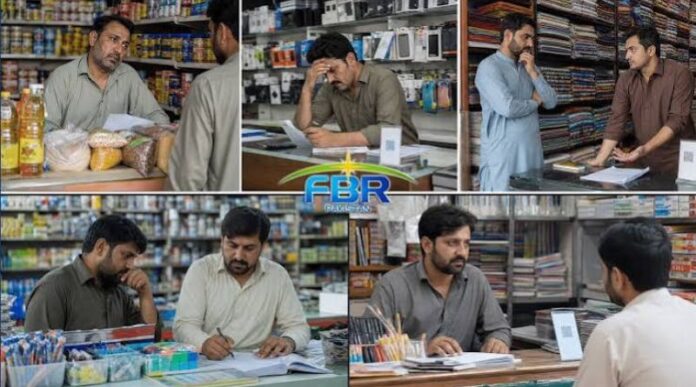

The government’s efforts to bring more retailers into the formal tax system have received a very limited response so far. Under the new fixed tax scheme introduced for retailers, only two new retailers have reportedly joined the tax net. The low number has raised questions about how effective the scheme is and whether more steps are needed to encourage shopkeepers and small businesses to register.
The fixed tax plan was introduced with the aim of making taxation easier for small retailers. Instead of dealing with complicated tax calculations and lengthy procedures, eligible retailers can pay a fixed amount based on the nature and size of their business. The government expects this approach to make it easier for small shop owners to become part of the documented economy.
However, the latest response suggests that retailers are still hesitant to register.
Government Wants More Retailers in the Tax System
Pakistan has a large retail sector, with thousands of shops operating across cities, towns, and smaller markets. A major portion of this business activity remains outside the formal tax system.
The government has been trying to increase documentation of the economy for many years. Bringing retailers into the tax net is considered an important part of this effort because retail businesses handle a large volume of daily transactions.
The fixed tax scheme was presented as a simpler option for retailers. The idea was to reduce the burden of complicated tax calculations and provide shopkeepers with a clearer way to meet their tax responsibilities.
Despite this, only two new retailers have joined the tax system under the scheme so far.
The small number shows the challenge faced by the authorities. While the government wants to increase tax collection and documentation, many retailers appear reluctant to register.
What Is the Fixed Tax Scheme?
The fixed tax system is designed to make taxation easier for small retailers. Under a traditional tax system, business owners may have to maintain records, calculate income, submit returns, and follow several other requirements.
For a small shopkeeper, these requirements can sometimes feel difficult or expensive, especially when the business does not have a proper accounting system.
A fixed tax approach is meant to simplify the process. Instead of calculating tax through a complicated process, a retailer can pay an amount determined under the government’s tax framework.
The purpose is not only to collect tax but also to encourage more businesses to become part of the documented economy.
The government hopes that a simple and predictable system will remove some of the concerns that retailers have about registration.
Why Are Retailers Not Registering?
The limited response suggests that several issues may be discouraging retailers from joining the scheme.
One major concern among small business owners is the fear of additional paperwork. Many retailers run their businesses with limited staff and do not have professional accountants. They may see registration with the tax authorities as an extra responsibility.
Another issue is uncertainty about future tax demands. Some shopkeepers may worry that joining the tax system today could lead to additional taxes or requirements in the future.
There is also a long-standing trust issue between taxpayers and tax authorities. Some businesses prefer to remain outside the formal system because they believe registration could bring greater government scrutiny.
For the fixed tax scheme to succeed, the authorities may need to address these concerns clearly and explain exactly what retailers will be required to do after registration.
Small Businesses Face Different Challenges
Not every retailer operates in the same way. A large shop in a major city may have a proper accounting system, employees, digital payment options, and regular business records.
A small shop in a local market may operate with only the owner and one or two workers.
This difference is important when designing a tax policy.
Small retailers often focus on daily sales, stock purchases, rent, electricity bills, employee wages, and other basic expenses. They may not have the time or knowledge to deal with complex tax rules.
A fixed tax scheme can therefore be useful if it is genuinely simple.
However, simplicity must be supported by an easy registration process and clear information. If retailers still need to visit different offices, complete difficult forms, or hire professionals, the main purpose of the scheme may be weakened.
Only Two New Registrations Raise Questions
The fact that only two new retailers have entered the tax net is significant because the government introduced the scheme with much broader expectations.
The government needs a large number of businesses to participate if it wants the scheme to make a meaningful difference to tax collection.
Two registrations are clearly a very small number compared with the size of Pakistan’s retail sector.
The development may lead authorities to review how the scheme is being implemented and why retailers are not responding.
It is possible that many retailers are still unaware of the scheme. Others may know about it but remain unsure about its rules.
This means that better communication could be one of the first steps needed.
Awareness Can Play an Important Role
Many government schemes fail to achieve their full potential when people do not clearly understand how they work.
Retailers need simple answers to basic questions.
They need to know who is eligible, how much tax they will pay, how registration works, what documents are required, and what their responsibilities will be after joining.
The government can explain these points through local markets, trade associations, tax offices, online platforms, and public awareness campaigns.
Instead of using complicated tax language, information should be provided in simple Urdu and other commonly used local languages where needed.
Shopkeepers are more likely to consider registration when they understand the process and know what to expect.
Retail Associations Could Help
Trade and market associations can also play a role in improving participation.
Retailers often discuss government policies with market leaders and business associations before making decisions. These groups can explain the scheme to shopkeepers and raise their concerns with the authorities.
If retailers have questions about the fixed tax system, the government can work with these associations to provide clear answers.
Regular meetings with business representatives could also help identify the reasons behind the low registration rate.
Instead of simply asking retailers to register, authorities may need to understand why they are hesitant.
Digital Registration Could Make Things Easier
Another important factor is the registration process itself.
If a retailer can register online or through a simple mobile-based system, it could reduce the time and effort required.
Pakistan has already seen growing use of digital services in banking, payments, business, and government departments. Tax registration can also become easier through digital platforms.
A simple process could allow a retailer to enter basic business information, verify details, select the relevant tax category, and complete registration without making repeated visits to government offices.
For shopkeepers who are not comfortable with online systems, help desks could be established in major markets.
Retailers Also Need Confidence
Tax policies work better when taxpayers have confidence in the system.
Retailers need to feel that they are being treated fairly and that the rules will be applied consistently.
If one business is required to pay tax while another similar business remains outside the system, registered retailers may feel disadvantaged.
This is why enforcement and fairness are important parts of any tax reform.
The government has to balance two things. It needs to encourage voluntary registration while also making sure that businesses cannot simply remain outside the tax system indefinitely.
Documentation of the Economy
Increasing the number of documented businesses is a major challenge for Pakistan.
A documented economy allows the government to better understand business activity, improve tax collection, and create more reliable economic data.
When businesses remain outside the formal system, the government has less information about their actual sales and income.
Retailers are an important part of this picture because they are directly connected to consumers and handle a large number of daily transactions.
Bringing more retailers into the formal system could therefore help improve documentation over time.
However, this process cannot depend only on announcing new tax schemes. The system must also be easy enough for small businesses to follow.
Fixed Tax Scheme Needs Better Response
The low number of registrations under the fixed tax scheme may encourage the government to reconsider its approach.
Authorities may need to identify whether the problem is the tax amount, registration process, lack of awareness, fear of documentation, or other concerns among retailers.
A detailed review could help determine what changes are required.
For example, the government could make registration easier, provide clearer guidance, reduce unnecessary paperwork, and offer support through market-level facilitation centres.
At the same time, tax officials can work directly with retailers to explain the benefits and responsibilities linked to registration.
What Retailers Should Know
Retailers considering the scheme should first understand its rules before making a decision.
They should check whether their business qualifies, what fixed tax amount applies to them, what records they need to maintain, and what filing or payment requirements will continue after registration.
They should also keep proper proof of their tax payments and business records.
Getting information directly from official tax authorities or recognised business associations can help prevent confusion.
Retailers should be careful about relying on rumours or unofficial information because tax rules can change and different businesses may fall under different categories.
A Long-Term Challenge for the Government
The latest figures show that bringing retailers into the tax net will not be an easy task.
The government may have introduced a simpler tax model, but simplicity alone may not be enough to convince shopkeepers to register.
Retailers need clear rules, easy procedures, proper guidance, and confidence that the system will remain predictable.
The government, meanwhile, wants to increase tax collection and document more economic activity without creating unnecessary pressure on small businesses.
Finding this balance will be important.
The fact that only two new retailers have joined under the fixed tax scheme is therefore more than just a small registration figure. It highlights the wider challenge of tax reform in Pakistan.
If authorities can understand the reasons behind the weak response and address retailers’ concerns, participation could improve in the future. But if the same barriers remain, the scheme may struggle to reach the large number of retailers it was designed to bring into the formal tax system.
Read Also: check