
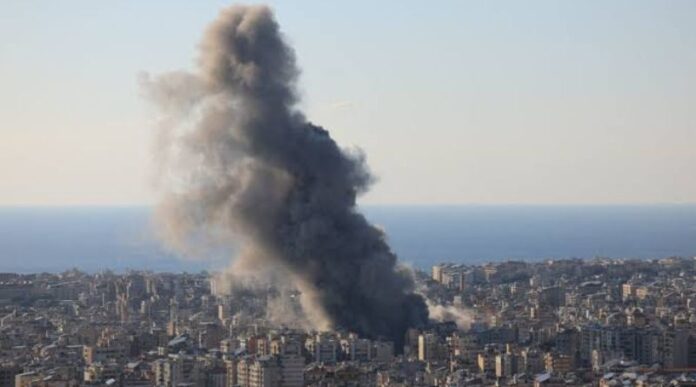

The conflict between the United States and Iran is entering another tense phase as fighting, military movements, attacks on shipping and diplomatic efforts continue at the same time. The war, which has already lasted for months, is now affecting a much wider part of the Middle East, with developments involving Iraq, Saudi Arabia, Yemen and the important Strait of Hormuz.
The latest developments have also raised fresh questions about whether the conflict is moving closer to another major military escalation or whether diplomatic efforts can bring back a ceasefire. Iran has received a response from Washington to its latest proposal, while the United States has completed the withdrawal of its forces from Iraq and is sending thousands of additional troops and ships to the region.
At the same time, attacks linked to the wider conflict are creating new pressure on Gulf countries. Saudi Arabia has reported attacks by Yemen’s Houthi movement, while commercial vessels continue to face security threats in and around the Strait of Hormuz. These developments have kept governments, markets and shipping companies closely watching the situation.
Conflict Enters Another Difficult Phase
The US-Israel war against Iran has now entered its eighth month. During this period, the fighting has moved beyond direct military action between the main sides and has affected important areas across the region.
One of the biggest concerns is the Strait of Hormuz, a narrow waterway between Iran and Oman. It is one of the world’s most important energy routes because large amounts of oil, gas and other fuel products normally pass through it. Reuters reported that shipping through the strait has increased in recent weeks, but flows of crude oil, refined fuel and natural gas remain badly affected. Ships are also facing higher costs because companies are taking extra risks to use the route.
New incidents at sea have added to these concerns. UK Maritime Trade Operations reported that a tanker was struck by an unknown projectile while passing through the Strait of Hormuz on October 1. The vessel caught fire, but the crew was reported safe. The full extent of the damage and any environmental impact were still being checked.
Separate reports also said three oil tankers had been hit by unknown projectiles while moving through the strait earlier in the week. Shipping intelligence firm Marisks said the vessels had switched off their tracking systems, making it harder to monitor their exact movements.
These incidents show why the waterway has become one of the main pressure points in the conflict. Even when some ships are able to pass, the cost and risk of doing so remain much higher than normal.
Iran and US Still Far Apart on a Ceasefire
Diplomatic efforts have not completely stopped despite the continuing military pressure. Iran recently put forward a proposal aimed at reviving a collapsed Gulf ceasefire.
Under the Iranian proposal, the United States would remove its blockade of Iranian ports, while Iran would reopen the Strait of Hormuz and restore normal maritime movement within seven days, subject to agreed conditions. President Donald Trump publicly said he had rejected the proposal, but Iranian officials said Tehran had not initially received a formal response. Later, Iranian officials confirmed that Foreign Minister Abbas Araqchi had received Washington’s response through Qatari mediators.
The main disagreement appears to be about the timing of each side’s actions. According to a person briefed on the talks, both sides broadly agree on some of the steps that would be needed, but they have not agreed on which side should act first.
Qatar has been playing an important role by carrying messages between the United States and Iran. The two sides also held indirect discussions around the United Nations General Assembly in New York. These were among the first such talks since the earlier ceasefire broke down.
For now, however, there is no clear sign that a full agreement is close. The latest US response has not been made public in detail, leaving many important questions unanswered.
US Completes Iraq Withdrawal
Another major development came from Iraq, where the United States completed the withdrawal of its remaining forces after more than two decades.
The final American troops left Iraqi bases on Wednesday as part of a plan agreed in 2024. The withdrawal formally ended the US-led military mission in Iraq. The United States first invaded Iraq in 2003 and later returned troops in 2014 as part of the campaign against Islamic State militants.
The departure is being closely watched because Iraq has long been an important part of the competition between Washington and Tehran. Iran has strong political and military links with several armed groups in Iraq, while American forces had been involved in security operations there for years.
Iran and groups aligned with Tehran have described the US withdrawal as an important development. Reuters reported that Iranian allies celebrated the move and viewed it as part of their wider effort to remove American military forces from the region.
Inside Iraq, the response has been mixed. While some people welcomed the departure of American forces, others expressed concern that the withdrawal could create new security problems or increase the influence of armed groups.
The situation is especially important because Iraq has repeatedly been caught between the interests of the United States and Iran. Any major change in the country’s security balance could have effects beyond its borders.
More US Troops Heading to the Middle East
Even as American forces leave Iraq, Washington is increasing its military presence elsewhere in the region.
The United States is sending around 9,000 additional troops aboard a group of ships, according to an American official cited by the Associated Press. The deployment includes a third aircraft carrier and thousands of sailors and Marines. The move comes as President Trump considers whether more military action against Iran could take place in the future.
The new deployment could bring the number of American sailors and Marines in the region to more than 20,000. Two aircraft carriers are already in the area, while another carrier strike group and an amphibious group are being sent toward the Middle East.
The buildup does not automatically mean that a new large-scale attack will take place, but it gives Washington more military options at a time when relations with Tehran remain tense.
For Iran, the presence of American forces near its waters is a major security concern. For the United States and its allies, maintaining naval and air power in the region is linked to protecting military forces, shipping routes and energy supplies.
Saudi Arabia Faces New Pressure
The conflict is also creating new problems for Saudi Arabia.
The Saudi-led coalition fighting Yemen’s Houthis said on Thursday that a Houthi drone had attacked a power distribution station in Medina earlier in the week. The coalition said one transformer was put out of service, although the wider electricity network was not affected.
The Houthi side denied the accusation and called the Saudi claim false. Saudi authorities have also reported intercepting drones and missiles launched toward southern parts of the kingdom.
The latest attacks come after months of rising tensions between Saudi Arabia and the Iran-aligned Houthi movement. This has added another layer to the regional conflict and increased concern about the safety of key infrastructure.
Saudi Arabia has also been working to restore energy exports after earlier attacks affected parts of its oil network. Reuters reported that the kingdom has restarted its East-West Pipeline and resumed tanker loading at Yanbu after a previous drone strike caused a shutdown.
Oil Markets Under Pressure
The conflict is having a direct effect on energy markets. Because the Strait of Hormuz remains under heavy security pressure, traders are closely watching every military and diplomatic development.
Oil prices moved sharply higher on Thursday as concerns over supply increased and the United States prepared a larger military deployment to the region. Reuters reported that Brent crude settled above $102 per barrel after a strong rise during the session.
Higher oil prices matter far beyond the Middle East. Countries that import large amounts of fuel can face higher costs when crude prices rise. This can increase pressure on transport, electricity, manufacturing and household budgets.
For countries such as Pakistan, international oil movements are particularly important because changes in global fuel prices can eventually affect local petrol and diesel prices, transport costs and the import bill.
Gulf Economies Watching Closely
Financial markets across the Gulf are also reacting to the uncertainty.
Reuters reported that most major Gulf stock markets closed lower on October 1 as investors tried to balance improving oil flows against unclear diplomatic signals from the United States and Iran. Saudi Arabia’s main index fell 0.5%, while Qatar, Abu Dhabi and Dubai also recorded declines.
At the same time, some oil flows are gradually recovering. Saudi Arabia’s pipeline operations and tanker loading activity have resumed, showing that the region’s energy sector is trying to adjust despite continuing security risks.
However, investors remain cautious because a new round of fighting could quickly change the situation. A major disruption in the Strait of Hormuz would create much greater pressure on energy supplies and shipping costs.
What Happens Next?
The coming weeks could be important for the direction of the conflict.
On one side, diplomatic talks through Qatar are still providing a channel between Washington and Tehran. Iran has already submitted a plan for restoring maritime traffic and reviving a ceasefire, while the United States has sent a response. This means diplomacy has not completely ended.
On the other side, military preparations are continuing. The United States is moving more troops and warships toward the region, while Iran continues to maintain pressure around the Strait of Hormuz. New attacks involving shipping and regional targets are also adding to the uncertainty.
The situation could therefore move in several directions. Continued talks could lead to steps that reduce tensions and improve shipping through the Gulf. Another possibility is that disagreements over the order of actions prevent a deal. Further attacks could also create pressure for a fresh military response.
For people across the Middle East and for countries dependent on stable energy supplies, the most important issue is whether the current cycle of military action and retaliation can be slowed.
Middle East Remains on Alert
The US-Iran conflict is no longer limited to one battlefield. Its effects can now be seen across Iraq, the Gulf, Yemen and major shipping routes. Military forces are being moved, commercial ships are facing new risks, and oil markets are reacting to every major development.
At the same time, diplomatic efforts continue, showing that both military pressure and negotiations remain part of the current situation. Iran has received Washington’s latest response, while Qatar continues to act as a mediator. Yet the key disagreements remain unresolved.
The Middle East therefore remains on alert as governments prepare for different possibilities. The future of the conflict may depend on what happens around the Strait of Hormuz, whether indirect negotiations make progress, and whether the United States and Iran can agree on a practical path back to a ceasefire.
Read Also: check