
By Dr. Noor ul Huda: Long marches are usually viewed as political contests. However, their economic consequences deserve equal attention, particularly for salaried teachers, small shopkeepers, junior government employees and freelancers. These households bear the costs of disruption despite having increasingly limited financial reserves.
As a political standoff moves towards the capital, Pakistan’s middle class – already stretched by double-digit inflation – has the most to lose from prolonged uncertainty
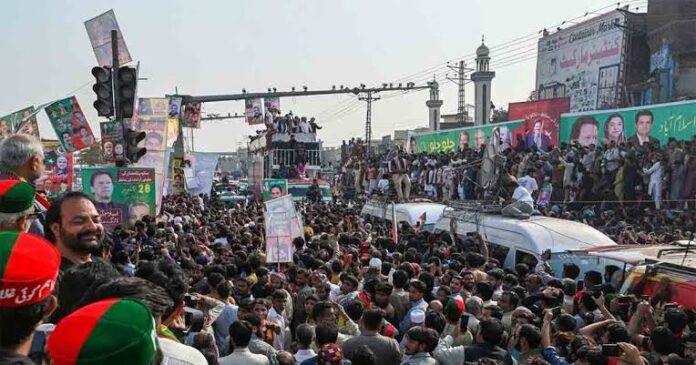
On October 4, a convoy of Pakistan Tehreek-e-Insaf (PTI) supporters, led by Khyber Pakhtunkhwa Chief Minister Sohail Afridi, departed Lakki Marwat for what the party calls a long march. Originally scheduled for September 27, it was postponed to allow talks with the federal government.
After negotiations failed, the convoy moved through Karak and Kohat towards Peshawar and Khairabad, about 80 kilometres west of Islamabad, where Afridi said the next phase would be announced.
Long marches are usually viewed as political contests. However, their economic consequences deserve equal attention, particularly for salaried teachers, small shopkeepers, junior government employees and freelancers. These households bear the costs of disruption despite having increasingly limited financial reserves.
However, this increased tension was defused after the President of Pakistan, on the advice of the Prime Minister, proclaimed an emergency and imposed Governor’s Rule in KPK and detained the Chief Minister and other party leaders. This action has calmed down the situation, yet an atmosphere of uncertainty prevailed as to how the people would react to the Governor’s Rule.
Where the Standoff stood
The PTI says the march seeks the release of its founder, Imran Khan, and the supremacy of the Constitution and the law. Concerns have intensified over his imprisonment, medical treatment and access to doctors and family. In August, the Supreme Court directed his transfer to a civilian hospital, but he was returned to prison after a brief stay at a government-run facility.
The federal government took a firm position. Adviser Rana Sanaullah said the march would not be allowed to enter Islamabad, while leaving room for talks if the provincial government cooperates on counterterrorism. Negotiations reportedly stalled over access to Khan and security assurances. Media reports citing official sources suggested the government had not ruled out emergency measures or Governor’s rule in the province, while the PTI reportedly prepared a sit-in at Governor House in response.
Both sides appeared increasingly prepared for escalation rather than compromise.
An economy under pressure
The timing is particularly difficult for households. Headline inflation eased to 10.3 per cent in September from 11.1 per cent in August, but remained nearly double the level a year earlier.
Average inflation in the first quarter of the fiscal year reached 10.2 per cent, up from 4.3 per cent a year earlier. Transport costs rose 27.4 per cent year-on-year, housing and utilities 12.4 per cent, and wholesale prices 13.3 per cent, signalling further retail price pressures. The Finance Division links much of the increase to the Middle East oil shock.
The government’s digital fuel relief targets lower-income households but leaves many lower-middle and middle-income families struggling with rising transport costs because they do not qualify.
Household survey data show average monthly income of Rs82,179 exceeds expenditure by barely Rs3,000. Though these figures predate this year’s price increases and mask differences among households, they highlight how little financial protection families have against further shocks.
How political disruption affects households
The consequences are not inevitable, but previous protests show where the burden often falls.
Movement and earnings: Road closures, containers and checkpoints disrupt commutes and reduce customer traffic, hurting small traders, transporters and shopkeepers dependent on daily turnover.
Digital livelihoods: During the October 2025 protest march towards Islamabad, mobile data was suspended in Islamabad and Rawalpindi. Similar restrictions would affect freelancers, online tutors, e-commerce sellers and students reliant on connectivity.
Prices and supplies: With wholesale inflation above 13 per cent, disruptions to transport and supply routes accelerate food and fuel price increases, particularly for perishable goods.
Confidence and savings: Prolonged uncertainty discourages hiring and investment, delaying household decisions about housing and children’s education.
Education and healthcare: Closures, diversions and blocked roads disrupt classes, examinations and hospital access, imposing costs families can rarely recover.
The psychological strain
Economic pressure extends beyond household accounts. Families struggling to stretch salaries across rent, electricity bills, school fees and medicines experience persistent anxiety.
Political confrontation compounds this stress with fears of violence, shutdowns and uncertainty. Through my work with the Mind Empowerment Council, I see a middle class that is not only losing purchasing power but also becoming increasingly exhausted. Such exhaustion erodes patience, trust and the capacity to plan. A society whose largest stabilising class loses its sense of security cannot remain stable.
What needs to be done
Although the long march is no longer in the field, the situation is simmering and can boil up again at any time. As such, core issues need to be addressed at the highest level in the larger national interests. As to questions concerning Khan’s medical care and access to doctors and family, these should be addressed through constitutional and legal channels. Parliament has a vital role in resolving such impasses.
Exercise restraint: The state should avoid blanket internet shutdowns, prolonged road blockades and mass detentions. Protesters should likewise avoid paralysing public life or damaging property. Peaceful protest and citizens’ freedom of movement must be respected equally.
Protect essential services: Ambulances, medicines, food supplies and school transport must retain unrestricted passage.
Extend targeted relief: Fuel and electricity assistance should cover financially vulnerable lower-middle-income salaried households increasingly left behind.
Preserve constitutional stability: A prolong emergency or Governor’s rule may deepen uncertainty when economic recovery requires predictability. Every escalation ultimately carries a cost for household budgets.
Conclusion
Governments and oppositions come and go, but the middle class sustains the country’s schools, clinics, markets, offices and tax base through every political cycle. When this class moves from financial strain to economic breakdown, the damage extends beyond any single party or government.
Whatever the PTI announces from Khairabad and however Islamabad responds, leadership must be measured by its ability to protect ordinary households from avoidable hardship. Pakistan can debate political power, but it cannot afford to pursue that contest at the expense of the people who keep the country running.
The writer is Correspondent, Awan-e-Aam (Parliamentarian Magazine), Chairperson of the Mind Empowerment Council, an academic author and teacher trainer, Cantab.