
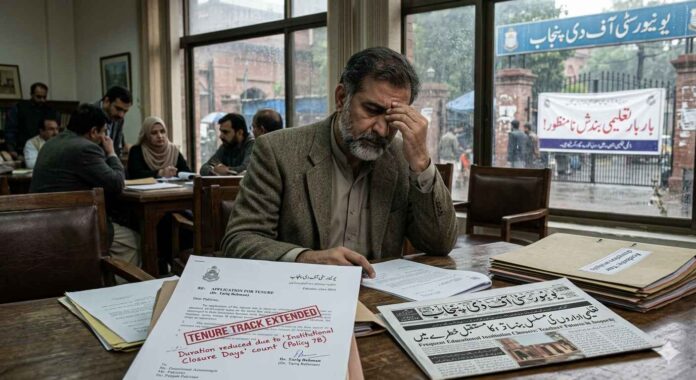

A Growing Pattern of Educational Disruption
The closure of educational institutions in Pakistan has increasingly become a recurring response to various crises. Whether it is a surge in fuel prices, worsening smog conditions, extreme heatwaves, heavy rainfall, or flooding, schools, colleges, and universities are often among the first sectors to shut down. While these closures are usually justified as necessary safety measures, their long-term consequences on education are profound and deeply concerning.
Over time, what once appeared to be temporary interruptions has evolved into a pattern. Academic calendars are no longer stable, and students are left navigating an uncertain educational landscape. Instead of consistent learning, students experience fragmented academic sessions, leading to a noticeable decline in academic tenure. The cumulative effect of these repeated disruptions is eroding the quality and continuity of education across the country.
When Safety Measures Turn Into Long-Term Setbacks
Closing institutions during emergencies is understandable, particularly when public health or safety is at risk. However, the frequency and duration of these closures raise an important question: at what cost does this approach come? Academic tenure, which represents the actual time students spend engaged in structured learning, is shrinking significantly.
In many cases, educational institutions operate effectively for only four to five months in a year. The rest of the time is consumed by unexpected closures, extended vacations, or reduced school weeks. This limited exposure to formal education is insufficient to meet the academic demands of a rapidly evolving global environment.
Students are not only losing valuable classroom time but also missing out on critical developmental experiences. Education is not merely about textbooks and exams; it is about interaction, discipline, creativity, and growth. When institutions remain closed, these essential elements are compromised.
Impact on Student Engagement and Behavior
One of the most alarming consequences of repeated school closures is the decline in student engagement. With prolonged gaps in their academic routine, students often lose focus and motivation. The structure that schools provide is replaced by unproductive habits, and in some cases, exposure to negative influences.
When students return after extended closures, teachers frequently observe a decline in academic performance and discipline. Many students struggle to reconnect with their studies, while others prioritize social activities over education. This shift in mindset is particularly concerning, as it undermines the very purpose of schooling.
The reduced number of instructional days further compounds the issue. In some regions, institutions have adopted shorter weeks, offering classes only four days a week. While this may address logistical challenges, it significantly limits opportunities for meaningful learning.
Parental Concerns and Financial Strain
Parents across the country are increasingly worried about their children’s future. The inconsistency in the academic schedule raises doubts about whether students are acquiring the knowledge and skills necessary to succeed in a competitive world.
Despite these disruptions, parents continue to bear the full financial burden of education. Tuition fees, transportation costs, and other expenses remain unchanged, even when classes are frequently canceled. This creates a sense of frustration and dissatisfaction, as the value of their investment diminishes.
For many families, education is a long-term commitment and a pathway to a better future. However, repeated closures disrupt this journey, leaving parents questioning the effectiveness of the current system.
The Limitations of Online Learning
In theory, online learning appears to be a viable solution to maintain educational continuity during closures. In practice, however, it is far from effective in Pakistan. Several structural challenges limit its feasibility and impact.
Internet access remains slow, unreliable, and expensive for a large portion of the population. Many households cannot afford smartphones, laptops, or other necessary devices. Even in areas where connectivity exists, frequent power outages and weak network signals disrupt virtual classes.
As a result, online learning often becomes inconsistent and inaccessible. Instead of bridging the gap, it creates further inequality, leaving disadvantaged students even further behind. The digital divide continues to widen, making it clear that online education alone cannot replace traditional classroom learning under current conditions.
The Role of Fuel Crisis and Policy Decisions
One of the major reasons behind recent school closures has been the fuel crisis. Rising global oil prices and supply constraints have forced authorities to implement measures aimed at reducing fuel consumption. These measures often include closing educational institutions, shortening working hours, and promoting remote work.
While such decisions may be necessary from an economic perspective, they place a disproportionate burden on the education sector. Schools become an easy target for cost-cutting strategies, despite the long-term consequences on human capital development.
The lack of a balanced approach highlights a critical gap in policymaking. Education, which should be a top priority, is often treated as secondary when compared to other sectors.
Environmental Challenges and Academic Interruptions
Environmental factors also play a significant role in disrupting education. During winter, smog levels rise to dangerous levels in several regions, forcing authorities to close schools to protect children’s health. Similarly, extreme heat during summer leads to extended vacations, sometimes lasting several months.
Heavy rainfall and flooding further complicate the situation, particularly in vulnerable areas. Infrastructure damage and safety concerns make it difficult for institutions to operate, leading to additional closures.
While these decisions are necessary to ensure safety, the lack of alternative strategies means that students bear the brunt of these disruptions. Each closure adds to the growing gap in learning, making it increasingly difficult to maintain academic standards.
Examination Pressure and Learning Gaps
Despite frequent interruptions, examination schedules often remain unchanged. Students are expected to appear for tests even when they have not completed the required coursework. This creates immense pressure and anxiety, particularly for those who are already struggling.
The mismatch between teaching time and examination expectations leads to superficial learning. Students focus on memorization rather than understanding, simply to pass exams. Over time, this approach weakens the overall quality of education.
Learning gaps continue to widen, especially among students from disadvantaged backgrounds. Without adequate support, many find it difficult to catch up, leading to long-term academic setbacks.
The Need for a Resilient Education System
The current situation underscores the urgent need for a more resilient education system. One that can withstand crises without compromising the continuity of learning. Relying solely on closures is not a sustainable solution.
Authorities must explore alternative approaches that prioritize education while addressing safety and economic concerns. This requires innovative thinking and long-term planning.
Practical Solutions for Continuity in Education
To address the challenges posed by repeated school closures, several practical solutions can be considered:
Flexible academic calendars can help institutions adjust schedules without compromising learning outcomes. Instead of fixed timelines, schools can adopt adaptive systems that account for disruptions.
Community-based learning centers can provide localized support, especially in areas where access to formal institutions is limited. These centers can ensure that students continue learning even during closures.
Investment in digital infrastructure is essential to make online learning more accessible and effective. Subsidized internet services and affordable devices can help bridge the digital divide.
Hybrid learning models, combining in-person and remote education, can offer greater flexibility. This approach allows institutions to continue teaching even under challenging conditions.
Teacher training programs can equip educators with the skills needed to adapt to different teaching environments. This ensures that the quality of education remains consistent.
Restoring Confidence in the Education System
For any reforms to succeed, it is crucial to restore public confidence in the education system. Parents and students need assurance that their concerns are being addressed and that their future is secure.
Transparency in decision-making is key. Authorities should provide clear timelines and communicate policies effectively. This helps reduce uncertainty and builds trust.
Education must be treated as a priority, not an afterthought. While crises are inevitable, their impact on learning can be minimized through proactive planning and strategic investment.
A Call for Balanced Decision-Making
The challenges faced by Pakistan’s education sector are complex and multifaceted. Fuel shortages, environmental issues, and economic constraints all play a role. However, the solution does not lie in repeatedly shutting down institutions.
A balanced approach is needed—one that considers both immediate concerns and long-term consequences. School closures should be a last resort, not a default response.
Students represent the future of the nation. Their education cannot be compromised without risking broader social and economic implications.
Conclusion: Protecting the Future Through Education
The decline in academic tenure caused by repeated school closures is a serious issue that demands immediate attention. Each lost day of learning is a missed opportunity for growth and development.
While safety and resource management are important, they should not come at the expense of education. A more resilient, inclusive, and adaptive system is essential to ensure that learning continues, regardless of circumstances.
Students and families are not asking for extraordinary measures. They seek consistency, fairness, and a system that supports their aspirations. By prioritizing education and implementing practical solutions, it is possible to overcome these challenges and build a stronger future.
The path forward requires commitment, innovation, and a willingness to rethink traditional approaches. Only then can the cycle of disruption be broken, and the true value of education be restored.
Read More
FBR Unveils Major Reforms for Property Developers in Pakistan


