
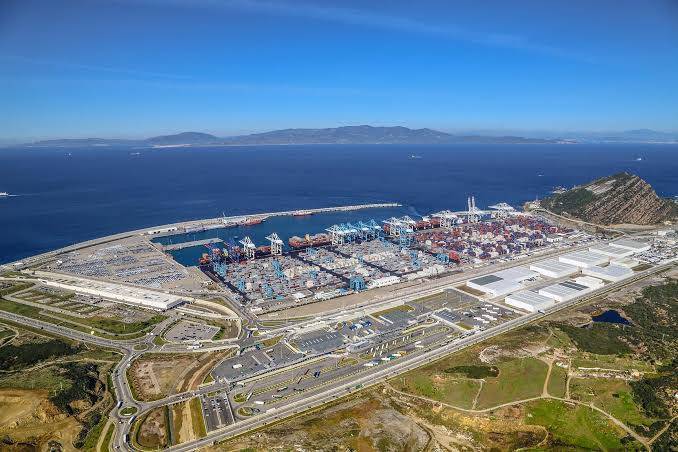

For the first time in history, Morocco has emerged as Africa’s most industrialized country in 2025, overtaking South Africa according to a new report released by the African Development Bank (ADB). The achievement reflects not only South Africa’s gradual industrial decline but also Morocco’s long-term economic strategy focused on industrial growth, infrastructure development, and foreign investment.
Tangier Med and Infrastructure Drive Growth
The ADB report highlighted Morocco’s rapid progress in industrialization, supported by rising public spending, increasing foreign direct investment, and the expansion of industrial zones across the country. A major factor behind this success is the Tangier Med port in northern Morocco, which has now become the largest port in Africa and a key logistics hub connecting Africa, Europe, and the Mediterranean region.
Morocco’s industrial economy is no longer dependent solely on phosphate exports and the automobile sector. The country has also become a growing player in the aeronautics industry. According to Moroccan strategic analyst Abdelmalek Alaoui, every aircraft manufactured after 2005 contains at least one essential component produced in Morocco.
He explained that Morocco’s heavy investment in modern infrastructure, connectivity, ports, and telecommunications has attracted both international and local investors, helping the country move into a higher category of industrial competitiveness.
Economic Success but Social Challenges Remain
Despite these achievements, experts warn that the benefits of industrial growth have not reached all parts of Moroccan society equally. While areas connected to ports and global trade are prospering, many rural and underdeveloped regions continue to face economic difficulties.
Alaoui noted that the country’s rapid industrialization has widened the gap between wealthy and poorer communities. Another recent ADB report also pointed out that although Morocco has successfully expanded its industrial base, it still struggles to create enough employment opportunities for its growing population.
Africa’s Industrial Rankings
According to the ADB’s industrial development index, Morocco achieved a score of 0.8415, placing it closest to the maximum industrial benchmark value of 1.
South Africa ranked second with a score of 0.8396, remaining a major industrial power despite experiencing a steady decline in competitiveness. Egypt secured third place with 0.7827, followed by Tunisia in fourth position with 0.7760.
Mauritius ranked fifth with 0.6731, significantly behind the leading four economies. The remaining countries in the top ten include Algeria, Eswatini, Senegal, Namibia, and Côte d’Ivoire.
North Africa Leads the Continent
At the regional level, North Africa continues to dominate as the continent’s most industrialized region, followed by Southern Africa. East Africa, West Africa, and Central Africa are still far behind, although they have shown gradual improvement in recent years.
The report states that North and Southern Africa continue to account for the majority of manufacturing production, export sophistication, and industrial competitiveness on the continent.
A Vision for Africa’s Industrial Future
Through its 2025 report, the African Development Bank emphasized the need for a more integrated approach to industrial development across Africa. The focus is no longer only on building national industries but also on creating regional industrial ecosystems capable of competing in global markets.
In this changing economic landscape, Morocco is now viewed as one of the countries best positioned to lead Africa’s next phase of industrial transformation.
The ADB’s 2026 Annual Meetings are being held until May 29 under the theme: “Mobilizing large-scale resources for financing Africa’s development in a fragmented world.”


