
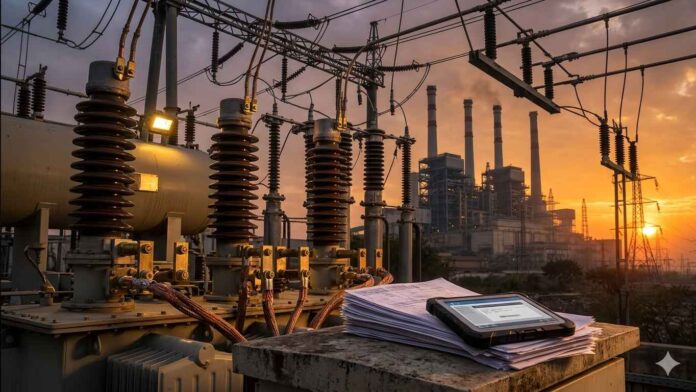

Pakistan’s electricity consumers are facing one of the most unusual and financially damaging realities in the country’s energy sector: billions of rupees are being paid every year to power plants that often generate little or no electricity.
Despite declining electricity production and weakening power demand growth, consumers continue paying massive fixed charges through their electricity bills simply to keep power plants available on standby. This system has significantly increased the burden on households, businesses, and industries already struggling with some of the highest electricity tariffs in the region.
Recent energy sector data reveals that Pakistan’s power generation declined sharply over the past several years, yet the financial obligations tied to unused generation capacity continued rising. Instead of paying mainly for electricity actually consumed, consumers are increasingly paying for idle generation capacity locked into long-term contractual arrangements.
The result is a deeply distorted electricity system where falling demand, inefficient infrastructure, expensive fuel imports, and rigid payment agreements are combining to create one of the country’s most serious economic challenges.
Experts now warn that unless Pakistan fundamentally restructures its energy system and renegotiates expensive capacity arrangements, electricity consumers may continue paying rising tariffs for power that is not being produced efficiently or, in some cases, not being produced at all.
Electricity Generation Falls While Consumer Costs Rise
Pakistan’s electricity generation has experienced a notable decline in recent years even as consumer financial obligations continued increasing.
Between FY22 and FY25, electricity production reportedly dropped by nearly 9 percent, reflecting slowing demand growth, economic pressures, energy conservation trends, and the rapid expansion of private solar adoption.
Under normal market conditions, lower electricity generation would generally lead to reduced overall costs. However, Pakistan’s energy structure operates differently because a large portion of the system’s financial burden comes from fixed capacity payments rather than actual electricity generation.
Capacity payments are guaranteed payments made to power producers simply for keeping plants available to generate electricity whenever needed, regardless of whether the plants are actively producing power.
As a result, consumers remain financially responsible for paying power plants even during periods when electricity demand falls or generation output declines.
This unusual structure has caused a growing disconnect between actual electricity production and the costs consumers pay through monthly electricity bills.
Capacity Payments Now Dominate Pakistan’s Power Costs
One of the most alarming trends within Pakistan’s energy sector is the rapid increase in the share of capacity payments within total electricity purchase costs.
By FY25, capacity purchase payments reportedly accounted for approximately 61 percent of total power purchase costs. This means that more than half of the money collected from electricity consumers is now being used to pay power plants for remaining available rather than for producing actual electricity.
The shift highlights a structural imbalance within the country’s power system.
Energy generation costs per unit have declined over recent years due to lower fuel consumption and reduced production levels. However, fixed capacity costs have surged sharply, placing growing financial pressure on consumers.
The energy cost per unit reportedly fell to around Rs. 9.04, while the capacity cost rose dramatically to approximately Rs. 14.21 per unit. This represented an increase of nearly 40 percent compared to levels recorded just two years earlier.
In practical terms, consumers are now paying more for the availability of electricity than for the actual electricity itself.
This growing dependence on capacity charges has become one of the biggest contributors to rising electricity tariffs across Pakistan.
Idle Power Plants Continue Draining the System
A major reason behind the rising financial burden is the extremely low utilization rate of many thermal power plants operating within Pakistan’s energy system.
Overall thermal capacity utilization reportedly stood at only around 43 percent, meaning that more than half of available thermal generation capacity remained idle or significantly underused.
Several categories of power plants performed especially poorly despite continuing to receive fixed payments from the system.
Imported coal plants reportedly operated at approximately 23 percent utilization levels, while RLNG-based plants functioned at around 41 percent utilization. Even more striking, RFO-based power plants reportedly operated at just 2 percent utilization despite remaining financially active within the system.
These figures demonstrate that Pakistan continues maintaining expensive power infrastructure that generates very little electricity while still creating massive financial liabilities.
Consumers ultimately bear the cost of maintaining these underutilized plants through electricity tariffs and government subsidies.
Energy experts argue that the country’s generation mix has become increasingly inefficient because capacity expansion during earlier years exceeded actual long-term demand growth.
Expensive Fuel Imports Add Further Pressure
Fuel costs continue creating additional financial strain on Pakistan’s electricity system, particularly through dependence on imported energy sources.
Imported coal and RLNG together contributed only about 24 percent of total electricity generation, yet these fuels accounted for roughly 42 percent of total generation costs.
This imbalance reflects the high cost structure associated with imported fuel-based generation compared to alternative domestic or renewable energy sources.
Pakistan’s dependence on imported energy exposes the power sector to global fuel price volatility, exchange rate fluctuations, shipping costs, and international supply disruptions.
Whenever international energy prices rise or the Pakistani rupee weakens against foreign currencies, electricity generation costs increase significantly.
The weighted average generation cost reportedly reached approximately Rs. 23.25 per unit, adding further pressure to already expensive electricity tariffs.
The situation has become especially difficult because expensive imported fuel plants often remain underutilized while still imposing substantial fixed financial obligations on the system.
Experts warn that continued dependence on costly imported fuels may further weaken Pakistan’s energy sustainability and external financial position.
Pakistan’s Energy System Becoming Structurally Imbalanced
Analysts increasingly describe Pakistan’s electricity system as structurally inverted due to the unusual combination of declining output, rising fixed charges, and worsening efficiency.
Traditionally, electricity systems operate most efficiently when generation capacity aligns closely with demand growth and plants operate at relatively high utilization levels.
In Pakistan’s case, however, expensive generation capacity continues expanding while actual grid demand growth weakens.
One major reason behind changing demand patterns is the rapid increase in private solar energy adoption across households, businesses, industries, and commercial buildings.
As more consumers install rooftop solar systems, their dependence on the national electricity grid decreases. This reduces demand for grid-supplied electricity during daylight hours.
While solar adoption helps consumers reduce electricity bills and supports renewable energy growth, it also creates financial complications for the centralized grid system.
Expensive thermal power plants remain fully contracted under long-term agreements even as grid demand gradually declines due to distributed solar generation.
The result is a system where fewer consumers are purchasing electricity from the grid while fixed capacity obligations remain largely unchanged.
This dynamic pushes electricity tariffs even higher for remaining grid consumers.
Solar Energy Growth Is Reshaping Demand Patterns
Pakistan has experienced a rapid increase in solar energy installations over recent years as consumers seek alternatives to rising electricity prices and unreliable grid supply.
Residential users, factories, shopping centers, office buildings, and agricultural operations have increasingly adopted solar power systems to reduce dependence on expensive grid electricity.
Falling solar panel prices and improved energy storage technologies have accelerated this trend.
As solar adoption expands, daytime electricity demand from the national grid declines, particularly during peak sunlight hours when solar systems generate maximum power.
This shift creates challenges for traditional thermal generation plants designed to operate continuously at higher utilization levels.
Many older thermal plants struggle to adjust efficiently to fluctuating demand patterns created by renewable energy integration.
Experts believe Pakistan’s electricity infrastructure was originally designed around centralized thermal generation models and has not adapted quickly enough to accommodate changing energy consumption patterns.
Without major reforms, the financial imbalance between declining grid demand and fixed capacity obligations may continue worsening.
Why Consumers Continue Paying Rising Electricity Bills
Many electricity consumers question why power tariffs continue rising even when electricity consumption falls and some plants remain idle.
The answer lies largely in Pakistan’s long-term power purchase agreements and capacity payment structures.
Under many contracts signed with independent power producers, the government guarantees fixed payments to plant operators regardless of whether electricity is purchased or generated.
These agreements were originally designed to encourage private investment in power generation during periods of severe electricity shortages.
At the time, Pakistan faced chronic blackouts and insufficient generation capacity, making long-term guarantees necessary to attract investment into the energy sector.
However, as generation capacity expanded and demand growth slowed, the system evolved into a financially burdensome structure where consumers remain responsible for paying unused capacity costs.
Even when plants remain idle due to lower demand or high fuel costs, capacity payments continue accumulating.
This system has become one of the primary drivers behind rising electricity tariffs and circular debt growth.
Circular Debt Crisis Continues Expanding
Pakistan’s power sector problems are closely linked to the country’s broader circular debt crisis, which remains one of the largest financial challenges facing the economy.
Circular debt occurs when unpaid obligations accumulate across the energy supply chain, including fuel suppliers, power producers, distribution companies, and government subsidies.
Rising capacity payments, transmission losses, electricity theft, inefficient billing systems, and delayed subsidy reimbursements all contribute to the expansion of circular debt.
As financial pressures grow, the government often passes additional costs onto consumers through tariff increases.
This creates a cycle where higher electricity prices reduce consumption and encourage alternative energy adoption, which in turn further weakens the financial sustainability of the centralized grid system.
Experts warn that without structural reforms, Pakistan’s power sector could continue facing long-term financial instability.
Power Sector Reforms Becoming Increasingly Urgent
Energy analysts increasingly argue that Pakistan must implement deep structural reforms to prevent further deterioration within the electricity sector.
One of the biggest priorities involves restructuring stranded generation capacity and renegotiating expensive long-term power contracts where possible.
Improving grid flexibility and integrating renewable energy more efficiently are also considered essential for future sustainability.
Modernizing transmission infrastructure, reducing technical losses, improving billing recovery, and encouraging competitive electricity markets may help improve operational efficiency over time.
Experts also emphasize the importance of transitioning toward lower-cost energy sources and reducing dependence on imported fuels.
Greater investment in domestic renewable energy generation, energy storage systems, and smart grid technologies may help create a more balanced and financially sustainable electricity system.
However, implementing such reforms will likely require substantial political commitment, financial investment, and regulatory coordination.
Industries and Households Continue Facing Economic Pressure
The ongoing inefficiencies within Pakistan’s electricity system continue affecting households, businesses, and industrial competitiveness across the country.
High electricity tariffs increase production costs for industries, reduce export competitiveness, and place financial pressure on manufacturers already struggling with economic uncertainty.
Small businesses and commercial users similarly face rising operational expenses linked to energy costs.
For households, expensive electricity bills have become a major contributor to inflation and cost-of-living pressures.
Many consumers now actively seek alternatives such as solar energy systems because grid electricity has become increasingly unaffordable.
The shift toward self-generation may continue accelerating unless the national electricity system becomes more efficient and financially sustainable.
Future Outlook for Pakistan’s Power Sector
Pakistan’s electricity sector now stands at a critical turning point.
The combination of rising capacity payments, declining utilization rates, expensive imported fuels, growing solar adoption, and increasing consumer dissatisfaction has exposed deep structural weaknesses within the energy system.
Without meaningful reforms, electricity consumers may continue paying billions of rupees annually for power plants that remain partially idle or economically inefficient.
The country’s future energy strategy will likely require balancing centralized generation with distributed renewable energy while reducing excessive fixed financial obligations.
Experts believe that creating a more flexible, efficient, and lower-cost electricity system is essential not only for energy sustainability but also for Pakistan’s broader economic recovery and long-term growth.
The coming years will determine whether Pakistan can successfully transition away from an increasingly unsustainable electricity model or whether consumers will continue bearing the cost of one of the world’s most inefficient power systems.
Read More
TECNO Unveils Shot On CAMON Contest 2026 Jointly with Lonely Planet


