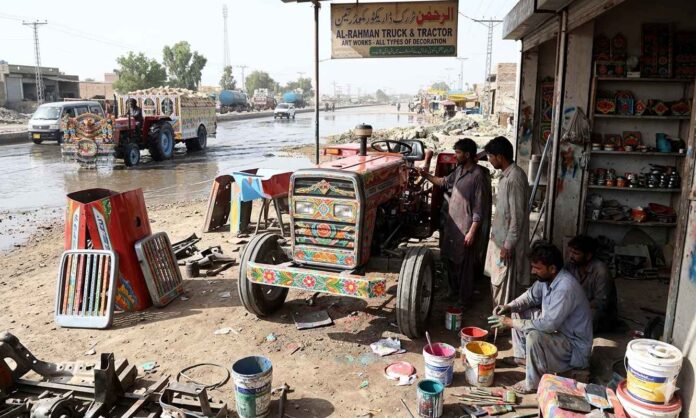

Sindh’s industrial sector has once again raised serious concerns regarding the state of infrastructure across major industrial zones despite the collection of more than Rs. 1.5 trillion in infrastructure cess over the past five years. Business leaders and industrial stakeholders argue that the enormous revenue generated through the levy has not translated into meaningful improvements in roads, drainage systems, water supply networks, or other critical facilities needed to support industrial growth.
The issue has become particularly prominent in the industrial estates of Hyderabad and Kotri, where businesses continue to face deteriorating roads, inadequate civic amenities, transportation bottlenecks, and rising operational costs. Industrialists contend that while they continue to contribute significantly to provincial revenues through taxes and duties, the infrastructure required to sustain industrial activity remains severely neglected.
The growing frustration reflects broader concerns about industrial competitiveness, investment attraction, and economic development in Sindh, which remains one of Pakistan’s most important manufacturing and commercial regions.
The Purpose of Infrastructure Cess
Infrastructure cess was originally introduced with the objective of generating dedicated funds for the development, maintenance, and modernization of infrastructure that supports economic activity.
The logic behind the levy was straightforward. Imports entering the province would contribute to a dedicated revenue stream that could be utilized to improve roads, logistics networks, industrial facilities, transportation corridors, and public infrastructure necessary for commerce and industry.
Such investments are critical because modern industrial economies depend heavily on efficient infrastructure. Roads, water supply systems, drainage networks, electricity connections, and transportation facilities all play a direct role in reducing business costs and enhancing productivity.
When infrastructure functions effectively, businesses can transport goods efficiently, reduce operating expenses, improve supply chain performance, and compete more effectively in domestic and international markets.
However, industrial stakeholders argue that despite massive collections under the infrastructure cess framework, many industrial zones continue to suffer from infrastructure deficiencies that have persisted for years.
Industrial Areas Facing Growing Challenges
The condition of industrial infrastructure in several parts of Sindh has become a growing concern for manufacturers and investors.
Hyderabad and Kotri industrial estates are among the most important industrial hubs in the province. These areas host hundreds of manufacturing units operating across various sectors, including food processing, edible oils, rice milling, agricultural products, engineering goods, and consumer products.
These industries serve both domestic markets and export destinations, making them important contributors to economic activity, employment generation, and tax revenues.
Despite their economic significance, many businesses operating in these zones report that infrastructure conditions continue to deteriorate rather than improve.
Road networks that support daily industrial activity have suffered extensive damage over time. Heavy truck traffic, container transportation, and commercial movement place significant pressure on roads that often receive insufficient maintenance.
As a result, businesses are forced to operate in environments where transportation delays, vehicle damage, and logistical inefficiencies have become routine challenges.
The Cost of Poor Road Infrastructure
Road infrastructure is one of the most critical components of industrial competitiveness.
Manufacturing facilities depend on reliable transportation networks to receive raw materials, distribute finished goods, and maintain efficient supply chains.
When roads deteriorate, the economic consequences extend far beyond inconvenience.
Businesses experience higher transportation costs due to increased vehicle maintenance requirements, fuel consumption, longer travel times, and shipment delays.
Damaged roads also create safety risks for drivers, workers, and transport operators.
For industries operating on tight margins, these additional costs can significantly impact profitability.
Companies may be forced to increase prices, absorb losses, or reduce investments in expansion and modernization.
The cumulative effect weakens competitiveness and discourages new investment in affected regions.
Many industrial stakeholders argue that improved road infrastructure could substantially reduce operating costs while enhancing productivity and efficiency across multiple sectors.
Transportation Bottlenecks and Supply Chain Disruptions
Industrial growth depends heavily on the smooth movement of goods.
Every day, thousands of trucks and containers transport raw materials and finished products through industrial corridors in Sindh.
When road conditions deteriorate, transportation networks become less reliable.
Delivery schedules become difficult to maintain, production timelines are disrupted, and supply chain efficiency declines.
Manufacturers often face delays in receiving essential materials, while customers experience slower deliveries of finished products.
In an increasingly competitive global economy, supply chain reliability has become a key determinant of business success.
Industrialists warn that continued infrastructure neglect could undermine efforts to strengthen Pakistan’s manufacturing sector and increase exports.
Water Supply Challenges Continue
Beyond road infrastructure, water availability remains another major concern for industrial operators.
Reliable water supply is essential for numerous manufacturing processes, particularly in industries such as food processing, agriculture-related manufacturing, chemicals, and textiles.
Many industrial areas continue to face shortages that disrupt production and increase operating costs.
In some cases, businesses are forced to rely on privately supplied water through tanker services.
This alternative is significantly more expensive than regular water supply systems and places additional financial pressure on manufacturers.
Higher water costs ultimately reduce competitiveness and may discourage investment in affected areas.
Industrial stakeholders argue that modern water infrastructure should be a fundamental priority for any region seeking to attract investment and support industrial expansion.
Drainage and Environmental Infrastructure Deficiencies
Drainage infrastructure represents another longstanding challenge in several industrial zones.
Poor drainage systems can create operational difficulties during periods of heavy rainfall, leading to water accumulation, transportation disruptions, and potential damage to industrial facilities.
Inadequate drainage also contributes to environmental concerns and can negatively impact surrounding communities.
The absence of modern treatment facilities further complicates the situation.
As environmental standards become increasingly important for international trade and investment, industrial zones must develop infrastructure capable of supporting sustainable growth.
Investments in drainage systems and treatment facilities are therefore essential not only for operational efficiency but also for long-term environmental compliance.
Importance of Hyderabad’s Industrial Base
Hyderabad remains one of Sindh’s most significant industrial centers.
The industrial estate has played a vital role in supporting economic development for decades and continues to host hundreds of manufacturing units across various sectors.
Food processing industries represent a particularly important segment of the local industrial landscape.
Manufacturers involved in edible oils, rice processing, agricultural products, and related industries contribute significantly to economic activity across lower Sindh.
These businesses support thousands of jobs, create value-added products, and help strengthen regional supply chains.
Given the importance of these industries, stakeholders argue that infrastructure development should receive greater attention and investment.
Improved facilities could enhance productivity, attract new businesses, and support broader economic growth across the region.
Questions About Infrastructure Spending
The collection of more than Rs. 1.5 trillion through infrastructure cess has intensified discussions regarding the utilization of public resources.
Industrialists are increasingly asking whether infrastructure spending has kept pace with revenue generation.
Many believe that greater transparency regarding project allocation, spending priorities, and infrastructure outcomes would help address concerns and improve accountability.
Businesses argue that taxpayers and industrial contributors deserve clear information regarding how infrastructure-related revenues are utilized.
Greater transparency could also help strengthen trust between industry stakeholders and policymakers while facilitating more effective planning for future development initiatives.
Impact on Industrial Competitiveness
Infrastructure quality directly influences a region’s ability to attract investment and support industrial growth.
Investors evaluating potential locations consider factors such as transportation networks, utilities, logistics systems, water availability, and public services.
Regions with strong infrastructure generally enjoy greater investment inflows because businesses can operate more efficiently and predictably.
Conversely, areas with persistent infrastructure challenges may struggle to attract new projects despite offering other advantages.
Industrial stakeholders warn that continued infrastructure deficiencies could reduce Sindh’s competitiveness relative to other provinces and regional markets.
Improving infrastructure is therefore viewed not only as a matter of maintenance but also as a strategic economic priority.
The Need for Long-Term Industrial Planning
Experts increasingly emphasize the importance of adopting a comprehensive approach to industrial development.
Infrastructure investments should be integrated into broader strategies that support manufacturing growth, export expansion, job creation, and investment attraction.
This requires long-term planning that aligns infrastructure projects with industrial priorities.
Road improvements, water systems, drainage networks, logistics facilities, and utility services should be developed in ways that maximize economic impact.
Strategic planning can help ensure that public resources generate sustainable benefits for businesses, workers, and communities.
Strengthening Investment Facilitation
Business leaders have also called for stronger institutional mechanisms to address industrial infrastructure challenges.
Dedicated investment facilitation frameworks could help coordinate development projects, streamline decision-making, and improve communication between government agencies and private sector stakeholders.
Such mechanisms may accelerate the resolution of issues related to roads, utilities, water supply, sewerage systems, and industrial services.
A coordinated approach could also improve investor confidence by demonstrating a commitment to supporting economic development and industrial expansion.
Opportunities for Economic Growth
Despite existing challenges, Sindh retains enormous potential for industrial growth.
The province possesses strategic geographic advantages, a large consumer market, established industrial clusters, and access to major transportation corridors.
With appropriate infrastructure investments, these advantages could support substantial economic expansion.
Modern roads, reliable utilities, improved logistics systems, and enhanced industrial services could attract new investment while helping existing businesses grow.
The resulting economic benefits would extend beyond industry, contributing to employment generation, export growth, and higher government revenues.
Looking Ahead
The debate surrounding infrastructure cess and industrial development highlights the growing importance of infrastructure as a driver of economic competitiveness.
Businesses increasingly view infrastructure quality as a fundamental requirement for sustainable growth.
As policymakers prepare future development strategies, industrial stakeholders are likely to continue advocating for greater investment in roads, water systems, drainage networks, and related facilities.
The success of these efforts will play an important role in determining Sindh’s ability to strengthen its industrial base, attract investment, and support long-term economic development.
Conclusion
The collection of more than Rs. 1.5 trillion in infrastructure cess over the past five years has brought renewed attention to the state of industrial infrastructure across Sindh.
While the revenue generated through the levy represents a substantial resource for development, businesses operating in key industrial zones continue to report serious challenges related to roads, water supply, drainage, and public services.
Industrial stakeholders argue that addressing these deficiencies is essential for improving competitiveness, attracting investment, supporting exports, and promoting economic growth.
As discussions continue regarding infrastructure spending and development priorities, the focus remains on ensuring that industrial areas receive the modern facilities needed to support Pakistan’s manufacturing future.
The condition of Hyderabad and Kotri industrial estates serves as a reminder that strong infrastructure remains one of the most important foundations of sustainable economic development and industrial success.
Read More
Government Considers Rs. 200 Billion Import Duty Relief for Industry