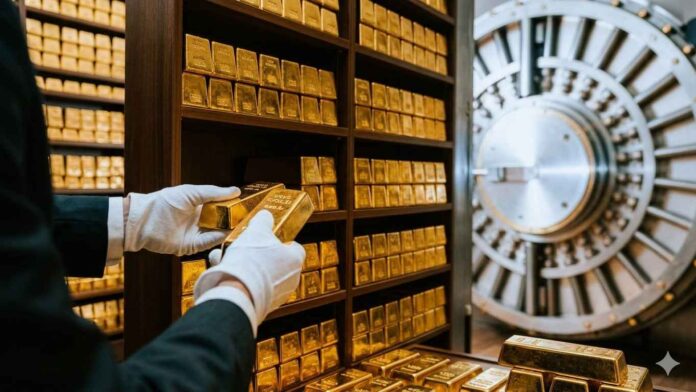

Gold prices in Pakistan witnessed a dramatic decline on Wednesday, reversing the gains recorded a day earlier and sending shockwaves through the local precious metals market. The sudden drop came after international gold prices experienced a sharp correction, triggering a significant decrease in domestic rates.
The latest decline reflects the strong connection between global bullion markets and local gold prices. Investors, traders, jewelers, and consumers closely monitor international developments because fluctuations in global gold rates often have an immediate impact on the Pakistani market.
The latest correction pushed gold prices substantially lower, ending the upward momentum seen earlier in the week. The sharp decline has generated considerable interest among investors and market participants who are now evaluating whether this represents a temporary correction or the beginning of a broader downward trend.
Gold Prices Register Major Decline Across Pakistan
The domestic gold market recorded one of its most significant single-day declines in recent weeks. The price of gold per tola dropped by Rs. 8,600, bringing the rate down to Rs. 467,762.
The decline erased much of the gains achieved during previous trading sessions and highlighted the volatility currently affecting precious metal markets.
Similarly, the price of 10 grams of gold experienced a substantial decrease. The rate fell by Rs. 7,373, settling at Rs. 401,030. This reduction reflects the broader downward movement witnessed across global bullion markets.
For many investors who had anticipated continued upward momentum, the sudden reversal served as a reminder that gold markets can remain highly sensitive to international economic developments, investor sentiment, and changes in monetary expectations.
The sharp correction has attracted attention from buyers who may view lower prices as an opportunity to enter the market, while existing investors assess the potential impact on their portfolios.
A Sharp Reversal After Tuesday’s Strong Rally
The latest decline is particularly noteworthy because it came immediately after a strong upward move in the previous trading session.
Gold prices had gained Rs. 4,600 per tola on Tuesday, reaching Rs. 476,362. The rally had reinforced expectations among some market participants that the precious metal could continue its upward trajectory.
However, Wednesday’s steep decline quickly reversed those gains and underscored the unpredictable nature of precious metals markets.
Market analysts often point out that gold prices rarely move in a straight line. Even during long-term bullish trends, periods of profit-taking and price corrections are common. The recent decline appears to reflect such a correction, driven primarily by developments in international markets.
Investors who closely follow gold prices understand that sudden swings can occur due to changing expectations regarding inflation, interest rates, currency movements, and geopolitical developments.
International Gold Prices Trigger Domestic Decline
The primary factor behind the decline in Pakistan’s gold market was a significant drop in international gold prices.
Global gold rates fell by $86 per ounce during the trading session, bringing the international price down to $4,454 per ounce.
Since Pakistan imports most of its gold and domestic pricing mechanisms are closely tied to global benchmarks, changes in international rates directly affect local prices.
When international prices rise, local gold prices generally move higher as well. Conversely, declines in global bullion markets typically lead to lower domestic rates.
The latest drop in international prices was substantial enough to trigger a sharp correction in Pakistan, resulting in one of the biggest daily declines recorded in recent weeks.
The movement highlights how interconnected financial markets have become and how developments occurring thousands of miles away can significantly influence local commodity prices.
Understanding the Factors Behind Gold Market Volatility
Gold remains one of the most closely watched assets in global financial markets. Its price is influenced by a wide range of economic, financial, and geopolitical factors.
One of the most important drivers of gold prices is investor sentiment. During periods of uncertainty, investors often move funds into gold because it is widely regarded as a safe-haven asset.
However, when market confidence improves or investors shift capital toward riskier assets such as equities, gold demand may weaken.
Interest rate expectations also play a critical role. Higher interest rates generally reduce the attractiveness of gold because the metal does not generate income. As a result, investors may prefer interest-bearing assets when rates rise.
Inflation expectations are another major factor. Gold has traditionally been viewed as a hedge against inflation, meaning demand often increases when inflation concerns intensify.
Currency movements can also affect gold prices. Since gold is typically traded in US dollars, changes in the value of the dollar often influence bullion markets. A stronger dollar can place downward pressure on gold prices, while a weaker dollar may support higher rates.
Impact on Investors and Traders
The sudden decline in gold prices has different implications for various market participants.
For short-term traders, the correction presents both risks and opportunities. Those who purchased gold at higher levels may face temporary losses, while others may view the decline as a chance to buy at lower prices.
Long-term investors often take a different perspective. Many view gold as a strategic asset designed to preserve wealth over extended periods rather than generate quick profits.
For such investors, daily fluctuations are less significant than long-term trends related to inflation, currency stability, and global economic conditions.
Jewelry retailers and bullion dealers also monitor price movements closely because significant changes can influence consumer demand.
Lower prices may encourage some consumers to make purchases they had previously postponed due to high costs. At the same time, uncertainty about future price direction can cause some buyers to wait for further declines before entering the market.
Silver Prices Also Move Lower
The decline was not limited to gold. Silver prices also experienced downward pressure during the trading session.
The price of silver per tola fell by Rs. 259, bringing the rate down to Rs. 7,894.
Silver often follows broader trends in precious metals markets, although its price movements can sometimes be more volatile due to industrial demand factors.
Like gold, silver serves as both an investment asset and an industrial commodity. Changes in economic outlooks, manufacturing activity, and investor sentiment can all influence silver prices.
The simultaneous decline in both gold and silver reflects broader weakness across the precious metals segment during the session.
What Lower Gold Prices Mean for Consumers
For consumers, falling gold prices can be welcome news, particularly for those planning jewelry purchases.
Gold jewelry remains an important part of cultural traditions and celebrations in Pakistan. Weddings, family events, and festive occasions often drive significant demand for gold products.
When prices decline, consumers may find it more affordable to purchase jewelry, potentially increasing market activity.
Retailers frequently report improved customer interest following notable price corrections, especially when buyers believe they are receiving better value compared to previous weeks.
However, consumer behavior often depends on expectations regarding future prices. If buyers anticipate further declines, they may delay purchases in hopes of obtaining even lower rates.
This dynamic creates an interesting balance within the market as both consumers and traders attempt to predict future price movements.
Gold’s Role in Wealth Preservation
Despite short-term volatility, gold continues to hold a unique position within investment portfolios.
For centuries, the precious metal has been used as a store of value and a means of preserving purchasing power during periods of economic uncertainty.
Many investors allocate a portion of their wealth to gold as a form of diversification. Because gold often behaves differently from stocks, bonds, and other financial assets, it can help reduce overall portfolio risk.
In countries facing currency fluctuations or inflation concerns, gold is frequently viewed as a reliable asset for protecting wealth over the long term.
This enduring appeal explains why demand for gold remains strong even during periods of price volatility.
Can Gold Prices Fall Further?
One of the most common questions among investors following a major decline is whether prices could continue falling.
The answer depends on a variety of factors, including international economic conditions, monetary policy decisions, inflation trends, and geopolitical developments.
If global financial markets remain stable and investor demand for safe-haven assets decreases, additional downward pressure on gold prices could emerge.
On the other hand, renewed economic uncertainty or geopolitical tensions could quickly restore demand and support higher prices.
Gold markets are influenced by numerous variables, making short-term forecasting extremely challenging.
Most analysts emphasize the importance of focusing on broader trends rather than reacting solely to daily price movements.
The Outlook for Pakistan’s Gold Market
Looking ahead, Pakistan’s gold market is expected to remain closely tied to international developments.
Domestic rates will continue to reflect changes in global bullion prices, exchange rate movements, and local demand conditions.
Investors are likely to monitor upcoming economic data and central bank decisions that could influence global financial markets and precious metals prices.
Any significant shifts in international investor sentiment could rapidly impact local gold rates.
At the same time, seasonal demand patterns and consumer purchasing activity will remain important factors affecting market dynamics within Pakistan.
The combination of global influences and domestic demand will determine the direction of prices in the weeks ahead.
Conclusion
Gold prices in Pakistan experienced a sharp correction on Wednesday, with per tola rates plunging by Rs. 8,600 following a significant decline in international bullion markets. The drop reversed gains recorded in the previous session and highlighted the volatility that continues to characterize precious metals trading.
The decline also affected silver prices, reflecting broader weakness across the precious metals sector. While the correction may concern some investors, others could view lower prices as an opportunity to enter the market.
As global economic conditions continue to evolve, gold is likely to remain a focal point for investors seeking stability, diversification, and long-term wealth preservation. Whether the latest decline proves temporary or signals a larger trend will depend largely on future developments in international financial markets.
For now, the sharp drop serves as a reminder that gold prices can change rapidly, creating both challenges and opportunities for investors, traders, jewelers, and consumers alike.
Read More
Gulf AI Market Accounts for Only 1% of Pakistan’s IT Export Earnings: Report