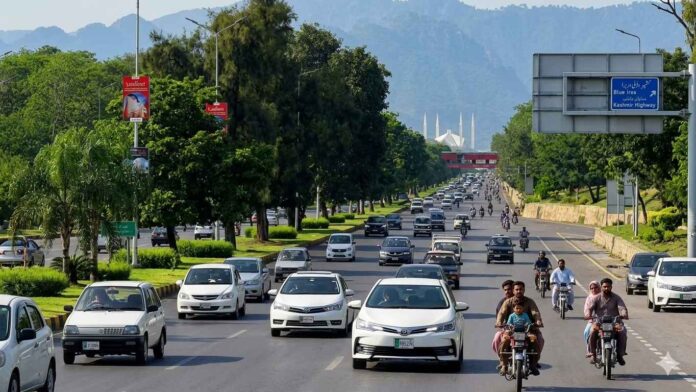

Vehicle ownership in Islamabad is set to become more expensive following the introduction of revised annual token tax rates under the Finance Bill 2026-27. The proposed changes represent a significant update to the taxation framework governing motor vehicles in the Islamabad Capital Territory and are part of broader fiscal measures aimed at increasing government revenue while modernizing the tax structure.
The new token tax regime introduces revised rates for private vehicles, motor cabs, public transport vehicles, and commercial transport operators. One of the most notable aspects of the proposal is the increased emphasis on vehicle engine capacity and invoice value as key determinants of taxation.
The revised framework reflects a growing trend toward value-based taxation, ensuring that owners of higher-value and larger-engine vehicles contribute proportionately more to public revenues. The government believes this approach creates a fairer and more equitable system while strengthening the fiscal position of the federal capital.
For vehicle owners, however, the changes may translate into higher annual costs, particularly for those owning luxury vehicles, high-engine-capacity cars, and commercial transport fleets.
A Major Shift in Vehicle Taxation Policy
The proposed revisions signal an important shift in the way motor vehicles are taxed in Islamabad.
Historically, vehicle taxation structures often relied on fixed rates based primarily on engine capacity categories. While engine size remains an important factor in the new framework, the government has also incorporated vehicle invoice value into the taxation formula for certain categories.
This change is designed to better reflect the actual market value of vehicles and create a taxation system that aligns more closely with ownership costs and purchasing power.
Supporters of the measure argue that owners of more expensive vehicles should contribute a greater share toward public revenues, particularly as they often benefit from superior infrastructure, road networks, and urban services.
Critics, however, warn that rising vehicle taxes may place additional financial pressure on consumers already facing increased costs associated with fuel, maintenance, insurance, and registration.
Regardless of differing viewpoints, the revised token tax structure represents one of the most significant vehicle taxation updates in recent years.
Understanding Token Tax and Its Purpose
Token tax serves as an annual levy imposed on vehicle owners as part of the broader vehicle registration and licensing system.
The tax contributes to government revenue and helps support infrastructure development, road maintenance, traffic management systems, transportation planning, and various public services associated with vehicle use.
Vehicle owners are generally required to pay token tax annually to maintain legal registration and compliance with transportation regulations.
Governments around the world utilize vehicle taxes as a means of generating revenue while encouraging responsible vehicle ownership and supporting transportation infrastructure investments.
The updated tax structure in Islamabad seeks to strengthen this revenue stream while aligning taxation more closely with vehicle value and usage characteristics.
Higher Taxes for Larger Engine Vehicles
One of the most notable features of the revised taxation framework is the increased focus on engine capacity.
Larger engines are generally associated with higher fuel consumption, greater environmental impact, and more expensive vehicles. As a result, governments often impose higher taxes on vehicles within higher engine categories.
Under the proposed framework, vehicles with larger engine capacities will face increased annual token tax obligations compared to smaller and more fuel-efficient vehicles.
The policy reflects broader international trends where taxation is increasingly linked to factors such as engine size, emissions, fuel consumption, and vehicle value.
Supporters argue that this approach promotes fairness by requiring owners of higher-end vehicles to contribute more toward public revenues.
The revised structure may also encourage some consumers to consider smaller, more fuel-efficient vehicles when making future purchasing decisions.
Value-Based Taxation Gains Greater Importance
A significant innovation in the Finance Bill 2026-27 is the use of invoice value as a basis for determining token tax liability for certain vehicle categories.
Rather than relying solely on engine displacement, the government is moving toward a model that incorporates the original value of the vehicle.
Value-based taxation is often considered more equitable because it reflects the actual cost of ownership and purchasing power of vehicle owners.
Luxury vehicles, imported models, and premium automobiles generally carry higher invoice values and therefore attract higher tax obligations under such systems.
The government believes this method creates a more progressive taxation framework while helping increase revenue collection.
For owners of premium vehicles, however, the revised structure could result in noticeably higher annual tax payments.
Impact on Luxury Vehicle Owners
Owners of luxury and high-end vehicles are likely to experience the most significant impact from the revised token tax framework.
Luxury vehicles typically feature larger engines and higher invoice values, placing them within categories subject to increased taxation.
The government’s rationale is that higher-income consumers who can afford expensive vehicles are better positioned to contribute additional revenue through vehicle-related taxes.
This approach aligns with broader fiscal strategies aimed at increasing contributions from higher-value assets and luxury consumption.
Some industry observers believe the changes may influence purchasing behavior, particularly among consumers considering premium imported vehicles.
Others argue that the overall impact on demand for luxury vehicles is likely to remain limited given the purchasing power of the target market.
Regardless, owners of high-value vehicles should expect higher annual registration-related costs under the proposed system.
Motor Cab Operators Face Revised Tax Structure
The Finance Bill also introduces updated token tax rates for motor cabs operating within Islamabad.
Taxi services remain an important component of urban transportation systems, providing mobility solutions for residents, workers, and visitors.
The revised framework establishes different taxation levels based on engine capacity categories.
Smaller engine vehicles generally face lower tax obligations, while larger engine vehicles are subject to progressively higher rates.
This tiered structure reflects the government’s intention to maintain affordability for lower-cost transportation services while ensuring proportionate contributions from operators utilizing larger vehicles.
Motor cab operators may need to incorporate these revised costs into their overall business planning and operating budgets.
The impact on fares and service costs will depend on market conditions and competition within the transportation sector.
Commercial Transport Sector Also Affected
Commercial transport operators are another group affected by the revised token tax framework.
The transportation industry plays a critical role in economic activity, facilitating the movement of goods, services, and people across the country.
Commercial vehicles utilize road infrastructure extensively and therefore represent an important source of transportation-related tax revenue.
The revised taxation structure seeks to ensure that commercial operators contribute appropriately to infrastructure financing and maintenance requirements.
Fleet owners may experience increased operating costs depending on the composition and size of their vehicle inventories.
These costs could influence transportation pricing, logistics expenses, and broader supply chain economics over time.
However, policymakers argue that infrastructure improvements supported by tax revenues ultimately benefit commercial operators through better roads and transportation networks.
Public Transport Vehicles Included in New Framework
Public transport vehicles are also covered under the updated taxation regime.
Public transportation remains a vital component of urban mobility and economic development.
Efficient public transport systems reduce congestion, improve accessibility, and support economic productivity.
The revised tax framework introduces updated rates for various public transport categories while seeking to maintain operational viability for transport providers.
Government officials emphasize that transportation policies must balance revenue generation with the need to ensure affordable mobility options for the public.
The long-term impact of the revised taxes on public transportation services will depend on how operators respond to increased regulatory costs.
Revenue Generation Objectives Behind the Tax Increase
One of the primary objectives of the revised token tax structure is to strengthen government revenue collection.
As fiscal pressures continue to challenge public finances, governments are increasingly seeking efficient and sustainable revenue sources.
Vehicle taxation provides a relatively predictable revenue stream because it is linked to registered assets that require ongoing compliance and renewal.
The government expects the revised framework to generate additional revenue that can be used to support infrastructure projects, transportation improvements, urban development initiatives, and public services.
Enhanced revenue collection also contributes to broader fiscal stability and reduces reliance on alternative taxation measures.
Officials argue that a modernized vehicle taxation system is necessary to meet evolving fiscal requirements while ensuring fairness across different vehicle categories.
Potential Impact on Vehicle Purchasing Trends
Tax policy often influences consumer behavior, and the revised token tax structure may affect future vehicle purchasing decisions.
Higher annual ownership costs could encourage some buyers to consider smaller-engine vehicles or more fuel-efficient alternatives.
Consumers increasingly evaluate total ownership costs when purchasing vehicles, including fuel expenses, maintenance costs, insurance premiums, and annual taxes.
As token tax becomes more closely linked to vehicle value and engine capacity, these factors may play a larger role in purchasing decisions.
The trend could potentially support demand for compact vehicles, hybrid models, and other fuel-efficient transportation options.
However, the overall impact on vehicle sales will depend on broader economic conditions, consumer income levels, and market dynamics.
Balancing Revenue Collection and Consumer Affordability
One of the key challenges facing policymakers is balancing revenue generation with affordability concerns.
While higher taxes can strengthen government finances, excessive increases may place additional burdens on consumers and businesses.
Vehicle ownership already involves multiple expenses, including fuel, maintenance, insurance, registration fees, and financing costs.
The government must therefore ensure that taxation policies achieve fiscal objectives without discouraging mobility or creating undue financial hardship.
Supporters of the revised framework argue that the focus on higher-value and larger-engine vehicles helps maintain fairness by concentrating increased taxation on those with greater financial capacity.
The effectiveness of this approach will become clearer as implementation progresses.
The Future of Vehicle Taxation in Islamabad
The revised token tax framework may represent only the beginning of broader transportation taxation reforms.
Around the world, governments are increasingly linking vehicle taxes to environmental performance, emissions levels, fuel efficiency, and sustainability objectives.
Future reforms could potentially incorporate additional factors such as carbon emissions, vehicle age, environmental impact, or alternative energy technologies.
As transportation systems evolve, taxation policies will likely continue adapting to changing economic, environmental, and technological realities.
Islamabad’s latest reforms suggest a movement toward a more sophisticated and value-based approach to vehicle taxation.
What the New Token Tax Means for Vehicle Owners
The Finance Bill 2026-27 introduces significant changes for vehicle owners in Islamabad through revised annual token tax rates based on engine capacity and invoice value.
The new framework affects private vehicles, motor cabs, commercial transport operators, and public transport providers. While the government views the changes as necessary for improving revenue collection and modernizing the taxation system, vehicle owners will likely face higher annual costs, particularly those owning larger and more expensive vehicles.
The reforms reflect broader fiscal objectives aimed at strengthening public finances while promoting a more equitable taxation structure. At the same time, they highlight the growing importance of vehicle value and ownership costs within transportation policy.
As the new fiscal year approaches, vehicle owners, businesses, transport operators, and industry stakeholders will be closely monitoring how the revised token tax framework affects ownership costs, market trends, and the broader transportation sector in Islamabad.
Read More
Federal Budget Raises HEC Development Allocation While Keeping Recurring Funding Unchanged