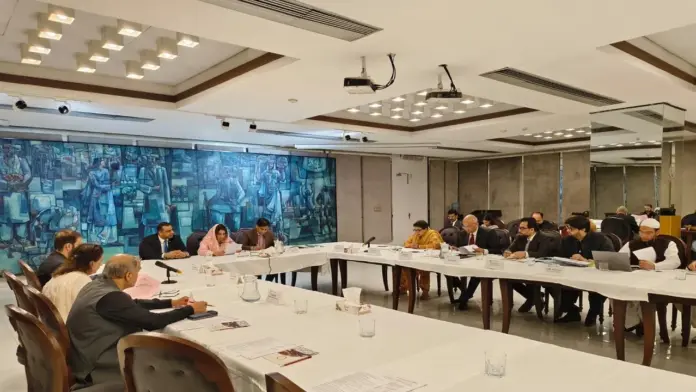

Pakistan has taken another important step toward improving its internet infrastructure. The Senate Standing Committee on Information Technology and Telecommunications recently reviewed the Pakistan Telecommunication Reorganisation Amendment Bill 2026, which aims to make it easier and faster to expand fiber optic networks across the country.
The bill has already been approved by the National Assembly’s committee and is now moving through the Senate for final approval.
What Happened in the Meeting?
The meeting was chaired by Palwasha Khan. During the session, Federal IT Minister Shaza Fatima Khawaja explained the proposed changes and why they are important for Pakistan’s digital future.
She said the amendments are designed to remove obstacles that have slowed the installation of fiber optic cables across the country.
Major Breakthrough: Right-of-Way Charges Removed
One of the biggest barriers to laying fiber optic cables has been right-of-way (RoW) charges.
These charges were fees imposed by provincial and local authorities whenever telecom companies wanted to dig roads or use public land to install fiber cables.
According to Shaza Fatima, all provinces have now agreed to abolish these charges. The new bill will make this decision part of the law so that future governments cannot easily bring the charges back.
The government believes that removing these fees will significantly reduce costs for telecom companies and encourage faster expansion of high-speed internet networks.
Government Wants 60% Fiber Coverage
The IT Minister told the committee that the government has set an ambitious target of achieving 60 percent fiberization coverage in the coming years.
Fiber optic networks provide:
- Faster internet speeds
- More reliable connections
- Better support for 5G and future technologies
- Improved services for businesses and households
Currently, Pakistan relies heavily on mobile broadband, while fiber connectivity remains relatively limited.
Concerns Raised About Telecom Towers
During the discussion, Senator Afnan Ullah Khan pointed out that the bill is not only about fiber optic cables.
He noted that it also includes provisions related to:
- Telecom towers
- Telecommunications equipment
- Other telecom infrastructure
He argued that while underground fiber cables usually create few problems, telecom towers and equipment can raise more complicated issues because they:
- Occupy physical space above ground
- Affect private property rights
- May create concerns for local communities
- Require agreements with landowners
Senator Afnan Ullah warned that these sections of the bill could create disputes in the future if not handled carefully.
Government Assures Protection of Private Property
Responding to these concerns, the IT Secretary assured the committee that no private land would be used without the owner’s permission.
He explained that:
- Telecom companies cannot force anyone to give up their land.
- Property owners must provide consent before infrastructure is installed.
- If disagreements occur, the matter will be referred to the relevant government authority for resolution.
The government says this mechanism will protect citizens while still allowing telecom projects to move forward.
Heated Exchange During the Session
The meeting also saw a tense moment when Senator Sadia Abbasi criticized the IT Ministry’s legal representative.
She complained that the official was behaving “like a Supreme Court judge,” suggesting that he was being overly legalistic and not responding constructively to lawmakers’ questions.
The exchange highlighted some of the disagreements surrounding the bill.
Concerns Recorded, But Approval Expected
Although Senator Afnan Ullah expressed concerns about the tower and equipment provisions, he indicated that the bill would likely still be approved.
However, he warned that lawmakers may face challenges later if the issues he identified are not addressed during implementation.
Such reservations are common in parliamentary committees, where members often allow legislation to proceed while formally recording their concerns for future reference.
Minister Says Consultation Is Complete
Shaza Fatima responded firmly to the criticism.
She stated that the bill has already gone through extensive consultations with:
- Government departments
- Provincial authorities
- Industry stakeholders
- Parliamentary committees
According to her, enough discussion has taken place and it is now time to pass the legislation so that Pakistan can move ahead with its digital infrastructure plans.
Why This Bill Is Important
The Telecommunication Reorganisation Amendment Bill 2026 could play a major role in improving internet connectivity across Pakistan.
By permanently removing right-of-way charges, the government hopes to:
- Reduce the cost of laying fiber optic cables
- Speed up broadband expansion
- Improve internet quality nationwide
- Support future technologies such as 5G
- Encourage investment in telecom infrastructure
While questions remain about how telecom towers and equipment will be regulated, the bill represents one of the most significant efforts in recent years to expand Pakistan’s fiber optic network and strengthen the country’s digital economy.
Bottom Line
The government wants to make high-speed internet more widely available by removing the fees and bureaucratic hurdles that have slowed fiber deployment. While lawmakers generally support this goal, some remain concerned about how the law will affect telecom towers, equipment installations, and private property rights. Despite these concerns, the bill appears to be on track for approval.