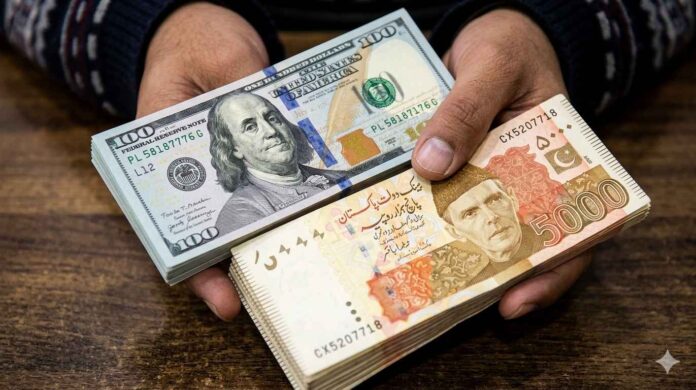

The Pakistani rupee continued its positive momentum against the US dollar, extending its remarkable winning streak following the announcement of the Federal Budget 2026-27. The local currency ended trading in positive territory once again, reinforcing a trend that has gradually strengthened investor confidence and improved market sentiment over recent months.
The latest appreciation marks another milestone in the rupee’s extended period of stability, a development that stands in sharp contrast to the volatility experienced by the currency during previous years. While the gain recorded during the latest trading session was modest, the continuation of the upward trend reflects broader economic developments that have contributed to strengthening the local currency.
Market participants are increasingly viewing exchange rate stability as a positive indicator for the economy, particularly at a time when policymakers are seeking to attract investment, support exports, manage inflation, and improve overall economic confidence.
The recent Federal Budget announcement has further reinforced optimism in financial markets, with investors closely monitoring fiscal measures, revenue targets, and economic reform initiatives that could influence currency performance during the coming fiscal year.
Rupee Maintains Positive Momentum Against the US Dollar
The Pakistani rupee has demonstrated notable resilience in recent months, consistently holding its ground against the world’s most widely traded currency.
Currency stability remains one of the most important indicators of economic confidence because exchange rates influence imports, exports, inflation, investment flows, and overall market sentiment.
The latest appreciation may appear small in numerical terms, but it carries symbolic significance because it reflects continued confidence in Pakistan’s foreign exchange management and macroeconomic direction.
A stable or strengthening currency helps reduce uncertainty for businesses, importers, exporters, and investors who rely on predictable exchange rates for financial planning and commercial activities.
The continuation of the rupee’s upward trajectory also suggests that supply and demand conditions within the foreign exchange market remain relatively balanced.
Financial analysts often emphasize that sustained currency stability can have a greater positive impact than short-term fluctuations or temporary gains.
Federal Budget Supports Market Confidence
The Federal Budget 2026-27 has played an important role in shaping investor sentiment and market expectations.
Budgets serve as key policy documents that outline government priorities, fiscal strategies, revenue targets, expenditure plans, and economic objectives.
Investors closely analyze budget announcements because fiscal policies can significantly influence economic growth, inflation, public finances, and currency performance.
The latest budget introduced a range of measures aimed at supporting economic activity, encouraging investment, strengthening exports, and improving revenue collection.
These initiatives have generally been viewed as positive signals for economic stability and growth.
Market participants often reward fiscal discipline and reform-oriented policies with greater confidence, which can translate into stronger support for the national currency.
The budget’s emphasis on economic modernization, tax reforms, digitalization, and export promotion has contributed to expectations of improved macroeconomic performance during the coming fiscal year.
Lower Oil Prices Provide Additional Support
One of the most significant external factors benefiting the rupee has been the recent decline in global oil prices.
Pakistan is a major importer of petroleum products, making energy prices an important determinant of external sector performance.
When international oil prices rise, the country typically requires larger amounts of foreign currency to finance energy imports. This increases demand for dollars and can place pressure on the local currency.
Conversely, falling oil prices reduce import costs and ease pressure on foreign exchange reserves.
Recent declines in energy prices have therefore provided welcome relief for the economy.
Lower import bills improve the trade balance, reduce inflationary pressures, and help stabilize foreign exchange markets.
These developments have contributed to favorable conditions for the rupee and supported its continued appreciation against the dollar.
Importance of Exchange Rate Stability
Exchange rate stability offers numerous benefits for the broader economy.
Businesses involved in international trade depend on predictable currency movements when negotiating contracts, importing goods, or exporting products.
Frequent exchange rate volatility can create uncertainty and increase operational risks.
A stable currency environment allows companies to plan investments more effectively and manage financial obligations with greater confidence.
Consumers also benefit from exchange rate stability because it helps moderate imported inflation.
Many everyday products, industrial inputs, and essential commodities are influenced by international prices and exchange rates.
When the local currency remains stable or appreciates, the cost of imported goods often becomes more manageable.
This can contribute to improved price stability and support household purchasing power.
Foreign Exchange Market Conditions Improve
Recent developments suggest improving conditions within Pakistan’s foreign exchange market.
Several factors have contributed to greater stability, including stronger remittance inflows, better export performance, prudent monetary management, and improved confidence among investors.
Foreign exchange reserves remain an important component of currency stability because they provide a buffer against external shocks and support market confidence.
When reserves are adequate, market participants are generally less concerned about currency volatility or liquidity challenges.
Government efforts to strengthen external sector performance have also contributed to improved sentiment.
These measures include initiatives aimed at boosting exports, attracting foreign investment, increasing formal remittance flows, and improving overall economic management.
The cumulative impact of these developments has helped support the rupee’s recent performance.
Investor Confidence Continues to Improve
Investor sentiment plays a critical role in determining currency trends.
Financial markets often respond positively when investors perceive improvements in economic fundamentals, fiscal discipline, and policy consistency.
The current appreciation trend suggests that confidence in Pakistan’s economic outlook has strengthened compared to previous periods of uncertainty.
Investors typically evaluate a wide range of indicators, including inflation, growth prospects, fiscal performance, external balances, and policy credibility.
Recent economic reforms and stabilization measures have contributed to more favorable perceptions among both domestic and international observers.
Improved confidence encourages investment activity, supports financial markets, and contributes to greater demand for local currency assets.
These factors collectively help strengthen exchange rate stability.
Performance Against Other Major Currencies
While the rupee gained ground against the US dollar, its performance against other major international currencies presented a mixed picture.
Currency markets are influenced by a complex network of global economic developments, interest rate expectations, geopolitical events, and investor sentiment.
As a result, movements against one currency do not necessarily mirror performance against others.
The rupee experienced varying levels of movement against several major international currencies during recent trading sessions.
These fluctuations largely reflect changes in global foreign exchange markets rather than domestic factors alone.
Movements in the euro, pound sterling, Australian dollar, and Canadian dollar often depend on developments within their respective economies and financial systems.
Currency traders continuously adjust positions based on changing economic expectations and market conditions.
Global Economic Trends Influence Currency Markets
The foreign exchange market is one of the largest and most dynamic financial markets in the world.
Currencies respond to a wide range of economic indicators, including interest rates, inflation data, employment figures, trade balances, and geopolitical developments.
Global events can influence exchange rates even when domestic economic conditions remain unchanged.
For emerging market currencies such as the Pakistani rupee, international investor sentiment often plays a significant role.
Periods of global stability tend to support emerging market currencies, while uncertainty can increase demand for traditional safe-haven assets such as the US dollar.
Recent improvements in global economic sentiment and reduced concerns about energy market disruptions have contributed to more favorable conditions for many developing economies.
Trade Balance Benefits from Currency Stability
A stable currency can support trade-related activities by reducing uncertainty for importers and exporters.
Export-oriented businesses benefit from predictable exchange rates because they can better forecast revenues and manage international contracts.
Importers similarly benefit from reduced volatility because it allows for more accurate cost calculations and inventory planning.
The government has emphasized export growth as a key component of its economic strategy.
A stable exchange rate environment complements these efforts by creating favorable conditions for international trade.
While excessive currency appreciation can sometimes affect export competitiveness, moderate stability generally supports broader economic objectives.
Policymakers continue to monitor exchange rate developments carefully to ensure balance between competitiveness and stability.
Impact on Inflation and Consumer Prices
Currency performance has a direct relationship with inflation.
A stronger or stable currency can help reduce imported inflation by lowering the cost of foreign goods and raw materials.
Pakistan imports a wide range of products, including energy resources, industrial inputs, machinery, pharmaceuticals, and consumer goods.
Exchange rate stability therefore plays an important role in controlling price pressures throughout the economy.
Lower import costs can benefit manufacturers by reducing production expenses, which may ultimately support more stable consumer prices.
At a time when inflation management remains a priority, currency stability provides an additional tool for supporting economic balance.
Consumers may indirectly benefit through improved affordability and reduced price volatility across various sectors.
Economic Reforms Strengthen Outlook
The government’s broader reform agenda has also contributed to improved confidence in the currency.
Recent policy initiatives have focused on strengthening revenue collection, improving fiscal management, enhancing transparency, supporting exports, and promoting investment.
These reforms are intended to address structural challenges while creating a foundation for sustainable economic growth.
Successful implementation of reform measures can strengthen investor confidence and improve perceptions of economic stability.
Financial markets often respond positively when governments demonstrate commitment to long-term economic improvements.
The rupee’s recent performance reflects, in part, market expectations regarding the effectiveness of ongoing reform efforts.
Continued progress in these areas could provide additional support for currency stability in the future.
Foreign Investment Remains a Key Factor
Foreign direct investment and portfolio investment remain important contributors to exchange rate stability.
When international investors commit capital to an economy, demand for the local currency typically increases.
The government continues to pursue policies aimed at improving the investment climate and attracting foreign capital.
Infrastructure development, digital transformation initiatives, industrial expansion programs, and regulatory reforms are all intended to enhance investment attractiveness.
Higher levels of foreign investment not only support economic growth but also strengthen external sector performance.
Improved investment inflows can contribute to greater foreign exchange availability and reduced pressure on the currency.
Market Outlook for the Coming Months
Looking ahead, analysts expect the rupee to remain influenced by a combination of domestic and international factors.
Budget implementation, fiscal performance, export growth, remittance inflows, oil prices, inflation trends, and global financial conditions will all play important roles in determining future currency movements.
Current market sentiment suggests cautious optimism regarding the near-term outlook.
The combination of improving economic indicators, lower energy prices, fiscal reforms, and stronger market confidence has created supportive conditions for currency stability.
However, policymakers and market participants remain aware that external risks and global uncertainties can quickly influence exchange rate dynamics.
Maintaining stability will require continued focus on sound economic management and effective policy implementation.
A Positive Signal for Pakistan’s Economy
The continued appreciation of the Pakistani rupee against the US dollar following the Federal Budget announcement represents more than a simple currency movement.
It reflects improving confidence in economic management, stronger fiscal expectations, favorable external developments, and greater stability within financial markets.
Lower oil prices, improved foreign exchange conditions, ongoing reforms, and supportive investor sentiment have all contributed to the currency’s recent performance.
While challenges remain, the rupee’s extended period of stability sends a positive signal regarding the broader economic outlook.
For businesses, investors, consumers, and policymakers, exchange rate stability remains an important foundation for sustainable growth and economic progress.
As Pakistan enters the new fiscal year, the performance of the rupee will continue to serve as a closely watched indicator of market confidence and economic resilience.
Read More
Government Sets Higher Mobile Levy Collection Targets as PTA Revenue Expectations Rise