Sunday, March 1, 2026
Home Blog

Xiaomi 12 Series Redefines Flagship Category

0

Xiaomi today announced the launch of the all-new flagship Xiaomi 12 Series for local markets, featuring two groundbreaking devices: Xiaomi 12 Pro and Xiaomi 12. Designed to empower users around the world with a cutting-edge videography studio and entertainment powerhouse, Xiaomi 12 Series delivers impressive advancements in Xiaomi’s AI algorithm, flagship processing power, and an all-round elevated experience. 

Capture cinematic shots at any time 

Xiaomi 12 Series enables users to record studio-quality shots no matter the scenario, be it challenging lighting conditions or moving objects. Both phones boast a pro-grade triple camera array for versatile shooting, starring a massive 50MP main wide angle camera, with 8K recording capabilities on both Xiaomi 12 Pro and Xiaomi 12.  Xiaomi 12 Pro stands out with its state-of-the-art triple 50MP array, which features a cutting-edge Sony IMX707 ultra-large main sensor. This sensor is capable of catching large amounts of light and empowers advanced imaging capabilities with faster focus speeds and increased color accuracy. Xiaomi 12 features a 13MP ultra-wide angle camera, along with a 5MP tele macro camera, for filming life from different perspectives.  

Beyond impressive hardware, Xiaomi 12 Pro and Xiaomi 12 also advance Xiaomi’s proprietary AI algorithms. These innovations make it easier than ever for users to record every moment the way they want to, even in low-light or moving subjects. Xiaomi ProFocus intelligently identifies and tracks objects, preventing blurring or out-of-focus shots of moving or veiled subjects. These advancements also include eye and face auto focus capabilities. Ultra Night Video uses Xiaomi’s proprietary algorithms to record video even under extreme low-light, meaning moody, atmospheric shots are clearer than ever.  

Available on both devices, One-click AI Cinema offers numerous creative options for show-stopping video editing, such as Parallel World, Freeze Frame Video, and Magic Zoom modes. 

Flagship processing, unprecedented performance and power-efficiency  

Flagship experience requires flagship performance. Xiaomi 12 Series features advanced Qualcomm® Snapdragon™ mobile platforms. Xiaomi 12 Pro and Xiaomi 12 boast a Snapdragon® 8 Gen 1 processor – Qualcomm’s most advanced mobile platform. Built on a 4nm process, this processor also boosts GPU graphic rendering capabilities by 30% and energy efficiency by 25% when compared to the previous generation. Both three devices come with UFS 3.1 exceptional loading and data transfer speeds, along with LPDDR5 RAM for memory speeds up to 6,400Mbps. For optimal product experience, Xiaomi 12 Series packs a high-performing cooling system, bolstered by a super-large vapor chamber and multiple layers of graphite to offer a leadingcooling capability. 

All-around elevated entertainment experiences 

Xiaomi 12 Series not only lets users capture every moment in exquisite detail, but also allows them to relive those moments in astonishing detail via an exceptional entertainment experience.  Both devices offer vivid viewing on an AMOLED Dot Display rated A+ by DisplayMate, and with TrueColor support. For added peace of mind, the display features scratch-resistant Corning® Gorilla® Glass Victus®, and supports Dolby Vision®, industry’s leading imaging technology that brings your content to life with vibrant color and details. Xiaomi 12 Series also supports HDR 10+. Xiaomi 12 Pro is SGS Eye Care Display Certified, showing care for users’ long-term visual health during marathon sessions.  

Meanwhile, Xiaomi 12 Pro redefines flagship display with incredibly smooth viewing, scrolling, swiping, and sliding. The device’s highly power-efficient 6.73-inch WQHD+ display leverages AdaptiveSync Pro to intelligently adjust dynamic LTPO display between 1Hz and 120Hz based on content. 

Xiaomi 12 delivers Xiaomi’s most colorful smartphone display to date, with more than 68 billion colors on 6.28-inch full-HD+ displays. Both feature 120Hz AdaptiveSync, for an impressively high-definition, vibrant, and flicker-free display that conveys every detail.  

 No cinematic experience is truly complete without pro-grade audio. Xiaomi 12 Series features SOUND BY Harman Kardon, and creates an immersive audio experience powered by Dolby Atmos®, delivering spatial sound with rich detail, clarity, and realism across all your favorite entertainment. Xiaomi 12 Pro’s quad speakers – in the form of two tweeters and two woofers – deliver clear details and cover an astounding range of sound. Xiaomi 12 delivers balanced stereo sound ideal for immersive gaming or video.  To optimize core user experience further, Xiaomi 12 Series incorporates MIUI 13, released globally earlier this year. The update includes faster storage, higher background process efficiency, smarter processing, and longer battery life. New features in the upgraded experience include Xiaomi’s proprietary Liquid Storage, Atomized Memory, Focused Algorithms, and Smart Balance. 

Next-generation charging 

Xiaomi 12 Series delivers pro-grade cinematic and entertainment experiences all day, the devices deliver next-level charging speed and safety.  

 Xiaomi 12 Pro features an incredibly fast 120W Xiaomi HyperCharge. With a 4,600mAh battery fully charged in just 18 minutes using Boost mode, Xiaomi 12 Pro delivers next-generation charging capabilities that keep up with user demands.  Xiaomi 12 fits a 4,500mAh battery into compact body designs. Xiaomi 12 Pro and Xiaomi 12 also support 50W wireless charging and 10W reverse charging.  Both leverage Xiaomi AdaptiveCharge, a smart charging algorithm that learns and adapts to charging habits, which prolongs battery life. 

Flagship capabilities packaged in an iconic design  

These portable pocket-sized studios fit comfortably in the palm of your hand thanks to Xiaomi 12 Series’ iconic and user-centered design. Slimmer high-capacity batteries and a narrower ridge gap save precious space within the device. Xiaomi 12 Pro’s 6.73-inch display is encased in a sleek middle frame with sophisticated 3D curves. Meanwhile, Xiaomi 12’s 6.28-inch display measures just 69.9mm in width and is accented by smooth curves for a perfect fit. Both devices are available in Gray, Purple, and Blue. 

Market Availability   

Xiaomi 12 Pro comes in one variant 12GB+256GB, and recommended retail price starts from PKR 208,999/-.

Xiaomi 12 comes in one variant, 12GB+256GB, and recommended retail price starts from PKR 179,999/-.

Purchase these devices and get a sweet bundle deal where you get a Mi Band 6 and a bag with the Xiaomi 12. Similarly with the Xiaomi 12 Pro, get a Mi Portable Bluetooth Speaker and a 10000mAh Mi Power Bank 3.  Available at top distributor partners such as Phonezo, Airlink, Smartlink etc. For those looking to purchase these online, we’ve news for you  too as these are also available on MiStore and Daraz. 

Quick Specs:

 Xiaomi 12Xiaomi 12 Pro
Display120Hz +  AMOLED DotDisplay120Hz 6.73” AMOLED Dot Display 
Rear Camera50MP main camera 13MP ultra-wide camera 2MP macro camera 5MP depth camera50MP wide angle, ultra-wide and tele macro camera
Front Camera32MP32MP in-display selfie camera
Dimension & Weight152.70mm x 69.90mm x 8.16mm – 180g163.60mm x 74.60mm x 8.16mm 205g
ProcessorSnapdragon ® 8 Gen 1Snapdragon ®r 8 Gen 1
Charging4500mAH – 67W charge4600mAH – 120W charge
Variant12GB + 256GB12GB + 256GB
Color AvailableGray, Purple & BlueGray, Purple & Blue

About Xiaomi Corporation  

Xiaomi Corporation was founded in April 2010 and listed on the Main Board of the Hong Kong Stock Exchange on July 9, 2018 (1810.HK). Xiaomi is a consumer electronics and smart manufacturing company with smartphones and smart hardware connected by an IoT platform at its core.  

Embracing our vision of “Make friends with users and be the coolest company in the users’ hearts”, Xiaomi continuously pursues innovations, high-quality user experience and operational efficiency. The company relentlessly builds amazing products with honest prices to let everyone in the world enjoy a better life through innovative technology.  

Xiaomi is one of the world’s leading smartphone companies. The company’s market share in terms of smartphone shipments ranked no. 3 globally in the third quarter of 2021. The company has also established the world’s leading consumer AIoT (AI+IoT) platform, more than 400 million smart devices connected to its platform as of September 30, 2021, excluding smartphones and laptops. Xiaomi products are present in more than 100 countries and regions around the world. In August 2021, the company made the Fortune Global 500 list for the third time, ranking 338th, up 84 places compared to 2020.  

Xiaomi is a constituent of the Hang Seng Index, Hang Seng China Enterprises Index, Hang Seng TECH Index and Hang Seng China 50 Index. 

To Get yours click here
TECNO to launch its new Spark phone in Pakistan soon

0

TECNO to launch its new Spark phone in Pakistan soon

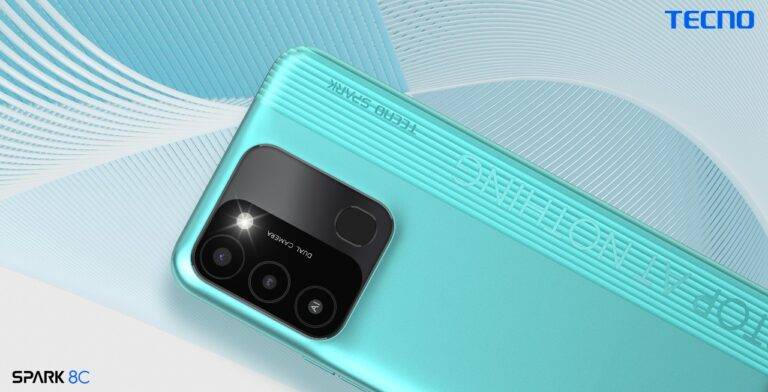
After massive success in the Pakistani Mobile market, TECNO is rumored to be preparing for a new addition to its Spark series. The globally eminent smartphone brand TECNO has been working tirelessly in Pakistan for quite some time now. The brand has brought forward some great phones over the years with advanced technologies, pocket-friendly prices, and stylish designs. 

Spark is TECNO’s famous mid-range series, bringing you quality devices at lower prices. Spark 8C is an entry mobile that is expected to be around PKR 19,499 to PKR 22,999. The price is not confirmed yet but we are expecting it around this segment. The phone is going to be a stunner in this range with Stylish Design and great Battery.

According to sources, Spark 8C will be equipped with better memory and memory fusion features than any other phone in this range. Memory Fusion Technology is specially designed to channel RAM operations by using unused read-only memory (ROM). This means it can expand the memory of 4+128GB to 7+128GB and that of 3+64GB into 6+64GB maximum. The RAM can be updated or expanded from 3GB to 6GB and 4GB to 7GB depending on the variant. If this is true, then Spark 8C shall be the only smartphone to provide such an amazing feature with 128GB in such an affordable price range.

Moreover, the phone is anticipated to provide efficient performance with a powerful processor and big battery. The 90Hz refresh rate, great display, and handy body design will make it a user-friendly device. The phone is expected to launch somewhere in mid-March 2022. Furthermore, the phone is being assembled in Pakistan to make it economical and pocket-friendly for the local consumers. 

So, fingers crossed for this new Spark device to be soon launched in Pakistan. Stay tuned for more updates and much more about tech!

Jazz appoints Atyab Tahir as CEO JazzCash

0

Jazz appoints Atyab Tahir as CEO JazzCash

Jazz, Pakistan’s leading digital operator (part of VEON Group NASDAQ: VEON, Euronext Amsterdam: VEON), announces the appointment of Atyab Tahir as the CEO of JazzCash effective May 1 2022.

Atyab, currently serving as Country Manager MasterCard Pakistan & Afghanistan, has over two decades of international experience in banking and consulting. Atyab has also held senior positions at Fidelity Investments, HBL, Telenor Bank and easypaisa. He holds a BA from Dartmouth College and an MBA from Babson College.

Commenting on Atyab’s appointment Aamir Ibrahim, CEO, Jazz  said: “While mobile phones and payment solutions have accelerated financial inclusion in the country, a significant portion of Pakistan’s adult population remain unbanked. I am confident that under Atyab’s dynamic leadership JazzCash will help boost financial inclusion across the board through innovative and customer-centric products.”

JazzCash is at the forefront of Pakistan’s digital revolution processing more than 5 million transactions every day and accounting for almost 7% of Pakistan’s GDP. Our aim is to build a world-class fintech serving every single Pakistani, from youth, SMEs, freelancers, with a very strong focus on the unbanked and the underbanked. I look forward to joining the Jazz family and collaborating with our partners in the telecommunications and financial services sector to unlock the true potential of Digital Pakistan.” said Atyab.

A division of Jazz, JazzCash has grown rapidly to become a leader in the country’s marketplace for digital financial services. As shown in VEON Group’s FY21 results that were released on 28 February 2022, JazzCash has 15.2 million monthly active users (+24.9% YoY) and 130,800 monthly active merchants (up by 2.3 times YoY). 

Jazz appoints Atyab Tahir as CEO JazzCash.

vivo V23 5G — The Best in Camera, Technology, Performance and Appearance

0

Due to the constant development in the technology space for smartphones, there is always hype surrounding any new ‘firsts’ in the market. There is always excitement as to what will be introduced and how well it will be accepted by the audience. 

Keeping this in mind, Vivo’s latest smartphone vivo V23 5G finds itself in a similar situation. The day it was announced, it received a lot of attention for its color-changing design. The design itself represents a significant advancement in smartphone research and design. Making smartphones not only technologically superior but also cosmetically superior is a step forward.

The continual excitement and experience since the smartphone’s launch has not only solidified its market position but also demonstrated that it is a well-balanced phone that isn’t only focused on aesthetics.

Delving more into the device, the vivo V23 5G dons a high-resolution 50MP AF Portrait Selfie camera on the front. This device focuses heavily on the selfie experience which makes it stand out in the market. The latest ISOCELL 3.0 technology helps the camera increase light sensitivity to capture a more crystal-clear picture for the user. Furthermore, the Eye Autofocus feature enables the users to be the center of attention while clicking the picture as the camera focuses on the user, even if they are in motion. 

The dual front camera system offers a much larger field of view with the help of its 8MP Super Wide-Angle Camera. Furthermore, with modes like the AI Extreme Night Portrait mode, the front camera delivers an unparalleled experience in this price range. The phone also sports a 64 MP main rear camera with an 8MP wide-angle lens and a 2MP Macro that can handle wide natural landscapes very easily. The user experience is further increased with features like the Super Night Mode, Bokeh Flare Portrait, and Ultra Stabilization. It is only right to say that both, the front camera and the rear camera together offer a device that is picture-perfect. 

When it comes to the visual and performance aspects of this phone, there’s no doubt that it’s the best of what vivo has to offer. vivo has always been on the cutting edge of device design and aesthetics. It’s also fair to say that Vivo takes pride in its technological advancements and innovations. Every device that vivo introduces exemplifies this completion.

V23 5G brings out the result of Vivo’s extensive research which is the Color Changing Fluorite AG Design. This material changes its color upon exposure to ultraviolet light and after about 30 seconds under the sun. This switch goes back to normal once the phone is out of sun exposure. Talking more about the appearance of the device, it is the combination of the Metal Flat Frame Design and the Color Changing Fluorite AG Design that gives the device the aesthetic appeal that has been the talk in the industry for a while now. 

All these powerful features that the phone flaunts are powered by the powerful MediaTek Dimensity 920 processor. This processor offers powerful performance and a fast user experience. The Extended RAM 2.0 further enhances the user experience with its versatile features to expand RAM when required. The 90Hz refresh rate display, a Liquid Cooling System, and Ultra Game Mode make it possible for users to enjoy super smooth gameplay performance. This experience is mutually assisted by the 4200mAh battery that features a 44W FlashCharge that helps in interrupted experience and performance. 

To summarise it all, the vivo V23 5G is a proud and well-balanced device that fulfills the requirements of every smartphone enthusiast whether it is for work, casual, or professional usage.


Tech Giant XIAOMI launches anticipated Redmi Note 11 Pro – Packing major upgraded to hardwares & software!

0

Xiaomi announced the Redmi Note 11 Pro for Pakistani markets, pushing forward the legacy of the Redmi Note series with two all-new devices: Redmi Note 11 Pro and Redmi Note 11. Rising to the challenge to bring even stronger specs and features, Redmi Note 11 series packs powerful upgrades to its camera system, charging speed, display, and SoC—making flagship-level smartphone performance more accessible than before. All this available in a bundle deal, with Redmi Buds 3 completely free.

Flagship-level 108MP quad camera to deliver outstanding photography

Boasting a rear quad camera setup, Redmi Note 11 Pro delivers an outstanding photography experience with zero compromise. Its 108MP main camera captures stunning images in high-resolution and vivid colors; an 8MP ultra-wide angle camera extends your perspective with a 118-degree viewing angle; a 2MP macro camera that captures fine details up close and a 2MP depth sensor that’s for capturing more natural looking portrait shots. Accenting the front of the phone is a 16MP front camera that can capture clearer and natural-looking selfies. The 108MP pro-grade main camera utilizes the Samsung HM2 sensor with a large sensor size at 1/1.52 inch, and supports 9-in-1 pixel binning technology as well as a dual native ISO to deliver incredible images in all lighting conditions, with spectacular results especially in dim light.

120Hz FHD+ AMOLED DotDisplay packed into trendy flat-edge body

Featuring a large 6.67′ FHD+ AMOLED DotDisplay with 120Hz display refresh rate, Redmi Note 11 Pro levels up the screen experience with smooth scrolling response and lag-free transitions. The beautiful display is packed into a body with a trendy flat-edge design. Plus, with the dual super linear speakers located at the top and bottom of the phone, Redmi Note 11 offers immersive stereo sound for gaming or watching videos.

Performance powered by 67W turbo charging and MediaTek Helio G96

Redmi Note 11 Pro comes with flagship 67W turbo charging, allowing you to charge up

to 51% of its 5,000mAh high capacity battery in just 15 minutes Powered by MediaTek Helio G96, Redmi Note 11 Pro also delivers a smooth and seamless performance.

Market availability:

Redmi Note 11 Pro comes in two variants – 6GB+128GB, and 8GB+128GB and are available at top distributor partners such as Phonezo, Airlink Communication, Smartlink and Tech Sirat. For those looking to purchase these online, we’ve news for you  too as these are also available on MiStore.

Redmi Note 11 Pro

6GB+128GB: PKR 51,999/-

8GB+128GB: PKR 59,999/-

Redmi Note 11 Quick Specs:

 Redmi Note 11
Display120Hz  6.67” FHD+ AMOLED DotDisplay
Rear Camera108MP main camera 8MP ultra-wide camera 2MP macro camera 2MP depth camera
Front Camera16MP in-display front camera
Dimension & Weight164.19mm x 76.1mm x 8.12mm 202g
ProcessorMediaTek Helio G96
Charging5,000mAh (typ) battery Supports 67W wired Pro fast charging
Variant6GB+128GB, 8GB+128GB
Available ColorGraphite Gray, Polar White, Star Blue

The Redmi Note 11 Pro is available at PKR 51,999/- for the 6+128GB variant and PKR 59,999/- for the 8+128GB variant. A bundle deal with Redmi Buds 3 absolutely free!

About Xiaomi Corporation

Xiaomi Corporation was founded in April 2010 and listed on the Main Board of the Hong Kong Stock Exchange on July 9, 2018 (1810.HK). Xiaomi is a consumer electronics and smart manufacturing company with smartphones and smart hardware connected by an IoT platform at its core.

Embracing our vision of “Make friends with users and be the Coolest Company in the users’ hearts”, Xiaomi continuously pursues innovations, high-quality user experience and operational efficiency. The company relentlessly builds amazing products with honest prices to let everyone in the world enjoy a better life through innovative technology.

Xiaomi is one of the world’s leading smartphone companies. The company’s market share in terms of smartphone shipments ranked no. 3 globally in the third quarter of 2021. The company has also established the world’s leading consumer AIoT (AI+IoT) platform, more than 400 million smart devices connected to its platform as of September 30, 2021, excluding smartphones and laptops. Xiaomi products are present in more than 100 countries and regions around the world. In August 2021, the company made the Fortune Global 500 list for the third time, ranking 338th, up 84 places compared to 2020.

Xiaomi is a constituent of the Hang Seng Index, Hang Seng China Enterprises Index, Hang Seng TECH Index and Hang Seng China 50 Index.

Road map for the Revival of Rail Sector in Pakistan

0

Railway is the premier mode of land transport. It is considered safe, efficient, sustainable and cost effective mode of transport. In terms of land intake, fuel efficiency, passenger safety, heavy and long haulage, it is established through various studies that railway has considerable advantage over road transport. High-speed trains have successfully proven their utility over airlines for a distances ranging from 500 to 1200 km. On some routes, Railways actually beat the maritime transportation both in terms of time and cost.

It is in this backdrop that there have been considerable investments in railways in late 20th and early 21st century. The sector has been completely revamped in Europe, Japan, and China with entirely different rules of the games and business models. USA, which ignored rail sector since World War 2 is displaying renewed commitment to invest in railways in order to create a credible mix of different modes of transportation.

In Pakistan, railways are witnessing a systemic decline since 1980s. There have been catastrophic accidents since 1990s, 2000s and 2010s with hundreds of passengers losing their lives. However, even such horrific accidents failed to raise the conscience of those at the helm of affairs. In railways, despite loud talks about reforms and improvements, there was never a serious, well-thought and profound attempt for reforming the sector to make it safe, efficient and reliable.

Why Railways?

Railways are environment friendly mode of transport. In terms of land use, it is 4 to 6 times more efficient than roads. In terms of million tons carbon emissions (mtCO2e) it has decisive advantages. A 2016 study published by Department of Transport in UK found that mtCO2e of Railways was 2 millions tones compared to 70 million tones of road and 35 million tones of aviation.

Transport sector consumes 1/3rd of energy demands, 2/3rd of global oil demand and 1/4th of global carbon dioxide emissions. Therefore, it is imperative that transport mix must be changed to meet the standards of emissions set by United Nations. Railways have considerable advantage over other modes of transport in long distances and heavy hauls vis-à-vis climate sustainability.

Railway is by far safest mode of surface transportation. In terms of billion passenger kilometers for single fatality, road is the least safe as there is one fatality every 2.31 billion passenger kilometers (pkms), while in railways this ratio is 6.41 billion pkms. Only aviation beats this by 9.90 billion pkms. The safety of high speed trains which are competitors of air industry for medium and long distance (800 to 1200 km) is almost as good as aviation industry but HSR emit nearly 10 times less CO2 compared to an aircraft.

It is in this framework that there is renewed interest in the revival of railway sector all over the world. Railway provides the most reliable mix in terms of safety, reliability and climate sustainability. All over the world, governments, policy makers and environment activists are lobbying to fund the railways. However, with this improved interest, there is an equally pressing need for railways to be financially viable, technologically advanced and organizationally efficient. In all major countries, railway sector have gone through substantial transformation in last few decades in terms of technology, regulations, organizational structures and business model.

In Pakistan, Pakistan Railways (PR) enjoyed monopoly since partition. The internal thinking of PR has always been in favor of maintaining the existing scenario as it favors their comfort zone. In the process, rail sector, which was once an integral component of economy, has been gradually reduced into insignificance. The horrific safety profile of PR has further eroded public confidence in the capability of PR.

An Overview of Financially Viable Railways

In order to learn lessons, it is important to have a look at the railways, which are performing far better in terms of revenue generation to have an idea about the structure of those railways.

Deutsche Bahn ($51.4 billion)

It is a German railway company which employs around 3,10,000 people in 130 countries, operates a network of 33,488 kms, and has 5700 train stations over the system. It has the distinction of carrying 80,000 containers between Germany and China in 2017 on the world’s longest railway route so far. DB is a joint stock company with state of Germany being the single shareholder. The company owns several other subsidiary companies each running the sector in the respective domains such as local passengers business, long distance passenger business, cargo, infrastructure etc.

The company generate half of its revenue through rail transport directly while remaining half is generated by logistics and other elaborate services. The company responsible for infrastructure construction, maintenance is further divided into three divisions i.e Infrastructure, Stations & Services and Energy divisions.

The professional management board runs the affairs of the company. There is a 20 members supervisory board comprising of shareholders representatives, employees representatives and state representatives.

SNCF ($40.12 billions)

A French state owned railways company, it employs 2,70,000 people in 120 countries. It operates a network of around 30,000 kms with 2600 km of high-speed network. SNCF has a fleet of 15000 trains. SNCF is among top 25 companies of France and listed in the Global Fortune 500 as well. It has subsidiaries companies to cater for infrastructure, manufacturing, rail transport, tramways, buses etc. It is a state owned company but strictly run on the basis of corporate principles.

JSC Russian Railways ($39.04 billions)

It is a very large company, which operates 85,000 kms of network. It has a workforce of 7,50,000 in 40 countries. It carries over a billion passengers and two billion tones of freight every year. It is a state owned company with fully vertically integrated operations. It maintains infrastructures and manages the operations as well. It was separated from the Ministry of Railways of Russia in 2003.  Later, Ministry of Railways was dissolved and merged into the Ministry of Transport.  Russian government controls the top appointments in the company; however, the business of the company is carried out strictly in accordance with the industrial structure.

Indian Railways ($ 28.8 billion USD)

India is a state owned and managed railways comprising of 18 zones and 68 divisions. A General Manager heads the zones while Divisional Railway Manager (DRM) heads a division. A seven member professional railway boards is responsible for the strategic management of railways in India. It is a network of around 95,000 kms, 7321 stations and employs around 1.2millions people.

India is a very large railway. It carries over a billion tones of freight and around 8 billions passenger per annum. Its passenger volume is more than the population of the world. Indian Railways have gradually moved towards corporatization and it is majority shareholder in 16 public listed companies, which carries out different activities relating to core/non core business of Indian railways.

East Japan Railway Company (JR East) ($ 27.7 billions)

Based in Tokyo, this is a company that deals in the areas of transportation, retails & services, real estate and hotels. This company has successfully diversified its business by applying Railway plus Property (R+P) model.

BNSF Railways ($ 21.38 billions)

Based in Fort Worth, Texas, BNSF is one of largest transportation company in North America. It operates a 52,303 km route covering 28 states in the US and three Canadian provinces and runs a total of 25 intermodal facilities. It has an employee base of 41,000 people.

Union Pacific Corporation  ($21.24 billions)

Union Pacific Railroad Company operates 8,573 locomotives on a 51,695km network covering 23 states. Headquartered in Omaha, Nebraska, US, the company serves 10,000 customers with a workforce of 41,992.

Central Japan Railway Company ($17.14 billions)

Based in Nagoya, Japan, JR Central is mainly involved in providing passengers with reliable rail transportation services. The company employed 28,867 people as of March 2018.

The company’s business segments include transport, merchandise, and real estate. It has also employed R+P model to its advantage.

West Japan Railway Company (JR-West) ($14.12bn)

Headquartered in Osaka, Japan, JR-West operates 5,008.7km of rail network covering 16 counties and two provinces. The company runs 6,562 vehicles covering 1,200 stations.

JR-West’s business segments include transportation operations, retail, and real estate. It has successfully adopted R+P model.

CSX Corporation  ($11.4bn)

CSD has 33,796km rail network. It operates in 23 states east of the Mississippi River and the District of Columbia, as well as Canada’s Ontario and Quebec provinces. Headquartered in Jacksonville, Florida, the company employs a workforce of approximately 24,000.

Common Features of High Performing Railways

The review of highest yielding railway enterprises would reveal beyond any shadow of doubt that the structure of management is based on established corporate principles. Even in government owned enterprises business decisions are made based on the principle of efficiency, business diversity and engagement of sector specialists.

It is also important to note that capacity of the system is utilized to the optimum level with high frequency of service and better load management. The corporate style railways are employing more people with better wage structure.  When we look in the context of PR, it has essentially ignored the developments taking place in the industry and refused to initiate or accept any process of reform/change.

Issues/Challenges of Pakistan Railways

The foremost problem of PR is the quality of human resource at its disposal. Since, PR has monopoly over rail sector, it was supposed to recruit, train and retain the best human resource. However, for the most part, the human resource of PR is less educated, skills deficient, low paid, demotivated, and poorly trained. The present organizational structure, training modules, work specializations, business processes were designed to meet the needs of 19th century or early 20th century railways. The industry has gone through significant transformation, yet, PR mindset is still stuck in the past. There has been no insightful attempt to reform and upgrade the knowledge base of the work force.

Another major bottleneck is the poorly maintained infrastructure, rolling stock and locomotives. This leads to frequent failures and occasional fatal accidents. The poor reliability coupled with poor safety record has tarnished the image of the organization. This can be easily gauged from the fact that in 1980, the annual passenger volume in PR was around 140 million when population was around 80 million. In 2020, when population is around 220 millions, PR is carrying less than 50% of the passenger volume of 1980. We have already lost our business case.

Railway networks all over the world connect the important towns. In India, China, Europe, railways networks are in all places including small towns. However, in Pakistan, the lazy thinking of PR managers has reduced it virtually to a one-corridor railway (Rawalpindi-Karachi). The railway network in all other provinces KP, Sindh and Baluchistan has been reduced considerably. Even in Punjab many branch lines/tertiary lines has been closed. This reflects very poorly on the organization that flourished on public money for ages, yet, it never bothered to maintain the level of services provided by the colonial government. This reduced network makes the railway market far less relevant for the government as well as private sector. The shrinking level of service for people undermines the case of railways to claim subsidy from the government.

PR management has never made a deliberate effort to expand the scope of railways to involve the provincial governments, district governments to elicit necessary political and financial support. This is rooted in the mindset that feels inherently insecure in broadening the base. As a result, PR, for all practical purposes is at the verge of closure. PR never made an attempt to bring professional members in the Board for a very simple reasons that if AGMs were posted back to the Board, they would have to relocate themselves outside of Lahore. This regressive mindset would blame everyone except them for failure of railways.

Pakistan Railways Academy, Walton is a nerve center of PR. PR administration has never made any attempt whatsoever to upgrade PRA’s infrastructure, quality of faculty, develop new training regimes, introduce a research and development wing, bring in new knowledge and inculcate specialized skill set needed for a modern railways. The organization was headed by a grade 18 Principal, which was later upgraded to grade 19 director and then upgraded to a grade 20 Director General and finally again upgraded to a grade 21 for parking the undesirable senior officers. This up gradation has nothing to do with actual up gradation of the institution.

Similarly, another vital institution of PR, the Federal Government Inspector of Railways has never been reformed. The mandate of the office require that there should have been more than one FGIRs long ago for infrastructure inspections, for safety audit of rolling stock and for accidents and investigations. But since this functional specialization has been ignored, the safety of organization plunged to the lowest level. Any talk of reform is fiercely resisted, and if that is not possible, slowed down considerably to buy time.

Railway plus property model revolutionized the profitability of the railway industry in Hong Kong and Japan. It has been happening since decades, yet, in PR there has been hardly any initiative to turn our land as a major revenue-generating source. The civil engineering cadre, who has got nothing to do with land management, land development or conceiving business model, has been manning it. The ground reality is that they have made encroachment easy while profitable legal enterprise through JVs almost impossible.

It was imperative for railways to expand its service, to help establish provincial/ regional railways, to provide assistance in establishing rail based mass transit systems, to create an environment for expanding rail industry, getting hold of logistics business in road/maritime and aviation. But these conceptualization required high quality human resource in engineering, business development, financial analysis, law etc. A serious review of quality of human resource would reveal that PR does not have the internal capacity to conceive or carry out any reforms. This is a serious impediment. The WB sponsored reforms in 1990s failed precisely because those were implemented through the existing HR of Pakistan Railways, which was neither capable nor willing to implement the reforms.

The manufacturing units are another white elephant, which produce little value. PR faces serious constraints in terms of capital, human and technical resources. There is a dire need of making a realistic assessment of the existing situation and carry out interventions to provide breathing stability so that long terms process of reform can be initiated.

There is a tendency to say that PR infrastructure is 150 years old and unless ML1 is built, nothing will change. This argument is faulty and an attempt to conceal the facts. The major portion of ML1 is Karachi –Lahore Corridor. If we look at the investment/up gradation projects of last two decades, this corridor must have been fit for the speed for 120 km/h. It should have been considerably safe. The entire projects of Doubling of Track (DOT) and Track Rehabilitation (TR) along with many small projects have been implemented on this corridor. What are the tangible improvements in terms of speed, safety, and reliability? We need an honest appraisal, not to penalize anyone but to get the realistic picture of what need to be done. (PR advisors will never let anyone explore this)

Railways are the Future- How to build a viable rail sector?

In the initial phase of railway expansion, many private companies financed the construction of railways because rate of return on capital investment was high in those days. As a result, private companies also constructed many lines in subcontinent. The private companies principally financed the largest railway network of the world built in USA. However, with passage of time, transport market has become very competitive. Rail infrastructure is capital intensive with relatively low returns, hence private sector backed out and gap was filled by the public sector in most countries.

In recent times, the largest expansion of railways is taking place in China and India. Both these expansions are financed through public money. However, railways have many advantages in terms of environment, which makes the case of building railways quite convincing especially in countries putting premium on carbon credits. In a country like Pakistan, option of financing through private sector is far fetched, building railways through external financing will put extra restraint on balance of payment, and public funding is extremely difficult because of shrinking fiscal space.

In this context, the managers of rail sector must tailor the industrial structure in a manner that they get resources from all the sources according to their need and use those resources to create profitable or at least sustainable railways. PR has a very precious land resource at prime urban locations throughout the country, which can be developed to solve the crisis of equity in the sector. The structure of the PR must be redefined/changed to fit in the role of provincial governments/district governments where full or partial funding for some projects may be obtained from these governments as well. In post 18th amendment scenario, the provincial government has funds for public sector development. These funds can be used for financing the development of railways in their regions. A structure of joint financing can be arranged with each provincial government.

Ralways Plus Property (R+P) Model

Hong Kong Railways is one of the best performing railways of the world. It serves the need of this gigantic metropolitan. The number of commuters using the transit system runs into millions and it generate a profit of around 1.5 billion USD per annum (2015 estimates). This is despite the fact that rail fares are comparatively low compared to other system. It charges an average of 1USD per passenger per trip compared to 1.5 USD by Tokyo, 2.75 USD by New York and 4.0 USD by Stockholm rail transit.

The rail company, which is listed in the stock market, is owned by the government (76%) but is run by the corporate sector expert purely on commercial lines. It extensively uses all the assets for revenue generation. The station designs, urban development, train branding are used to maximize revenue. The company paid around 600 million USD to the government in dividends in 2015-16. It uses the capital to finance construction of new lines and development of new urban settlements. The company is not only a transport service provider but it is also central to the urban planning, land use and housing development.

PR can use this model for financing rail transit in all provincial capitals. The cash flow based on R+P model will make it a successful venture. If little gap in financing are left that can be filled jointly by federal and provincial governments. This will essentially require a new HR with new skill set, entrepreneurship and leadership capacity. The big challenge in this regard is finding the right kind of human resource to conceptualize and implement the model.

Tokyo railway is also a leading example of business diversification and success of R+P model. Tokyo Corporation is a conglomerate of around 400 companies with 30 thousand work force. Surprisingly only 1/10th of the employees work in railways. They have developed real estate, retail outlets, and bus companies and relied very little on the far box revenue. Such diversification is badly needed in PR.

Reforms in China’s Rail Industry

China is a global leader in innovation and reform in rail sectors. Chinese started embracing market based economic model since 1980s and gradually got away with the planned model of economy. Rail sector was the last remnants of planned economy model that was disbanded in 2013 and Ministry of railways was abolished to create an entirely new industrial structure. It was felt that that expanding rail sector in China and BRI imperatives are too big for the Ministry of Railways to handle hence a new institutional structure was needed. However, before actually disbanding the Ministry, there was considerable capacity building of the sector to facilitate a smooth transition.

Consequently, in 2013 MOR was split into the National Railway Administration (NRA) and the China Railway Corporation (CRC).

The NRA is the bureau within the Ministry of Transport (MOT) responsible for the management and administration of the rail sector as a whole, including

  • Laws and regulations governing the sector;
  • Formulation and implementation of railway technical standards;
  • Management of railway safety, including the licensing of participants and 
investigation of railway accidents;
  • Regulation of rail transport and construction;
  • Supervision of service quality and public service obligations undertaken by 
railway enterprises; and
  • Monitoring and analysis of railway operations and the rail industry.

CRC is a 100 percent state-owned enterprise with its shares held by the Ministry of Finance. It is responsible for the management and safety of almost all the 127,000-kilometer (km) public network, including

  • The unified dispatching and control of railway transport;
  • Operation and management of passenger and freight transport services;
  • Public-benefit transport;
  • The railway construction investment plan and national railway construction 
and financing arrangements in conjunction with the National Development 
and Reform Commission (NDRC); and
  • Preparatory work for and subsequent management of construction projects.
  • There are 18 Regional Authorities (RAs), which maintain the rail network and provide train services. Nevertheless, operational and overall construction management of the rail network remains highly centralized, which has been a key factor in achieving such a rapid development of high speed rail (HSR). The railway sector also includes a complete industrial chain of engineering construction and equipment manufacturing entities, many of which are state- owned enterprises, under the supervision of the State-Owned Assets Supervision and Administration Commission (SASAC). Design institutes and university rail programs are important players in sector development.

Action Plan (Immediate Interventions for Efficiency & Profitability)

PR as an organization has lost its credibility for public because of abysmally poor safety, huge deficit and low reliability. The organization is too weak, too frail to reform even. It will be gigantic task to bring in some kind of stability/strength in it for paving the way for long-term reforms. In the prevailing circumstances, it is unlikely for the government to fund PR. Therefore, PR need to do some critical management interventions to slow down the pace of rapid decline and create some space for corrective actions. Some important steps that can bring some sanity into the organization are listed below:

  1. Restoring the professional railway board with original members like Member Traffic, Member Civil and Member Mechanical. This will require AGMs to be sent back to the board. PR will oppose it tooth and nail for no professional reason but this has to be done. In order to further strengthen the governance regime, the private members of the Board must be taken from leading chartered accountants, lawyers and real estate development specialists.
  2. The CEO of PR must be a dynamic sector specialist with advanced knowledge of railways management and contemporary practices. With typical PR mindset, nothing will change as most people have neither capacity nor willingness to bring about much needed reforms.
  • The office of FGIR to be reformed immediately. A civil engineer FGIR has proved highly inadequate in conducting safety audit of the rolling stock, and has consistently failed to carry out investigations on merit, hence there is a dire need of appointing at least three FGIRs with full budget and staff support. It must be laid down in rules that officers once posted in FGIR will never get back to PR. This bad practice has been responsible for horrific accidents in PR, as successive FGIRs have failed to discharge their duty honestly and competently.
  1. PRA, Walton is the brain center of rail sector. The best officer from BS 19/20 may be posted there as DG with a team of highly qualified grade 18/19 officers. It must report directly to Ministry. It’s budget, staff should be made independent of CEO. The pay structure of Academy to be made at par with NSPP. It must develop technical, managerial and leadership capability of existing as well as future leadership of railways. The entire syllabus, examinations structures, instructors need immediate overhaul. In three years, entire training regime can be changed in collaboration with FPSC and Establishment Division.
  2. In land directorate, existing HR is very poor with ne sense of direction. It is important to induct people from MLC, PAS, PMS and PSP to give it a new outlook so that space for further reforms may be created. Finally, PR will have to create a new industrial structure of land management, but before that a professional management structure is required to be put in place as an interim arrangement because existing management will never let the reform process become a success.
  3. The track infrastructure is in bad shape. After relocating the AGM/I as member, CEN (Open Line) must be given the task to personally supervise the track maintenance/improvement work on ML1 along with territorial deputies chiefs and field divisional engineers. Based on safety profile of last few years, improvement works carried out in different projects, weak/strong areas can be easily identified for targeted interventions. This must continue for at least one financial year. PR must remove the blind spots, which drain resources but contribute very little towards safety.
  • The manufacturing facilities are supposed to supplement the safety of rolling stock. Their daily productivity reports may be generated for discussion in punctuality meeting in the office of COPS. A weekly meeting of punctuality must at all costs be held by CEO to monitor the input of these units in improving punctuality/safety. The blind spots in terms of resource drains and inefficiency must be identified and addressed.
  • PR has schools/hospitals in name only. We must either disband them or turn them into state of the art facilities by conceptualizing workable Joint Ventures with private sectors. These resources must generate financial and social utility for the citizens. A resource that  does not create value for the citizen is a liability. A considerable improvement is possible in short span of time (2 to 3 years) if competent teams of professionals are appointed to manage health & education sectors.
  1. The selection of Divisional Superintendents and key Principal officers must be carried out by detailed scrutiny of their resumes and career profile. Only people with leadership, integrity and professional competence to be posted on these assignments.
  2. Financial System of PR is archaic. It is important that every cost center must have one or two accountants for bookkeeping and at higher levels there should be a team of qualified financial advisors. A half billion USD organization does not require such a large force of accountants. It must change sooner than later.
  3. PR does not need detailed audit formations. Its funds can be audited by AGP or any other firm approved by the government but keeping such a huge formation of audit is counterproductive.
  • PR must consider rationalizing its force from non-skilled/clerical to skill-oriented people. The relocation of work force is badly needed in core operational/technical formations where there is always a shortage. This practice of burdening PR with human resource that cannot perform the core functions must be discontinued/banned.

Long Term Strategic Action Plan

Short-term interventions are just for attaining temporary stability. The rail sector has to be revamped and built a new. A completely new governance model and structure of industry is required in line with international best practices. Pakistan needs to create a new Ministry of Transport just like China and USA. This Ministry shall be responsible for the entire transportation of the country. The regulation, policy making and safety aspects of railways must be assigned to the Ministry of Transport. The corporate entities of railways can be placed either under the Ministry of Transport or under the Ministry of Finance. The conceptual basis of building new industrial structure can be borrowed from either Europe or China or a mix of both.

Building New Industry Structure:

Experience shows an alternative to the archetypal railway can be formed from three main policy building blocks:

Business organization

 The degree to which its delivery institutions are to be structured in a business-like or commercial manner including the option of private sector ownership or operation of core railway functions;

Market competition

The degree to which the railway transport services it produces is to be competitive, as between different rail service providers

Separability

The degree to which its monolithic nature should be broken down and some of its sub-businesses be separated and decentralized.

Type of Business Organization

There are three main corporate forms that can help improve the performance of the archetypal railway organization by reducing bureaucratic demands and political pressures: a state-owned enterprise operating under a specific railways law or state-owned enterprise law; a state-owned company under companies law; or a privately-owned company under companies law. There can of course be more than one entity in any industry structure. In any particular country different legal challenges might be faced with the different structures regarding asset holding, accounting methods, taxation and transfer of staff to new entities. The choice of corporate form is therefore complex and mainly dependent upon environment of a particular country.

Market Competition

Railways are generally state owned monopolies. However, many countries structure their monopoly in a manner that still there is considerable competition within the industry. Competition creates incentives for managers to meet market needs at the lowest cost and encourages service innovations to gain market advantage. The strongest case for competition in the market is for rail freight services. Even in some small railway markets in individual European countries and Australian states, competition in rail freight transport is significant and effective.

By contrast, competition among rail passenger service providers is rare and occurs mainly in EU member countries under three scenarios: (i) between a long-distance national operator and a regional service provider on selected routes (e.g., German Railways Inter-City Express (ICE) Service or regional route concessionaires); (ii) between two operators on parallel or overlapping routes (e.g. 10-20 percent of the UK market); and (iii) using third-party track access rights (a few UK services planned between Cologne and Hamburg in competition with German National Railways).

The competition with other modes like Shipping, Aviation and Road is also very healthy. Optimal mixes of intermodal transport serve the national economies of scale very well. So far, china has been very successful in structuring their transport industry on this model.

Seperability

How the railway industry structure is divided, referred to as ‘separability’, comprises of two primary dimensions, horizontal and vertical. Horizontal separations are sometimes justified by creating better managed, decentralized, and market focused units from a monolithic national company. China has structured its rail industry on horizontal separation.  Vertical separation into companies for operations and for infrastructure can help expand private sector participation and competition in train services (EU model of segregation of Infrastructure/Operations).

Restructuring of Manufacturing and Material Supply Sector of Railway

Many early railway manufacturing and materials companies were privately owned and independent from the core railway. But the mutual dependence of ‘large buyer/large seller’ led some railways to develop their own manufacturing capability. Moreover, in China, Great Britain, India, and the Russian Federation, railway nationalization and integration led to ministerial or departmental structures with responsibility for both railway system and manufacture of capital assets.

Now most countries have dismantled these structures in all industries, not just railways, because experience has proven that the exclusive relationships of co- owned public industries reduced incentives for efficiency and innovation for both. In the railway transport industry it produced technologically outmoded locomotives, rolling stock, and other equipment. In railway manufacturing industries, it undermined their potential to be internationally competitive.

Today, the railway supply industry is diverse, global, and competitive. Nearly all capital equipment and materials for railway infrastructure or operations can be procured competitively using domestic or international tendering. Technical ability to specify and monitor railway equipment performance is a core railway competence, particularly for assets that provide competitive advantage in the transport market. However, preserving significant manufacturing capability within a railway transport organization is difficult to justify because the required competencies do not serve the core business of passenger and freight transport.

Role of The Government

In building the new industrial structure, government must retain the core competencies within its own structures to play the following role:

  • Setting the transport policy/Aims & framework
  • Creating railway sector structures/Regulation
  • Facilitating International Railway Integration
  • Purchasing Transport services under public service obligations (Federal/Provincial/Local)
  • Establishing Administrative apparatus
  • Governance structures for entities owned by the government

In the final analysis, there is always a scope for creating a different reality out of ashes. It requires leadership, vision and strong political commitment. The existing capability of PR is not likely to survive for long. If rail sector is to be retained in the national economy some drastic measures has to be taken to build a new industrial structure independent of ML1. It is important because if China backs out from ML 1 then what is our option? There is a dire need to create teams of dedicated/competent officers in different components of railways with a defined mandate of two to three years. The impetus for national development must come from within.

(Muhammad Hanif Gul)

The writer is a senior Civil Servant working in Pakistan Railways. He is a graduate of Railway System Engineering from University of Birmingham, UK and SPURS/Humphrey Fellow at MIT, USA.(+92 301 4188853)

vivo X200 Pro Captures the Majestic Beauty of Snow-Capped Mountains with Shehroze Kashif

0

vivo, a global leader in smartphone innovation, has once again pushed the boundaries of mobile photography with the vivo X200 Pro, capturing the breathtaking beauty of Pakistan’s snow-covered peaks. This extraordinary feat was accomplished in collaboration with Shehroze Kashif also known as The Broad Boy, Pakistan’s renowned high-altitude mountaineer, who has successfully summited 14 of the world’s highest peaks, including Everest and K2. Together, vivo and Shehroze embarked on a journey to document the raw, untouched beauty of the northern mountains using the X200 Pro’s industry-leading camera system.

vivo, a global leader in smartphone innovation, has once again pushed the boundaries of mobile photography with the vivo X200 Pro, capturing the breathtaking beauty of Pakistan’s snow-covered peaks. This extraordinary feat was accomplished in collaboration with Shehroze Kashif also known as The Broad Boy, Pakistan’s renowned high-altitude mountaineer, who has successfully summited 14 of the world’s highest peaks, including Everest and K2. Together, vivo and Shehroze embarked on a journey to document the raw, untouched beauty of the northern mountains using the X200 Pro’s industry-leading camera system.


The project took place in Skardu, Gilgit-Baltistan, where the unpredictable weather, freezing temperatures, and challenging terrains made this expedition an ultimate test, not just for Shehroze but also for the vivo X200 Pro. Equipped with a 200MP ZEISS APO Telephoto Camera, Super Landscape Mode, and Telephoto Macro, the device enabled Shehroze to capture breathtaking wide landscapes, intricate close-ups, and stunning telephoto shots of the mountain peaks.

The Super Landscape Mode proved to be an essential tool in Shehroze’s journey, allowing him to document vast mountain ranges in their full majesty. The feature’s HDR processing and intelligent lighting balance ensured that every snow-covered peak and deep valley was captured with remarkable precision. Despite the high-altitude glare and extreme lighting conditions, the vivo X200 Pro maintained color accuracy and contrast, producing shots that mirrored the breathtaking reality of the region.

The Telephoto Macro Mode further pushed the limits of mobile photography, letting Shehroze capture intricate details of snow crystals, rugged rock formations, and the smallest elements of the mountainous terrain. This feature provided an entirely new perspective on the frozen world he was navigating.

The project took place in Skardu, Gilgit-Baltistan, where the unpredictable weather, freezing temperatures, and challenging terrains made this expedition an ultimate test, not just for Shehroze but also for the vivo X200 Pro. Equipped with a 200MP ZEISS APO Telephoto Camera, Super Landscape Mode, and Telephoto Macro, the device enabled Shehroze to capture breathtaking wide landscapes, intricate close-ups, and stunning telephoto shots of the mountain peaks.
The Super Landscape Mode proved to be an essential tool in Shehroze’s journey, allowing him to document vast mountain ranges in their full majesty. The feature’s HDR processing and intelligent lighting balance ensured that every snow-covered peak and deep valley was captured with remarkable precision. Despite the high-altitude glare and extreme lighting conditions, the vivo X200 Pro maintained color accuracy and contrast, producing shots that mirrored the breathtaking reality of the region.
The Telephoto Macro Mode further pushed the limits of mobile photography, letting Shehroze capture intricate details of snow crystals, rugged rock formations, and the smallest elements of the mountainous terrain. This feature provided an entirely new perspective on the frozen world he was navigating.


In addition to photography, Shehroze also tested the X200 Pro’s durability and performance in extreme conditions. Despite tough temperatures and high-altitude challenges, the device’s robust design and long-lasting battery ensured uninterrupted usage throughout the expedition. From capturing high-resolution images in unpredictable weather to functioning seamlessly in rugged terrains, the vivo X200 Pro stood strong, proving its reliability in the most demanding environments.

This collaboration between vivo and Shehroze Kashif exemplifies how cutting-edge smartphone technology can empower explorers, adventurers, and photographers alike. The vivo X200 Pro, with its unparalleled imaging capabilities, has proven that capturing the world’s most challenging landscapes no longer requires bulky professional equipment, it can all be done with a smartphone that fits in your pocket.

With the vivo X200 Pro, Shehroze Kashif has not only documented his latest adventure but has also redefined how we perceive mobile photography in extreme conditions. This journey stands as a testament to vivo’s commitment to pushing the limits of innovation, ensuring that every impossible moment can be captured and preserved – Every Shot a Journey #IntoTheXtreme

Jazz Cash Announces The Formal Launch Of Its Online Payment Gateway

    0

    Jazz Cash Announces The Formal Launch Of Its Online Payment Gateway

    Islamabad – 19th August, 2016: JazzCash has announced the formal launch of a world class Online Payment Gateway poised to play a major part in the imminent e-commerce boom in Pakistan.  The move further strengthens the role it has played in bringing innovation to the Branchless Banking sector in Pakistan.

    02-11

    The year 2016 was another landmark for JazzCash as it introduced several innovative products and services that contributed to the overall economy of the country. JazzCash launched the pilot of its Online Payment Gateway earlier this year and had been working with a number of merchants to develop the best merchant and customer experience.This service enables merchants to accept payments through variety of channels including Credit / Debit Card, Mobile Account and Voucher Payments in turn providing convenience to customers to pay for their online purchase.Pakistan’s E-Commerce industry is currently dominated through Cash on Delivery (COD) as the payment channel. COD has its challenges for the online merchants including delay in the realization of funds and financial costs associated with return orders, cash in transit insurance, theft / extortion etc. COD therefore impacts the financial stability of the merchants. Prepayments through JazzCash Online Payments Gateway enables merchants to overcome these challenges and in-turn benefit the customers.Not only this, the online escrow feature offered by JazzCash is the first of its kind in Pakistan. With the escrow feature enabled, customers can now shop online with complete confidence as their money will be safe until they are satisfied with the delivered product. The unique feature of JazzCash Escrow is its complete automation, where the customer can raise a dispute just by logging into an online portal in comparison to the lengthy manual & paper based processes in place with other Escrow Enabled payment gateways in the marke “As the business world embraces the ongoing digital revolution, E-Commerce sales are growing rapidly, and with them, online payments. In such an environment, JazzCashaims to facilitate E-Commerce merchants and their customers with its Online Payment Gateway.Apart from being convenient, secure and swift it offers other unique features such as a fully automated Escrow option which sets it apart from other offerings in the market,” said Aniqa Afzal Sandhu, VPDigital &Mobile Financial Services – Mobilink.For E-Commerce merchants, JazzCash strives to be the payment gateway of choice. It offers merchants with the quickest onboarding and integration through platform specific plugins, dedicated integration and support teams, merchant portal for real time transaction visibility and other productive offerings.

    About JazzCash

    JazzCash, a mobile financial service offering under Jazz’s ecosystem has over 60,000 retail outlets across Pakistan. JazzCash offers a broad portfolio of Branchless Banking services for customers including money transfer, Online Payments Gateway, NFC enabled payments, payment of utility bills, corporate disbursements, mass payment collections, and insurance services.

    Should upgrade Windows 10 or wait?

      0

      This is the question that many users make when just close to the time Microsoft officially launched Windows 10. If you have never participated in the program Insider, install the trial version of Windows or tired of all reviews Price details, analyze strengths and weaknesses of the new operating system, the following brief summary explanation for that you upgrade Windows 10 or not.

      Windows 10

      Also remember that Windows 10 allows a free upgrade for users of Windows 7 and 8 in the first year and have to pay after that period. Once you install the new operating system, you will continue to receive new updates also during the next without spending an additional cost.

      Windows XP

      12 years of existence and development of Windows XP has left a significant impression in an industry that has changed breakneck speed as 3 years old are considered and 5 years was considered ancient. Ultimately XP life cycle ends on June 8/4 last year and whether you want it or not, users should upgrade the new version of the operating system when Microsoft ended technical support as well as providing fixes to involve.

      Windows_XP

      If due to specific job, you can still continue to use the operating system without getting any support from the company. This also means that system more vulnerable before the vulnerabilities discovered by no updates fixes.

      If they wish to upgrade, sorry XP policy was not free Microsoft offering and the old hardware does not guarantee conformity. You should buy a new PC pre-installed Windows 10 and this is a fast and simple resolve to the system and personal data are secure.

      Note that the Office 2003 running on XP will not be compatible with Windows 8 and 10.

      Windows Vista

      Compared to Vista, Windows 10 is the most obvious improvements, but you also can not be upgraded for free, as mentioned above. So if you regularly update fixes the Vista still considered stable and safe to use on the job, at least until April 2017.

      If you already own a PC running Vista, do not hurry “jumped” into Windows 10. Instead, you can start from the upgrade to Windows 8.1, an option with the lowest cost available today. It should make sure that the computer can meet the hardware requirements of Windows 10 as an upgrade.

      Windows 7

      Statistics from the market research company said in January NetMarketShare early 2015, Windows 7 continued presence in more than half of all PCs worldwide and accounted for 56.40% market share, just decreased by 0.49% compared to a peak of 56.41%.

      Windows 7

      These figures suggest that the fact that Windows users do not tetchy about the new operating system upgrade, and this is one of the reasons why Microsoft introduced the first free upgrade to Windows 10 with Windows 7 and 8 users.

      If you’re satisfied with what Windows 7 offers, you can not upgrade. But try looking at the change of Windows 10 to see if you are not attractive enough.

      Compared with Win 8.1, the new operating system not only changes in the user interface, but also increases the usability of manipulation on the touch screen of the device. Specifically, Windows 10 will launch straight into the desktop interface instead of Modern UI as before and this gives the feeling more familiar to Windows users.

      The change in the user interface, many different versions to cause confusion and compatibility with applications that many users, especially the businesses still choose Windows 7 instead of upgrading to Windows 8. With Windows 10, Microsoft hope to satisfy users are satisfied with many familiar features had in Win 7.

      Surface Pro 3

      One of the biggest changes of Windows 10 is the return of the Start menu, which combines traditional interface of Win 7 and Live Tiles box displays information of Windows 8. In Windows 10, Microsoft also added many features to optimize multi-tasking capabilities, such Task View helps users see the application running or Snap View split-screen allows many parts to run multiple applications at once or synchronize data directly with OneDrive online.

      Besides, you also get new features as her virtual assistant Cortana, Virtual desktops (virtual desktops), the DirectX 12 graphics library and support features to stream games from Xbox One and even computer even allow gamers to play together despite using two different platforms. This is one of the new features of Windows 10, for gamers.

      It should be added about the upgrade, you must goodbye WMC heavy and seek alternative because Windows 10 does not support or built. This also shows that Windows Media Center (WMC) was no longer trendy. By Gabriel AUL, Chief Technical Officer of Microsoft, then VLC Player (free) and are available on Microsoft’s app store will be appropriate alternatives.

      Windows 8 and 8.1

      Immediately and always without thinking! There is no reason to hesitate unless you have bought the rights to integrate Windows 8 Windows Media Center and still regret it.

      Hum Jantay haen iss Mitti ki Zubaan

      0

      Hum Jantay haen iss Mitti ki Zubaan

      *DOMESTIC VIOLENCE SCANDAL HITS PAKISTANI TV HOST*

      0

      Lahore, Pakistan – July 10, 2024

      Renowned Pakistani TV host Ayesha Jahanzeb has made a shocking revelation, accusing her husband of physically harming her and putting her children in danger.

      According to sources close to the matter, Ayesha Jahanzeb’s husband was arrested by Sarwar Road police after a case was registered against him for domestic violence.

      The TV host, known for her bold stance on social issues, revealed that she had been facing domestic violence for some time but had tried to save her marriage for the sake of her children. However, the latest incident has forced her to take action.

      “I tried my best to save my house, but this time my husband injured me and my children are in serious danger from him,” Ayesha Jahanzeb said in a statement.

      The judicial magistrate has approved a two-day physical remand for the accused, and the police are investigating the matter further.

      Ayesha Jahanzeb’s courage in speaking out against domestic violence has sparked widespread support and outrage, with many calling for swift action against her husband and an end to domestic violence in Pakistan.

      The incident has also highlighted the need for greater support and protection for victims of domestic violence in Pakistan, where the issue remains largely taboo.

      Embrace the next generation of Vlogging and Storytelling with Infinix ZERO Flip*

      0

      Lahore – Wednesday, 08th January 2025– Infinix, a revolutionary smartphone brand in Pakistan committed to empowering the youth through the latest technology, proudly announces the launch of its latest flagship phone, the Infinix ZERO Flip. Designed for creative minds and adventure seekers, the ZERO Flip is now available for order offline at outlets nationwide for PKR 234,999/-. Equipped with a ground-breaking 4K front and rear pro-stable vlogging camera, the Infinix ZERO Flip delivers unmatched video quality for all your vlogging and content creation needs. The impressive 50MP main camera, featuring 4K 30FPS recording with stabilization capabilities, captures stunning detail and clarity, making it ideal for producing high-quality content that stands out.

      The Infinix ZERO Flip’s front and rear 4K cameras with Pro-Stable capabilities set a new standard for mobile videography. The camera’s Dual Optical Image Stabilization (OIS) and Electronic Image Stabilization (EIS) work in tandem to ensure smooth, stable videos, even in dynamic outdoor environments. This revolutionary stabilization technology guarantees that every shot remains steady, enabling users to focus on their creativity without worrying about unstable footage. The ZERO Flip also features a 50MP ultra-wide-angle lens, perfect for capturing expansive landscapes and lively group shots. With EIS maintaining stability during recording, you can share every breathtaking moment without compromising quality.

      “As a leader in the smartphone market, Infinix is committed to driving innovation that empowers the youth to unlock their full potential. We believe that cutting-edge technology should be accessible to everyone, enabling them to express their creativity, share their stories, and make a lasting impact on the world. The Infinix ZERO Flip is a testament to our vision of blending innovation with user-centric design, ensuring that young creators have the tools they need to thrive in an increasingly digital landscape.” – Simon Feng, CEO of Infinix.

      To conclude, the Infinix ZERO Flip redefines the boundaries of mobile technology, offering a seamless blend of innovation, performance, and creativity. The ZERO Flip not only enhances the visual quality of content but also simplifies the creative process, allowing users to focus on their vision rather than technical limitations—it’s an invitation to push creative boundaries, elevate digital experiences, and inspire a new generation of storytellers to capture the world from their unique perspective.