Islamabad: Lesbian-themed films and web series are increasingly accessible to Pakistani audiences through global streaming platforms and open internet services, despite Pakistan being a conservative Muslim society where same-sex relationships have no legal recognition. This trend has expanded quietly over the past decade, largely driven by youth consumption and unregulated digital access.
Digital Access and Distribution
Analysis of digital viewing behaviour suggests that such content is not broadcast through Pakistani television channels or local OTT platforms. Instead, it is primarily available through international streaming services and video-sharing websites that remain accessible in Pakistan without major restrictions.
Platforms Accessible in Pakistan
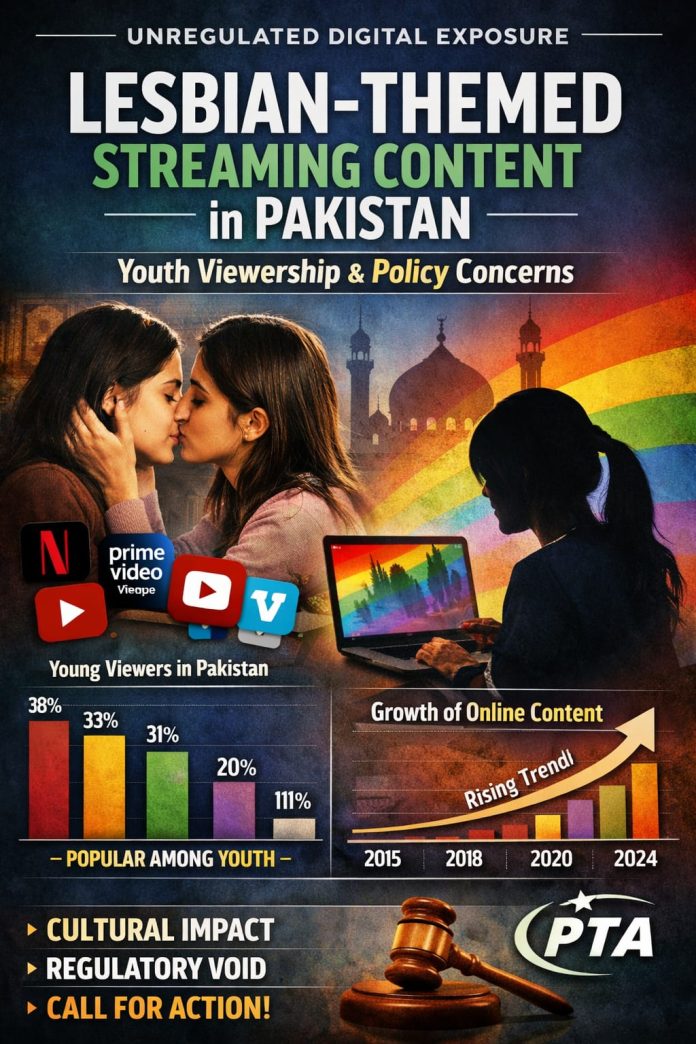
Content featuring lesbian or queer women themes can currently be accessed through Netflix, Amazon Prime Video, YouTube, Vimeo and Dailymotion. These platforms are not subject to any blanket ban by the Pakistan Telecommunication Authority (PTA). In contrast, local Pakistani OTT platforms have largely avoided hosting such material, reflecting self-regulation aligned with local cultural norms.
Youth-Centric Viewership
Estimated viewership data indicates that exposure to such online content is heavily concentrated among younger audiences. Approximately 33% of viewers fall within the 18–24 age group, while around 31% are between 25–34 years. Combined, nearly two-thirds of the audience belongs to the 18–34 age bracket — Pakistan’s most digitally active demographic.
Growth Timeline
Limited access began around 2015–2016 and gradually expanded with the rapid rise of smartphones and social media usage. By 2019–2020, availability increased significantly through global OTT platforms. Between 2021 and 2025, access has become widespread, with most internet users able to reach such content without technical barriers.
Regulatory Blind Spot
Pakistan’s current media regulation framework remains focused mainly on cinema and traditional broadcasting. The Central Board of Film Censors regulates theatrical releases, while digital-first content largely remains outside its jurisdiction. As cinema culture declines and online consumption rises, this regulatory gap has become increasingly significant.
Lack of Transparency
Although PTA has the authority to restrict online content, it does not maintain a publicly accessible list of blocked links or categories. This lack of transparency prevents citizens from understanding what content has been restricted, on what basis, and for how long.
Cultural Context
Pakistan’s constitutional and social framework is rooted in Islamic values. Same-sex relationships are neither legally recognised nor widely accepted at a mainstream social level. However, the digital ecosystem operates independently of these norms, creating a growing disconnect between traditional values and online consumption patterns.
Policy Recommendations
Media analysts suggest that Pakistan urgently needs a comprehensive national OTT and digital content policy. Key proposals include a PTA transparency portal listing blocked URLs, clear age-classification rules for streaming content, and an expanded advisory role for film censorship authorities within the digital space.
Conclusion
The spread of lesbian-themed streaming content in Pakistan is not the result of local promotion but rather a by-product of global digital platforms and largely unregulated online access. Without updated laws, transparent regulation and informed public debate, Pakistan’s digital landscape will continue evolving beyond its existing cultural and legal frameworks.
Lesbian-Themed Streaming Content Accessible in Pakistan: Youth Viewership, Digital Exposure and the Regulatory Blind Spot