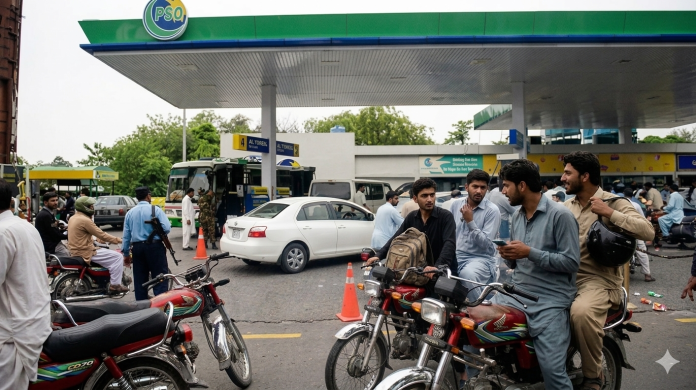

The federal government has announced a significant increase in fuel prices, raising the cost of both petrol and high-speed diesel by Rs. 55 per litre. The decision was announced late Friday night and came as part of the latest fuel price adjustment.
Following the increase, the price of petrol has reached Rs. 321.17 per litre, while the price of high-speed diesel has climbed to Rs. 335.86 per litre. The revised prices took effect immediately from Saturday, March 6, 2026.
This latest hike is expected to have a widespread impact on transportation costs, goods prices, and overall inflation in the country, as fuel prices play a key role in determining the cost of many essential services and commodities.
Adjustment in Petroleum Levy
While fuel prices have increased significantly, authorities have also adjusted the petroleum levy on diesel. The levy on high-speed diesel has been reduced from Rs. 76.21 per litre to Rs. 55.20 per litre.
Despite the reduction in the levy, the overall price of diesel still increased due to rising global oil costs and other adjustments in the pricing structure. These changes demonstrate how international market conditions and domestic fiscal policies both influence the final retail price of petroleum products.
Petrol prices were also affected by similar cost pressures, leading to the identical increase of Rs. 55 per litre for both major fuels.
Government Announcement and Policy Decision
The new fuel prices were announced during a late-night press conference attended by senior government officials responsible for economic and energy policy. The announcement highlighted the difficult economic conditions facing the country and the need to align domestic fuel prices with international market trends.
Officials explained that the decision was necessary to manage rising import costs and maintain stability in the country’s energy supply system. The government emphasized that the price adjustments reflect the current realities of global energy markets and the financial pressures associated with importing petroleum products.
Impact of Global Market Tensions
One of the main reasons behind the sudden rise in fuel prices is the ongoing instability in global energy markets. Recent tensions in the Middle East have created uncertainty across international commodity markets, particularly in the oil sector.
Geopolitical developments in the region have triggered concerns about supply disruptions and rising shipping costs for oil cargoes. These developments have pushed global crude oil prices higher, which directly affects countries that rely heavily on imported petroleum products.
The resulting market volatility has made it increasingly difficult for governments to keep fuel prices stable without incurring heavy financial costs.
Economic Pressures and External Factors
Economic considerations have also played an important role in the decision to raise fuel prices. International financial institutions have encouraged the government to pass rising petroleum costs directly to consumers rather than providing subsidies on petrol and diesel.
Subsidies can place a significant burden on the national budget, particularly when global oil prices remain high for extended periods. By adjusting fuel prices according to international rates, authorities aim to avoid additional fiscal pressure while maintaining financial discipline.
These measures are often considered necessary to ensure long-term economic stability and maintain commitments related to financial reforms.
Previous Fuel Price Increase
The latest fuel price hike follows another increase that was announced just a week earlier. In that adjustment, the price of high-speed diesel had been raised to Rs. 280.86 per litre, while petrol had increased to Rs. 266.17 per litre.
The new increase has pushed fuel prices significantly higher in a short period of time, adding pressure on households and businesses that depend heavily on transportation and fuel consumption.
Possible Effects on Consumers
Rising fuel prices typically have a ripple effect across the economy. Higher transportation costs can lead to increased prices for food, goods, and services, as businesses adjust their expenses to reflect higher operating costs.
For consumers, the latest increase may result in higher daily expenses and greater financial pressure, particularly for those who rely on private transportation or fuel-dependent industries.
Businesses that depend on logistics and transportation may also experience higher operational costs, which could ultimately be passed on to consumers.
Outlook for Future Fuel Prices
The future direction of fuel prices will largely depend on global oil market conditions and geopolitical developments. If crude oil prices continue to rise or supply disruptions intensify, further adjustments in domestic fuel prices may be necessary.
However, any stabilization in global energy markets could help ease pressure on fuel prices in the coming months.
For now, the government has indicated that it will continue monitoring international market trends and adjust domestic prices accordingly to reflect global developments.
Read More
Bank of Khyber Reports Record Profit of Rs. 5.8 Billion in FY2025 as EPS Jumps 61%