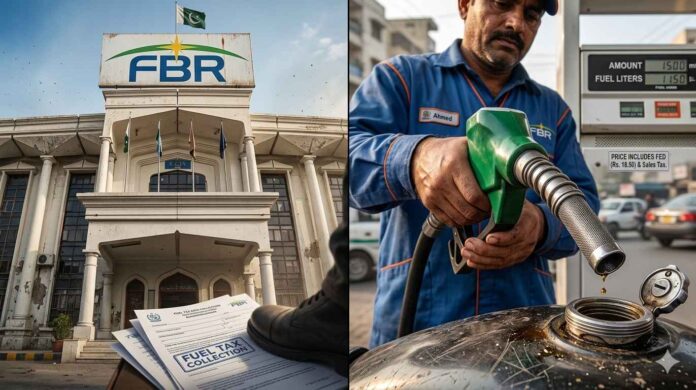

FBR Assigned to Recover Climate and Petroleum Levies on Behalf of Petroleum Ministry
Government Expands FBR’s Role in Levy Collection
In a significant policy shift aimed at improving revenue efficiency and streamlining fiscal operations, the Federal Board of Revenue (FBR) has been officially assigned the responsibility to collect the Climate Support Levy (CSL) and Petroleum Development Levy (PDL) on behalf of the Ministry of Petroleum. This development follows a newly issued notification that introduces key amendments to the existing tax framework, signaling the government’s intent to centralize levy collection under a single authority.
The move reflects a broader strategy to enhance transparency, strengthen compliance mechanisms, and ensure better coordination between revenue collection bodies and policy-making ministries. By designating FBR as the primary collecting agent, authorities aim to eliminate inefficiencies that may arise from fragmented systems and overlapping responsibilities.
Notification Brings Amendments to Sales Tax Rules
The transition has been formalized through the issuance of S.R.O. 800(I)/2026, which amends the Sales Tax Rules, 2006. The notification introduces changes specifically within Annex L of Form STR-7, a key component used for filing monthly sales tax returns. These amendments are designed to incorporate the collection mechanisms for both the Climate Support Levy and the Petroleum Development Levy within the existing tax reporting system.
The integration of these levies into the monthly sales tax return process is expected to simplify compliance for businesses, particularly those operating within the petroleum and energy sectors. By embedding levy reporting into an already established framework, the government aims to reduce administrative burden while improving accuracy in reporting and collection.
Understanding the Climate Support Levy
The Climate Support Levy was introduced as part of the Finance Bill 2025 and came into effect on July 1, 2025. It represents a strategic fiscal measure designed to address environmental and climate-related challenges through economic policy instruments. The levy is intended to generate revenue that can be directed toward climate adaptation, mitigation efforts, and sustainable development initiatives.
In recent years, climate change has emerged as a critical issue, with increasing pressure on governments to adopt proactive measures. The introduction of the Climate Support Levy reflects an acknowledgment of these challenges and a commitment to aligning fiscal policy with environmental objectives.
The levy is not merely a revenue-generating tool; it also serves as a signaling mechanism to encourage more sustainable practices within industries that contribute significantly to carbon emissions. By incorporating environmental costs into the pricing structure, policymakers hope to incentivize cleaner alternatives and promote long-term sustainability.
Role and Importance of the Petroleum Development Levy
The Petroleum Development Levy has long been a key component of the government’s revenue framework, particularly in relation to fuel pricing. It is imposed on petroleum products and serves as a major source of non-tax revenue. The funds generated through this levy are typically used to support infrastructure development, energy projects, and fiscal stability.
With the inclusion of the Petroleum Development Levy in the updated STR-7 system, the government aims to ensure more efficient tracking and collection. This move is expected to minimize leakages and enhance accountability, particularly in a sector that plays a central role in the country’s economy.
The petroleum sector is highly sensitive to global price fluctuations, making it essential for authorities to maintain a robust and responsive revenue collection system. By entrusting FBR with the responsibility of collecting this levy, the government is taking a step toward strengthening oversight and improving financial management.
Introduction of STR-7 for Levy Collection
One of the most notable aspects of the recent changes is the introduction of STR-7 within the monthly sales tax return system for the collection of the Petroleum Development Levy. This development marks a significant evolution in the way levies are reported and collected.
The STR-7 form has been updated to include fields specifically designed for capturing data related to both the Climate Support Levy and the Petroleum Development Levy. This ensures that all relevant information is consolidated within a single reporting mechanism, reducing the risk of discrepancies and improving data accuracy.
For businesses, this means a more streamlined reporting process, as they can now declare multiple levies within a unified system. For the government, it translates into better data visibility and enhanced capacity for monitoring compliance.
Domestic Sale Invoice Mechanism Introduced
In addition to the changes in the reporting framework, the FBR has introduced a Domestic Sale Invoice mechanism for the collection of both levies. This mechanism is designed to ensure that levies are accurately calculated and recorded at the point of sale, thereby reducing the likelihood of underreporting or evasion.
The Domestic Sale Invoice system provides a standardized format for documenting transactions, making it easier for authorities to verify compliance and conduct audits. It also enhances transparency by creating a clear record of all transactions subject to levies.
This initiative is particularly important in the petroleum sector, where high transaction volumes and complex supply chains can make it challenging to track revenue flows. By implementing a robust invoicing mechanism, the government aims to strengthen oversight and improve overall efficiency.
FBR as the Official Collecting Agent
Despite these changes, officials have clarified that the heads of tax collection will remain unchanged. The levies will continue to be categorized under their respective headings, but the FBR will now act as the official collecting agent on behalf of the Ministry of Petroleum.
This distinction is important, as it preserves the existing fiscal structure while enhancing the operational role of the FBR. By centralizing the collection process, the government can leverage the FBR’s expertise and infrastructure to achieve better outcomes.
The FBR’s extensive network and experience in tax administration make it well-suited for this role. Its digital systems, compliance mechanisms, and enforcement capabilities are expected to play a crucial role in ensuring the success of this initiative.
Implications for Businesses and Industry
The new framework is likely to have significant implications for businesses, particularly those involved in the import, distribution, and sale of petroleum products. Companies will need to update their accounting and reporting systems to align with the revised STR-7 requirements and the Domestic Sale Invoice mechanism.
While the changes may initially require adjustments, they are expected to bring long-term benefits in terms of simplified compliance and reduced administrative complexity. By consolidating multiple levies within a single system, businesses can streamline their reporting processes and improve efficiency.
Moreover, the enhanced transparency and accountability associated with the new system may contribute to a more level playing field, as all market participants will be subject to the same standards and oversight.
Strengthening Fiscal Governance
The decision to assign levy collection responsibilities to the FBR is part of a broader effort to strengthen fiscal governance and improve revenue mobilization. By centralizing collection under a single authority, the government aims to reduce inefficiencies, minimize leakages, and enhance overall accountability.
This approach is consistent with global best practices, where integrated revenue collection systems are used to improve efficiency and transparency. By adopting such measures, the government is positioning itself to better manage its fiscal resources and respond to emerging challenges.
Environmental and Economic Significance
The inclusion of the Climate Support Levy within the FBR’s collection framework underscores the growing importance of environmental considerations in fiscal policy. As climate change continues to pose significant risks, governments are increasingly turning to economic instruments to drive sustainable behavior.
The levy represents a step toward integrating environmental costs into economic decision-making, encouraging industries to adopt cleaner practices and reduce their carbon footprint. At the same time, it provides a source of funding for climate-related initiatives, supporting the transition to a more sustainable economy.
Similarly, the efficient collection of the Petroleum Development Levy is essential for maintaining fiscal stability and supporting key development projects. Together, these measures reflect a balanced approach to addressing both environmental and economic priorities.
Looking Ahead
As the new system is implemented, its success will depend on effective coordination between the FBR, the Ministry of Petroleum, and industry stakeholders. Continuous monitoring and evaluation will be essential to identify any challenges and make necessary adjustments.
The government’s decision to centralize levy collection represents a forward-looking approach to fiscal management, with the potential to deliver significant benefits in terms of efficiency, transparency, and sustainability.
In the coming months, businesses and stakeholders will need to adapt to the new requirements and ensure compliance with the updated framework. With proper implementation and support, the initiative has the potential to strengthen the country’s revenue system and contribute to long-term economic stability.
Read More
Oil Prices Drop After Iran Sends Peace Proposal via Pakistan